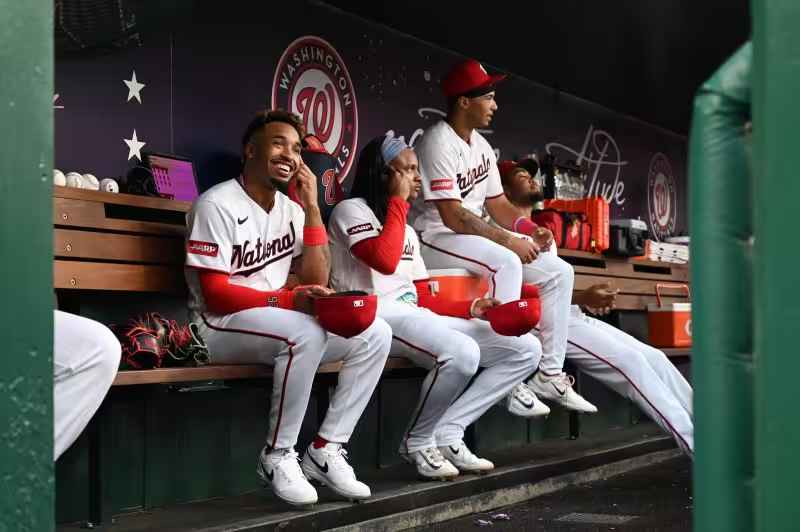
The Nationals arrive in San Francisco for a series against the Giants after both clubs put up unusually strong offense over the past month, setting up a matchup that will be decided less by bats than by which pitching staff can slow the other. The teams last met 44 games ago; since then the Nationals are 23-21 and the Giants are 18-26.
On the numbers that matter to fans who like to keep score, the Giants have been the best lineup in baseball since May 8, hitting.277/.331/.480 with a 126 wRC+. The Nationals have not been far behind — fourth in baseball over that same span at.246/.322/.447 with a 115 wRC+. San Francisco’s.277 team batting average leads the sport by a wide margin, with Pittsburgh second at.262, and the Giants pair that contact rate with a 6.5% walk rate and a 19.9% strikeout rate.

Part of the Giants’ recent surge looks familiar: Buster Posey has been credited with helping recreate elements of the club’s championship-era approach at the plate. That era, from 2010 to 2016, produced a.258/.320/.392 line with a 7.8% walk rate and an 18.3% strikeout rate — a template the current offense is outperforming in raw batting average and power while nudging walk and strikeout numbers in similar directions.
But the obvious tension in San Francisco is that the offensive uptick has not been matched by pitching. Over the past month the Giants posted a 5.09 team ERA and ranked 27th in MLB. That slide shows in run prevention metrics: the club produced just +0.2 fWAR on the mound over the stretch and was described as the third-least valuable staff in the sport during that window, behind teams such as the Cubs (-0.4 fWAR) and Reds (-0.8 fWAR).


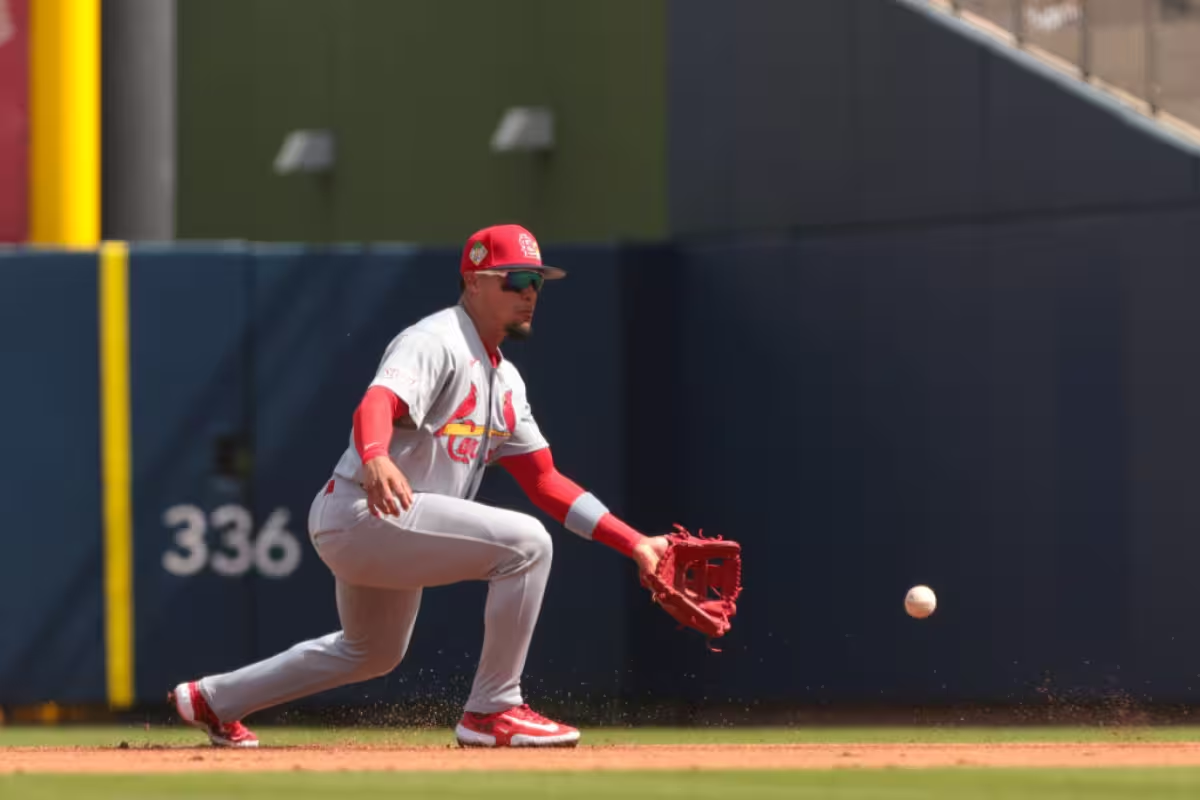
Since the clubs last faced each other, both staffs have been middling by most measures. The Nationals have a 4.11 ERA and a 4.46 FIP in the interval; the Giants have a 4.65 ERA and a 4.45 FIP. Those figures suggest the matchup will be less about one dominant pitching unit shutting down a lineup than about which staff can spike its performance over three games.
The Nationals’ profile is a useful counterpoint: despite ranking fourth in lineup production since May 8, the Nationals as a whole have been the sixth-worst team over the past month. That paradox — good offense inside a generally poor monthly record — raises the stakes in San Francisco. If the Nationals’ run prevention holds closer to their post-series ERA and FIP, they can make the Giants pay for mistakes; if not, both lineups have the firepower to turn this into a high-scoring brief war.
Practical detail for readers: this is the first head-to-head meeting in 44 games, which means managers will be working from sequences and scouting that were established months ago but have to be adjusted for recent form. The Giants have also benefited from a few offensive blowouts that helped their numbers climb and get healthier at the plate; whether those results are repeatable against a Nationals staff that has been serviceable since the last Canada-and-back meeting is central to the series’ intrigue.
What to watch when the first pitch drops: can the Giants sustain their league-leading.277 batting average against a Nationals rotation that has improved since the teams last met, and will San Francisco’s pitchers trim the 5.09 ERA that has crippled the club’s value-of-innings over the past month? If the Giants’ bats carry the way they have since May 8, the home crowd will see a lot of runs — but if the pitching remains 27th in ERA, those runs may not be enough.
The single consequential question coming out of this week is simple: will the Giants’ hot offense continue to outscore a pitching staff that has been flaky of late, or will those same pitching struggles reassert and hand the Nationals a series that their month-long lineup production otherwise would not suggest? The answer will arrive over three games in San Francisco.