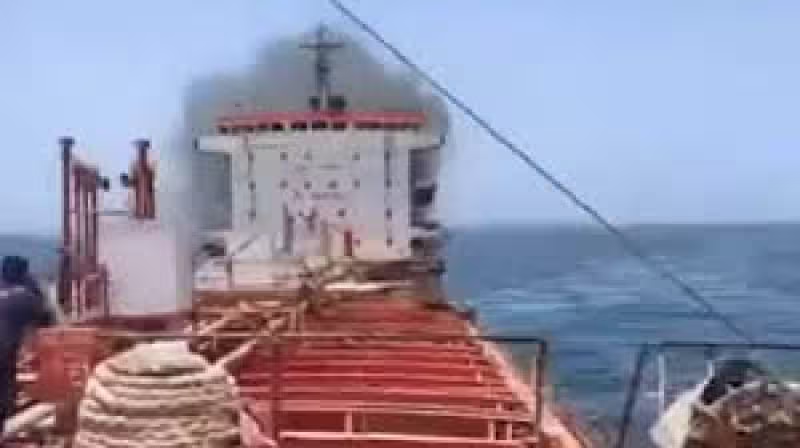
A Times of India headline reports that a US warplane struck and disabled an oil tanker near Oman and that the vessel's crew of 24 Indians was evacuated.
The headline names the attacker as a US warplane, says the oil tanker was disabled and specifies that 24 Indians were taken off the ship; that is the full extent of the verifiable account available from the published page.

Those three facts — a claimed strike by a US warplane, a disabled oil tanker and the evacuation of 24 Indian crew members — are the only elements visible in the published item. The body text and any sourcing, timestamps, official statements or operational details do not appear on the page.
The location is described only as "near Oman," which places the incident in a strategically sensitive stretch of water but does not identify coordinates, the tanker’s name, its flag state, its cargo, or the time of the reported strike.
The most immediate confirmed consequence in the headline is the evacuation of 24 Indians. Beyond that, the published item offers no information about who carried out the evacuation, where the crew were taken, whether any injuries occurred, or the condition of the vessel after being described as disabled.



The absence of supporting detail is the friction in this story. A claim that a US warplane struck a commercial oil tanker is operationally significant, yet the headline supplies no attribution to military sources, no quote from government officials, no imagery, no ship-tracking data and no eyewitness account to substantiate the action it reports.
That gap matters now because a strike on an oil tanker can quickly escalate geopolitically, affect global energy markets and trigger maritime safety and legal inquiries. The headline places Indian nationals at the center of the human consequence, but it leaves every other relevant question unanswered.
What is verifiable is compact: an oil tanker was said to be disabled near Oman, and 24 Indians aboard were said to have been evacuated. What is not verifiable from the published material is larger: who ordered or carried out the strike, why the tanker was targeted, where exactly the incident occurred, and what evidence supports the claim.
For readers seeking clarity, the next essentials are straightforward. Officials from the United States, Oman and India would typically be expected to confirm or deny such an action; naval or coast‑guard logs, ship automatic identification system traces and satellite imagery could corroborate a strike and the vessel's fate; and statements from the evacuated crew or the tanker’s operator would establish the human facts.
The single most consequential unanswered question is not whether the tanker was disabled but what evidence underpins the headline’s specific allegation that a US warplane struck it. Until the chain of evidence — official statements, independent tracking data or direct testimony — appears, the claim should be treated as unverified reporting of an event that may have occurred.
This report will be updated as additional material becomes available: official confirmations, details on the tanker’s identity and cargo, the circumstances of the evacuation and any public record that explains why a military aircraft would have engaged a commercial vessel in that maritime area.