




Steven Spielberg told an interview updated June 7, 2026 that he absolutely thinks aliens have been here and are here, tying the declaration to his new film Disclosure Day and a scenario in which a trove of eighty years of visual evidence is released to the world all at once.
Spielberg framed the movie as both a moral and cinematic provocation. "'Disclosure Day' is about how, if somebody had the power and if somebody had possession of the entire archive of visual evidence of what's been happening for the last 80 years, what would happen if they decided to do a data dump across the entire world all at once?" he said, adding that the people trying to stop that data dump are the core of the chase movie. Emily Blunt leads the cast as Margaret Fairchild, a Kansas City meteorologist who inherits sudden gifts and skills she does not understand; Spielberg said the film "takes the position of the believers, or the curious, the ones that have been deeply affected by this," while also leaning into institutional resistance.

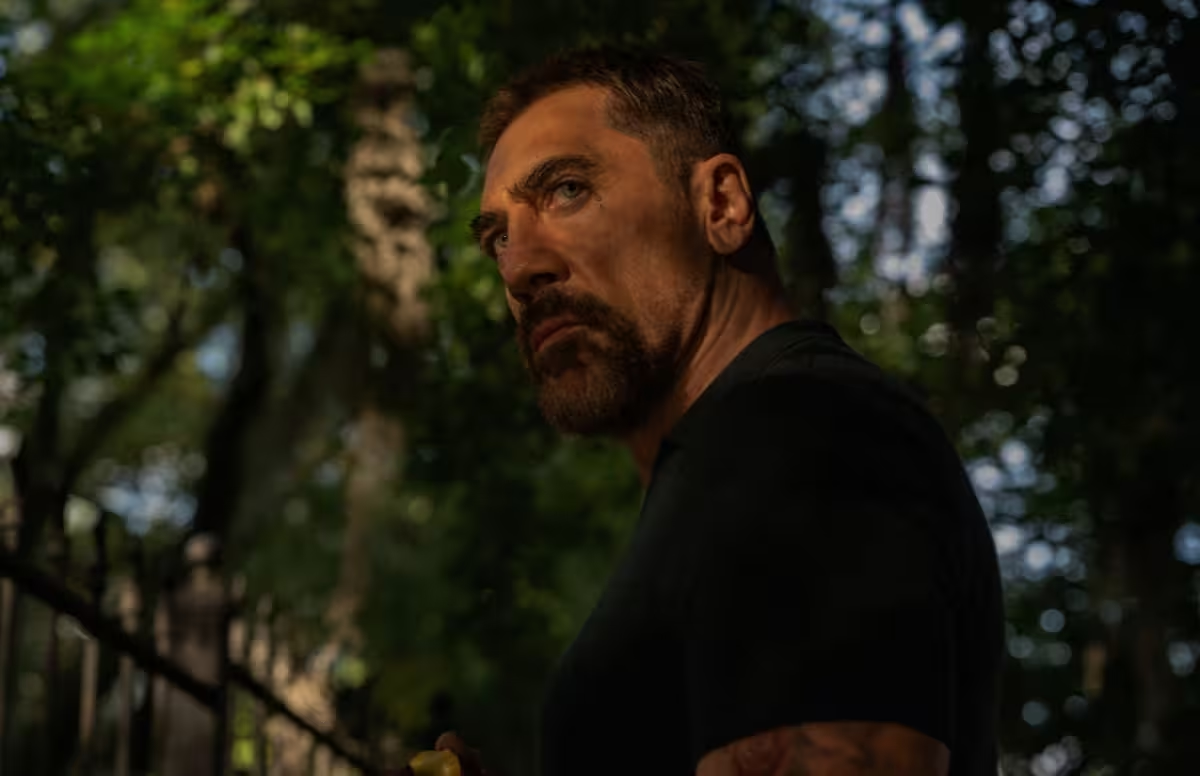

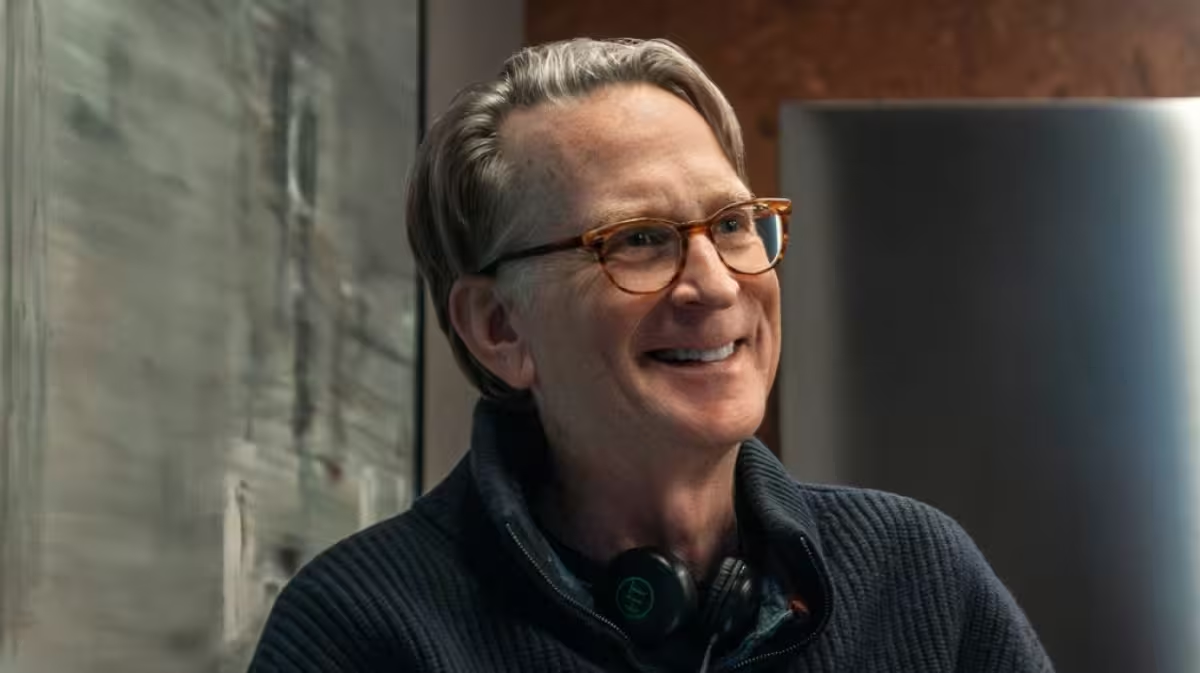
The movie is explicitly presented as a bookend to Spielberg's earlier work: forty-nine years after Close Encounters of the Third Kind, which ends with the arrival of the aliens, Spielberg said he imagines the aliens never left. He recalled watching Close Encounters in a theater and the heat of that night: "It was, like, 95° in Mobile, Alabama, and, like, 80% humidity. I remember that!" Richard Dreyfuss appears in Close Encounters as Roy Neary, a character haunted by a vision after an encounter — an echo Spielberg used to describe why ordinary people in Disclosure Day would be shaken if a global dump of imagery arrived tomorrow.
Spielberg described the tone as part chase flick, part '70s thriller and part big-tech conspiracy, and he raised the larger questions the film wants viewers to sit with. "I can't speak for the entire audience, but there are certain things that unite us. And one of the things that unites us, one of the places we can find common ground, is our united belief that the extraordinary is possible, and the impossible is possible," he said, later adding, "And I think UAP, UFO, the whole phenomenon is something that everybody across any spectrum – culturally, politically – can agree on." The director also said Disclosure Day takes the position of the church, asking bluntly: "What does this do to the fundamental beliefs that many of us have? Is God our God only on this planet? Or is God a god for every system where there's civilization and intelligent life, and even developing life?"
That rhetorical sweep is the movie's friction: Spielberg insists the phenomenon can unite people, while Disclosure Day centers on denial, cover-up and active efforts to stop a release of visual evidence. He supplied the outline — the archive, the dump, the pursuers — but not the archive's contents or the identities of those trying to stop it. Nor did the interview provide a release date or list supporting cast beyond Emily Blunt. And to address the headline directly: despite the name in this story's title, Spielberg's comments and the material published June 7 make no mention of Eve Hewson; there is no evidence in the interview that she is connected to Disclosure Day. The next public steps to watch are further casting notices and any official release information, because until the archive in Spielberg's story is shown on screen, the central unanswered question remains: what exactly is in that eighty-year archive and who will be revealed as trying to bury it?



