



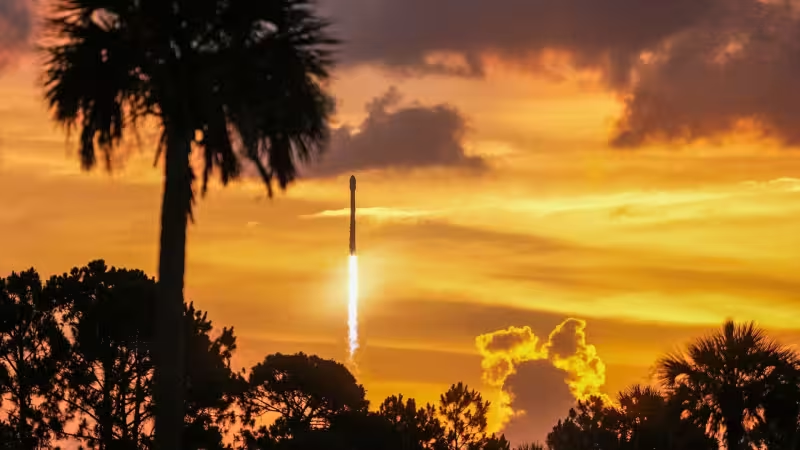
SpaceX is set to launch 29 more Starlink satellites from Cape Canaveral Space Force Station on Monday morning before sunrise, with liftoff scheduled for 6:13:50 a.m. EDT from Space Launch Complex 40. The Falcon 9 will fly northeast on the Starlink 10-35 mission, and live coverage is due to begin about an hour before launch.
The flight is built around booster B1067, SpaceX’s fleet leader, which is scheduled to fly for a record-breaking 35th time. That would push the company another step toward proving out the kind of extreme reuse it says Falcon 9 hardware can handle, even though its own accounting model still treats 25 flights as the estimated useful life for a booster. SpaceX says the rocket and its boosters have been engineered and demonstrated to support up to 40 flights, a standard that remains unusual in commercial launch.

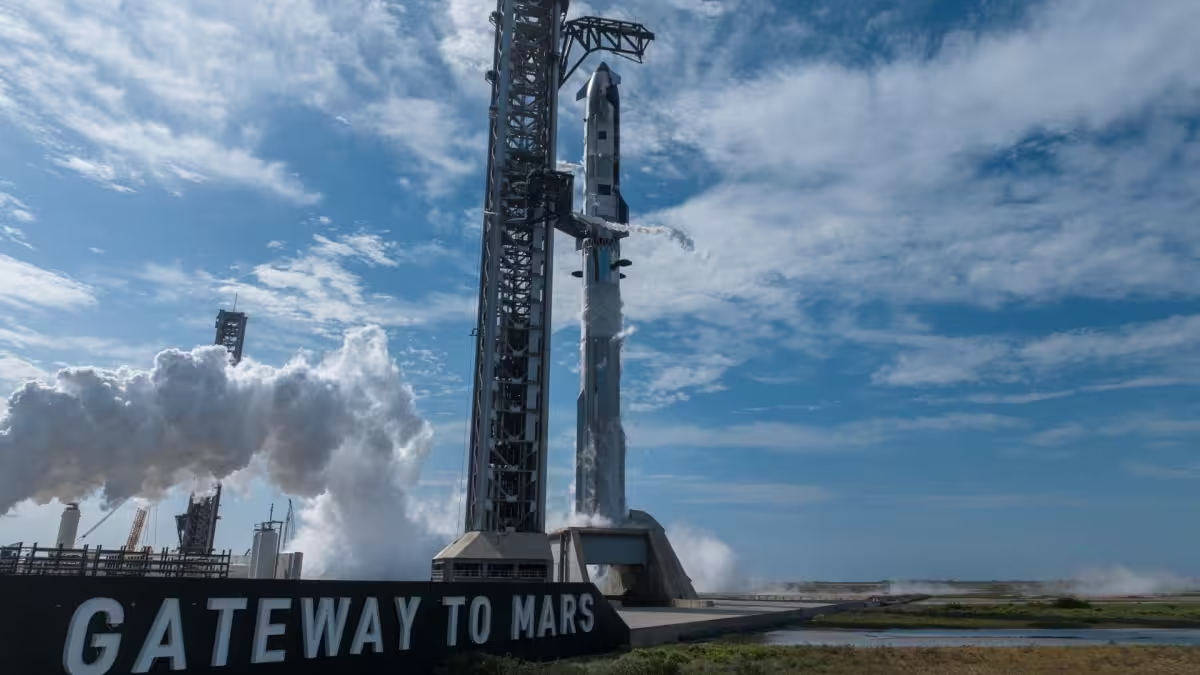


Weather looks favorable at the start of the window, with the 45th Weather Squadron calling for a 90 percent chance of good conditions at opening time. That forecast slips to 75 percent as the morning goes on, with meteorologists watching thick clouds over the Cape Canaveral area and the risk of Thick Cloud Layers Rule violations rising as the window progresses. In other words, the launch has a strong chance of going on time, but the exact moment of liftoff may still move if cloud limits tighten.
The mission also lands against a busy stretch for SpaceX. On June 3 and June 4, Falcon 9 launches from California and Florida added 53 more Starlink satellites to orbit and lifted the active constellation to more than 10,500 spacecraft. The company has also been more than a week into a probe of the Sept. 1 launch pad explosion that destroyed a Falcon 9 booster and an Israeli communications satellite, and Musk said Friday that investigators had still not found a smoking gun. The coming launch does not answer that question, but it does show SpaceX pressing ahead with routine high-cadence flights while the review continues.
If conditions hold, the next move is simple: B1067 climbs from SLC-40 just after 6:13 a.m. EDT, carrying another batch of broadband satellites and another test of how far SpaceX can keep pushing the same booster.



