



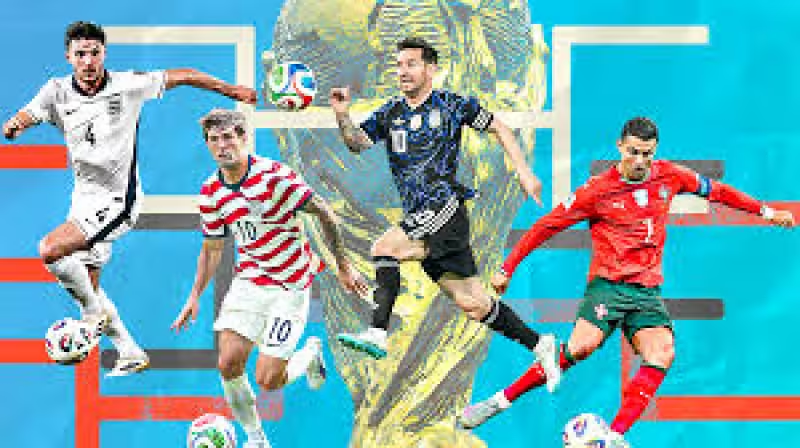
The 2026 FIFA World Cup will be the biggest ever: 48 teams, 104 matches and play staged across three countries.
That scale lands immediately for viewers because the tournament opens with Mexico Vs South Africa — a single fixture that will sit inside a far larger slate of games and logistics than any previous World Cup. Broadcasters and ticket platforms are already treating that opener as a marquee draw; one streamer has announced it will show the Mexico vs South Africa match free on YouTube (

Put plainly: more teams and more matches means more travel, more stadium nights and a longer television cycle. The headline numbers — 48 teams and 104 matches — are the facts that change planning for national federations, club schedules and fans who follow multiple sides. Teams that previously might have missed the knockout rounds have more pathways to appear on the global stage, and every additional match adds pressure on club release calendars and player fitness.
The story of scale is already visible in the coverage surrounding the tournament. High-profile players have been photographed and reported preparing on different continents: Argentina’s Lionel Messi was seen taking a break with teammates during a practice session in Kansas City, Kan., and qualifiers have featured recognizable moments such as Cristiano Ronaldo’s penalty for Portugal in Budapest and Luka Modric’s penalty for Croatia in Osijek. Stadiums that will host worldwide attention have also been part of recent coverage — a general view of MetLife Stadium was shown during a Club World Cup semifinal last year — all reminders that the infrastructure and star power are already in play.

Where the source material becomes thin is the precise format mechanics. The tournament is being billed as the largest ever, but the published details stop at totals: 104 matches, 48 teams, three countries. They do not yet explain how the expanded format will be organized match by match — the number of groups, the route to knockout rounds, or how match allocation will work across the three host nations. That gap matters because format drives rest days, venue distribution, and which teams meet early versus later in the competition.
The practical consequences are immediate. Fans buying travel and tickets will need clearer schedules; national teams will require exact group structures to sequence qualifying plans and friendlies; broadcasters will demand firm match windows to program rights and advertising. Players, clubs and national associations will judge whether more matches dilute the quality of competition or simply broaden opportunities to feature in World Cup play.
Some of the unresolved issues will be technical: fixture sequencing to limit travel fatigue, whether neutral venues will be used for particular rounds, and how host-country matches are balanced so local markets receive marquee games. The public-facing images — star players training, penalty moments in qualification and major stadiums hosting other tournaments — show that the sport’s machinery is already gearing up. But the single most consequential unanswered question is how FIFA will translate 104 matches into a competitive, fair bracket that fits three hosts.
The next concrete date for most fans is the tournament itself; until then, organizers must publish the full format and match schedule so federations and travelers can finalize plans. In the meantime, the opener — Mexico Vs South Africa — will act as the first test of interest and logistics, and streams like the YouTube presentation linked above will provide a preview of how distribution and viewership might scale across this enlarged event.



