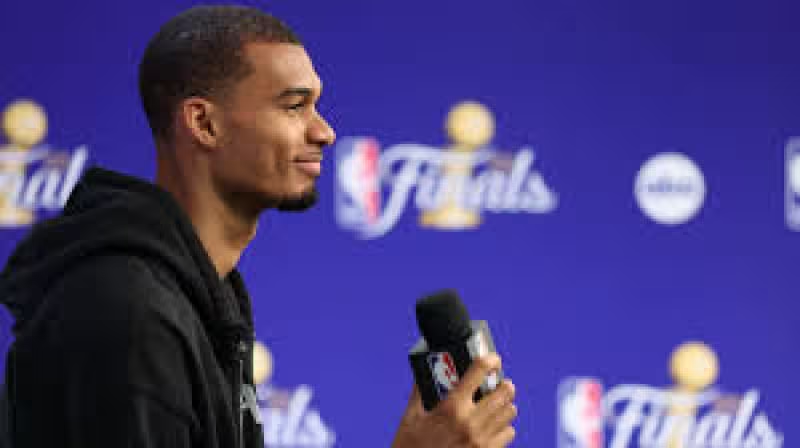
The New York Knicks beat the San Antonio Spurs 105-104 in Game 2 of the NBA Finals, taking a 2-0 series lead after a late Victor Wembanyama outlet-pass mistake swung the game back to New York.
The defining sequence came in the final minute. San Antonio had rallied and briefly held the lead after De'Aaron Fox hit another crunchtime shot, but on the next possession Wembanyama threw an outlet pass to Stephon Castle — who was looking the other way when the pass arrived. Castle failed to secure it, Jalen Brunson ended up with the ball, and New York regained control.

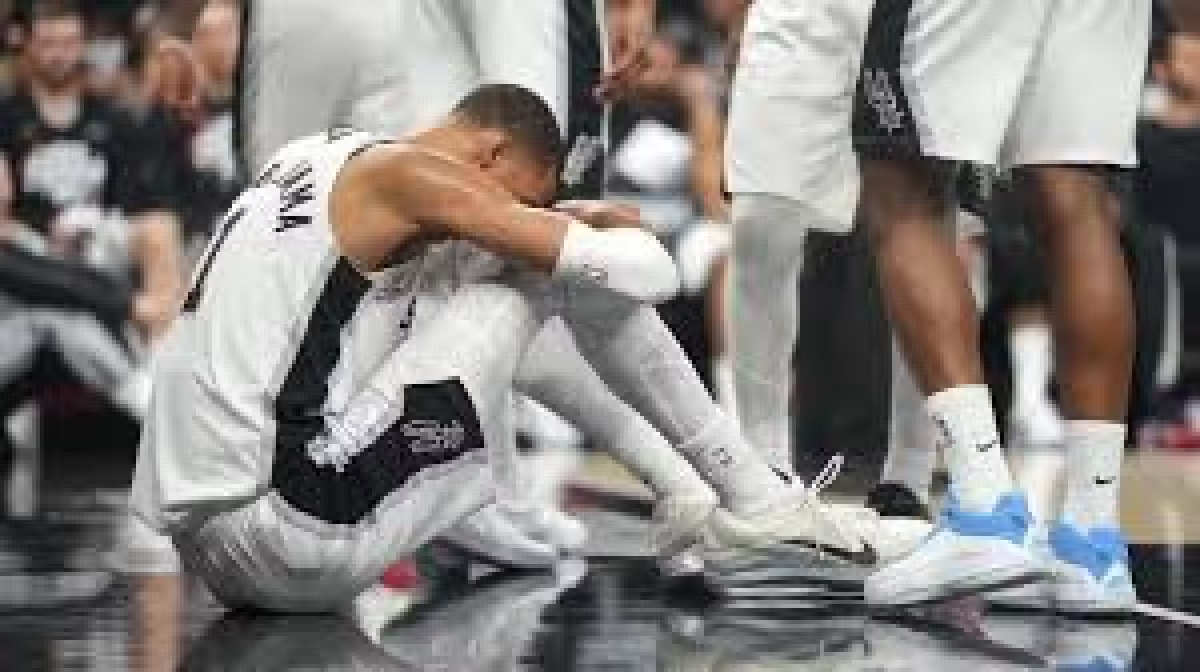
Wembanyama, the 7-foot-4 Spurs star, said plainly afterward: “I threw that one away. I messed up.” He added that the loss was frustrating and that he needed to show more poise: “I need to have more poise, more control over the game,” and “To throw it away after putting in all this work.” Those lines mattered because they framed what followed.
Immediately after the turnover Wembanyama sprinted back on defense and, after running up to Brunson, left his feet on a pump fake — contact that sent Brunson to the free-throw line. Brunson missed his second free throw, but the Knicks kept possession and the Spurs were left with one final chance. On that possession San Antonio ran a pick-and-roll between Fox and Wembanyama; Wembanyama got a clean look over Mitchell Robinson but clanked the shot off the back rim, and New York held on by a single point.
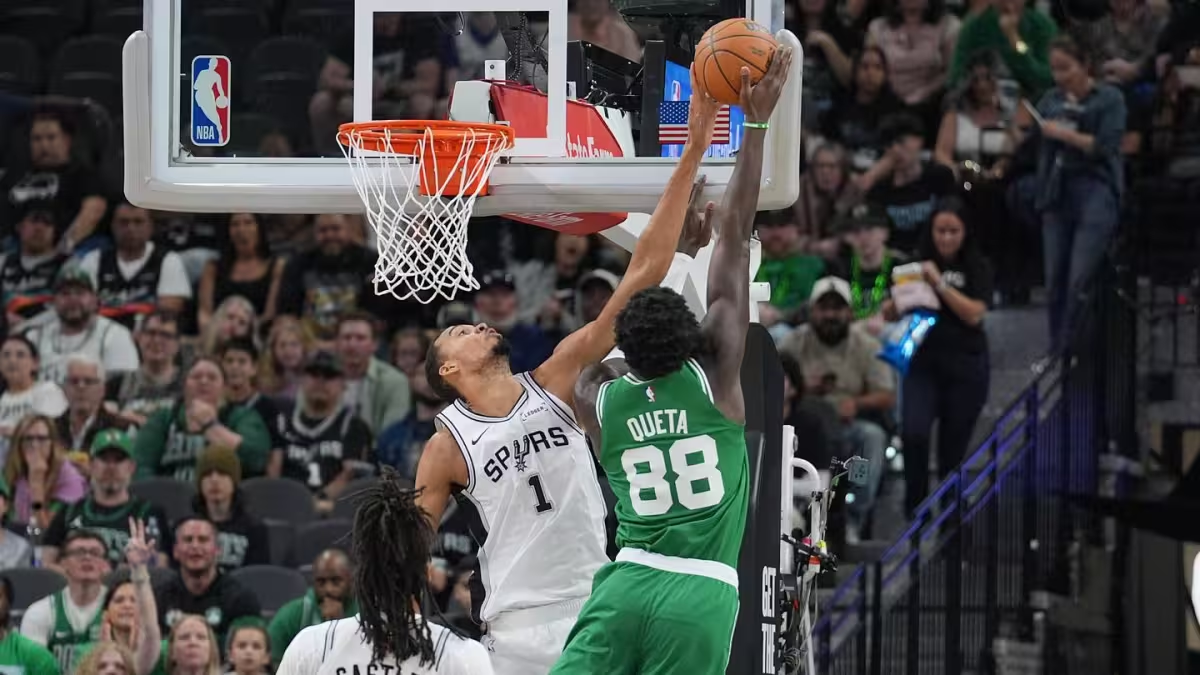
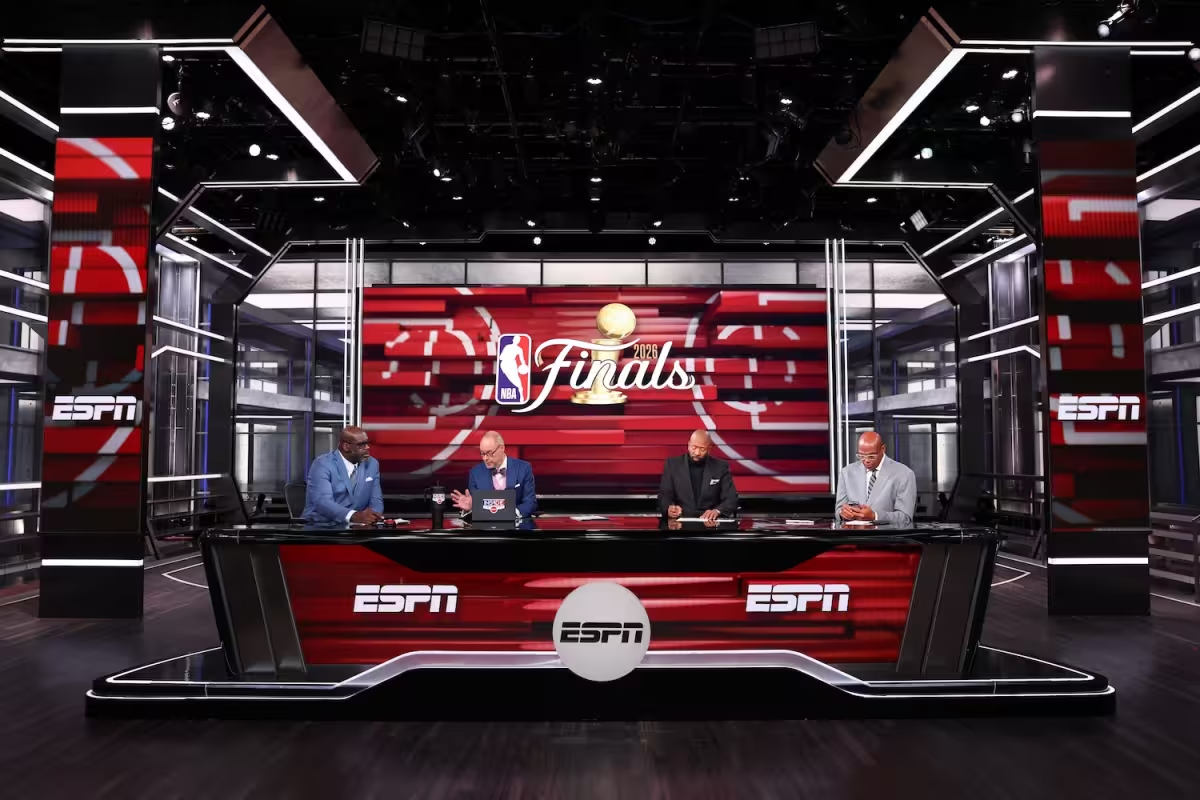
Put another way: a one-point margin, Game 2, and a 2-0 edge for New York. The Spurs had been one possession from tying the series late; instead, a failed outlet to Castle and an overzealous closeout on Brunson delivered the result. Fox’s late shot had kept the Spurs alive, but the turnover and the subsequent defensive gamble are the immediate explanations for how San Antonio lost after taking the lead in the final minute.
Context sharpens the stakes. San Antonio’s offensive formula is to get the ball to its guards and put Wembanyama in motion — screens, roll actions and on-the-move play that create space for his playmaking. When that system works, the Spurs can win in multiple ways. The Knicks have repeatedly shown a late-game discipline and process that forces opponents to execute nearly perfectly; on Friday night New York’s focus in the last possessions produced the margins it needed to escape with the win.
There is friction in how the finale unfolded. After the initial miscue Wembanyama overextended trying to correct it, and that overextension created the foul drama that handed the ball back to New York. Two small episodes — the failed outlet to Castle and the ill-timed closeout on Brunson — decided a game the Spurs had fought hard to take. Wembanyama called the loss “the most frustrating thing” and admitted, “I’m still very blurry. That’s the whole problem,” underscoring how individual urgency blurred team execution at the moment it mattered most.
What happens next is immediate and obvious: Knicks Spurs Game 3 now carries heightened consequence. New York’s 2-0 lead pressures San Antonio to erase both a scoreboard deficit and the psychological sting of a one-point defeat decided by late mistakes. The next game is the Spurs’ first true opportunity to show whether Friday night was a fluke of nerves or the start of a deeper series problem; their ability to avoid turnovers in crucial moments and for Wembanyama to temper urgency with composure will determine whether the series returns to even footing or tilts decisively toward New York.