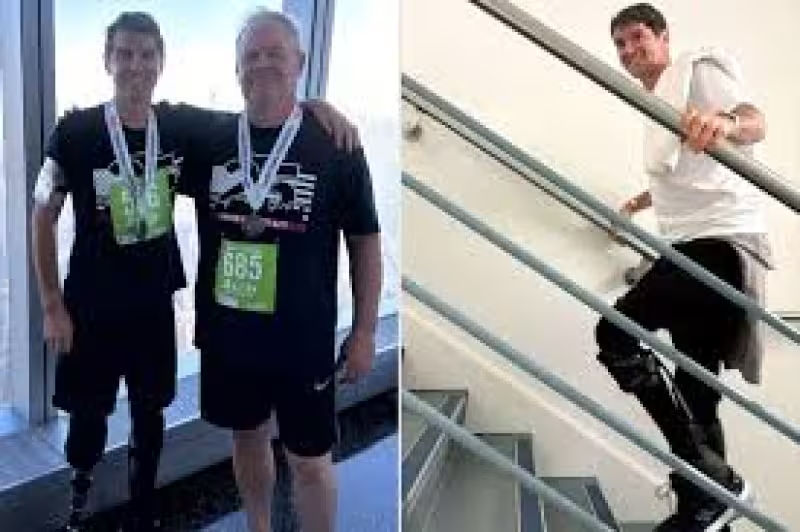
Benjamin Hall finished the climb at the top of One World Trade Center in 46 minutes, having raced up 104 stories on behalf of the Tunnel to Towers Foundation and dedicated the effort to fallen heroes.
Hall, a senior correspondent, completed the challenge on Jan. 1, 2026, and framed the ascent as more than a physical test: he singled out mental fortitude, the inspiration he drew from fellow climbers and the power of collective resilience as the real achievements of the day.

The numbers underline how unusual the feat was. One hundred and four stories, 46 minutes of sustained effort on stairways designed for utility, not spectacle — a pace that requires steady cardio, leg strength and an ability to push through rising exhaustion. Hall paired that effort with a public dedication to those who did not come home, tying the climb’s purpose to the Tunnel to Towers Foundation’s mission of honoring fallen service members and first responders.
Context matters here: Hall took on this climb four years after sustaining life‑threatening injuries in Ukraine on June 1, 2022. The timeline frames the ascent as a marker of recovery as much as an act of charity; completing such a demanding, timed climb after a period of convalescence is a narrow and consequential accomplishment.

Hall described the climb in terms that downplayed spectacle and emphasized psychology: he spoke about meeting the day with a steady head, about drawing courage from others on the route, and about leaning on a collective spirit that made pushing through fatigue possible. Those themes — mental toughness, shared inspiration, resilience — were the throughline of his remarks and the explicit reason he linked the climb to fallen heroes.
The friction in the story is immediate. A physical feat that looks straightforward on the page becomes striking when set beside the reported injuries four years earlier. Completing 104 stories in under an hour is notable for an elite athlete; for a correspondent who suffered life‑threatening wounds in a foreign conflict, it reads as a pronounced moment of recovery and reclamation.
What remains unsettled, and what shapes how this climb will be remembered, is a narrower question: the public record describes Hall’s 2022 wounds as life‑threatening, but it does not provide a detailed accounting of the specific injuries he sustained in Ukraine. That gap changes the frame. Without a fuller medical chronology, observers are left to measure the climb against a headline description of danger rather than a catalog of the months or surgeries and the precise limits he has overcome.
Hall’s decision to attach the ascent to the Tunnel to Towers Foundation tightens the narrative of purpose. It was not a personal record attempt for its own sake; he made a deliberate gesture toward honoring those who gave their lives, and he acknowledged the role other climbers and supporters played in pushing him through the stairwells. Those acknowledgments shift the climb from stunt to statement: a public, communal demonstration of resilience rather than a private athletic triumph.
The next, unresolved chapter is clear. If the climb stands as a milestone in Hall’s recovery, the missing detail—what he actually suffered in Ukraine and how those injuries continue to affect him—now becomes the story worth answering. That medical and personal accounting will determine whether the One World Trade Center ascent is read as an extraordinary step back to full health, a remarkable accommodation of lasting damage, or something in between.