




Jacob Misiorowski threw the fastest pitch on record — a 103.7 mph fastball — during the Milwaukee Brewers’ 7-1 victory over the Colorado Rockies on Saturday.
The pitch came in the third inning to Rockies third baseman Kyle Karros and was the hardest any pitcher has thrown since full pitch tracking began in 2008. It was one of 52 triple-digit pitches Misiorowski reached in the outing, a raw-velocity benchmark that rewrites the modern tracking era.

Misiorowski’s single pitch was notable, but so was the rest of the line: seven innings, one run on four hits and eight strikeouts. The 2025 All-Star mixed elite speed with length, giving the Brewers a starter-quality night that left the bullpen untouched.
The 103.7 mph fastball was out of the zone for a ball, and that detail matters. The moment-of-the-game metric carries weight precisely because it landed outside the strike zone — a reminder that top speed and usable results are different things.
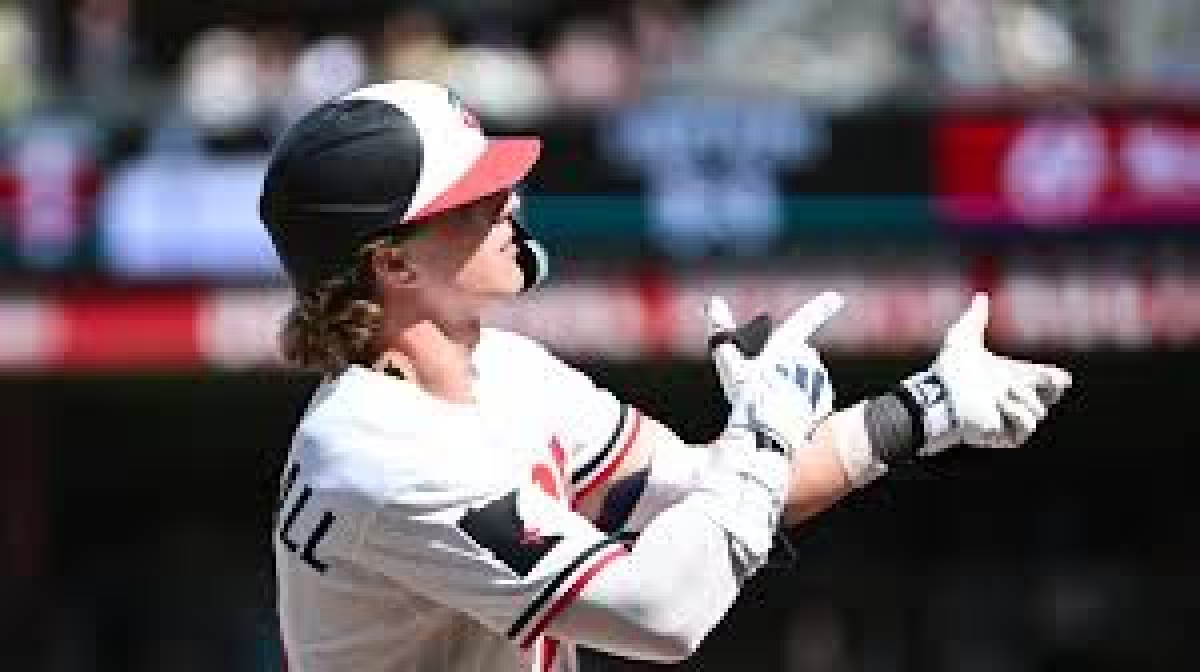
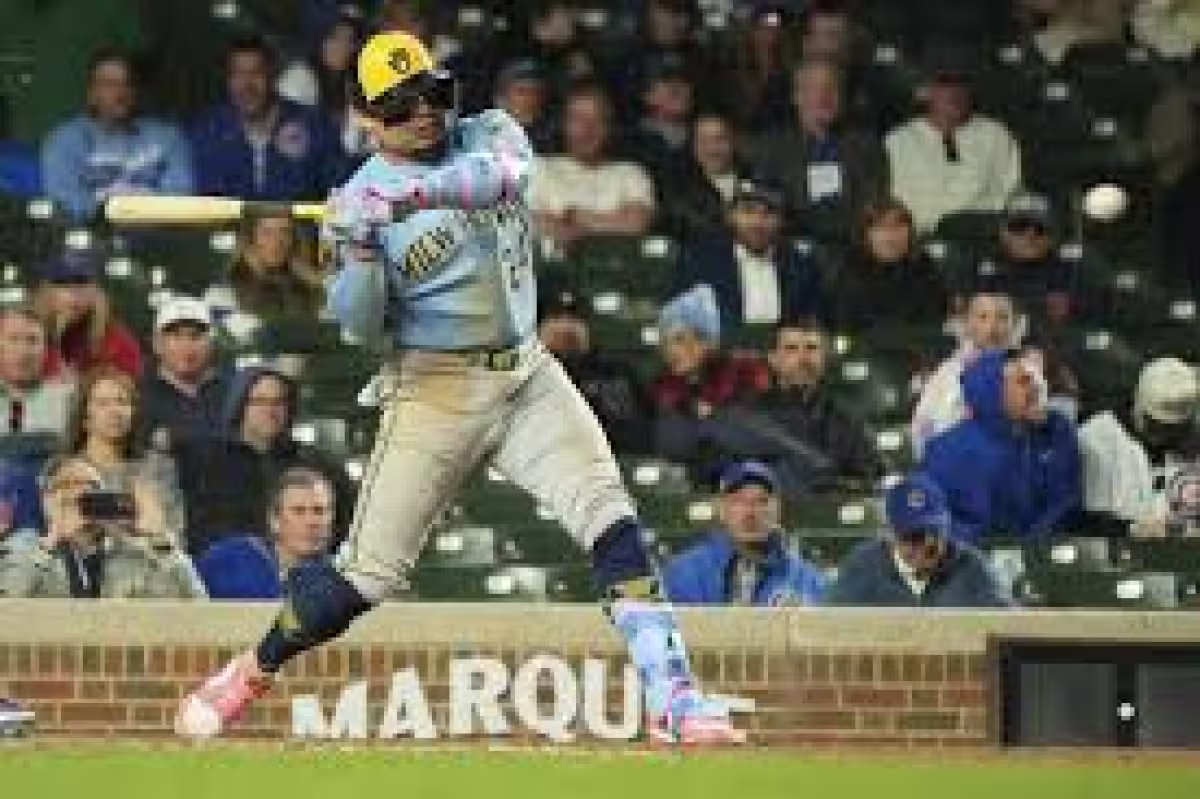
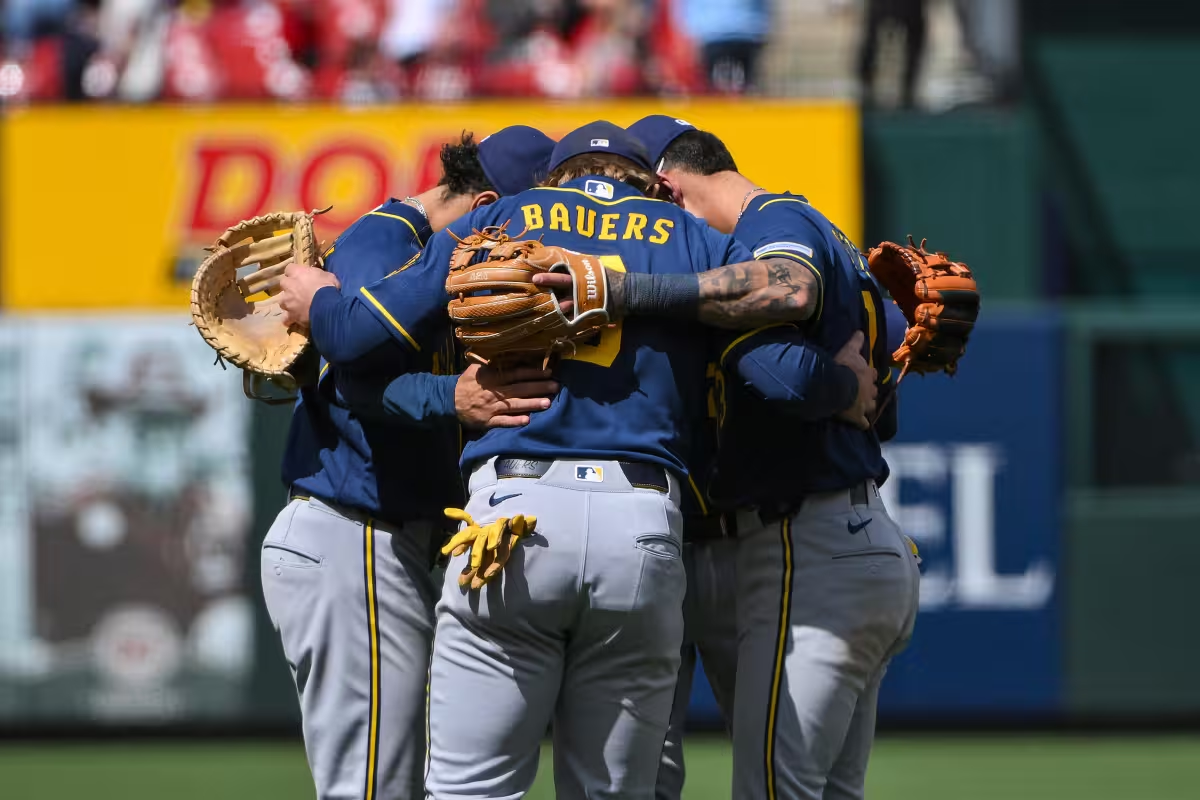
Brewers manager Pat Murphy acknowledged the arm and the extension: "Miz has got great extension and great velocity, so that doesn't surprise me," he said. He immediately tempered the celebration with a focus on execution: "But we've got to get off that — the harder the better, and all that. He's got to throw the ball in the zone and throw his other pitches in the zone. As I say often, good hitters can time up anything."
The club’s social channels leaned into the moment: MLB’s X account made a tongue-in-cheek reference to the WWE rivalry between Danhausen and The Miz, underscoring how unusual and shareable the number was. Still, the raw figure means more as a billboard than a prescription; velocity spikes attention, not outcomes.
Context sharpens the accomplishment. Since 2008, when full pitch tracking began, no recorded pitch had reached 103.7 mph. Misiorowski’s combination of high-end speed and a seven-inning outing is rare; he paired the headline number with length and strikeouts in a way few rookies or midseason additions do.
That blend is also the source of the story’s friction: elite velocity invites questions about usage and strategy, but the manager’s caution keeps those questions open. The club has not confirmed any change to Misiorowski’s role, workload or next start, leaving the practical consequence of the record pitch unresolved. The record exists as a fact; whether it alters the Brewers’ handling of him does not.
The clearest takeaway is immediate and narrow: Misiorowski delivered a record-setting pitch inside a quality start that helped Milwaukee win 7-1. The clearest unanswered question is also narrow and consequential — will the Brewers treat the 103.7 mph outburst as a reason to expand his innings, protect him with limits, or simply file it as a peak night? The team has given no public answer, so the next decision will be the signal that turns a single velocity record into a lasting change in his usage.



