




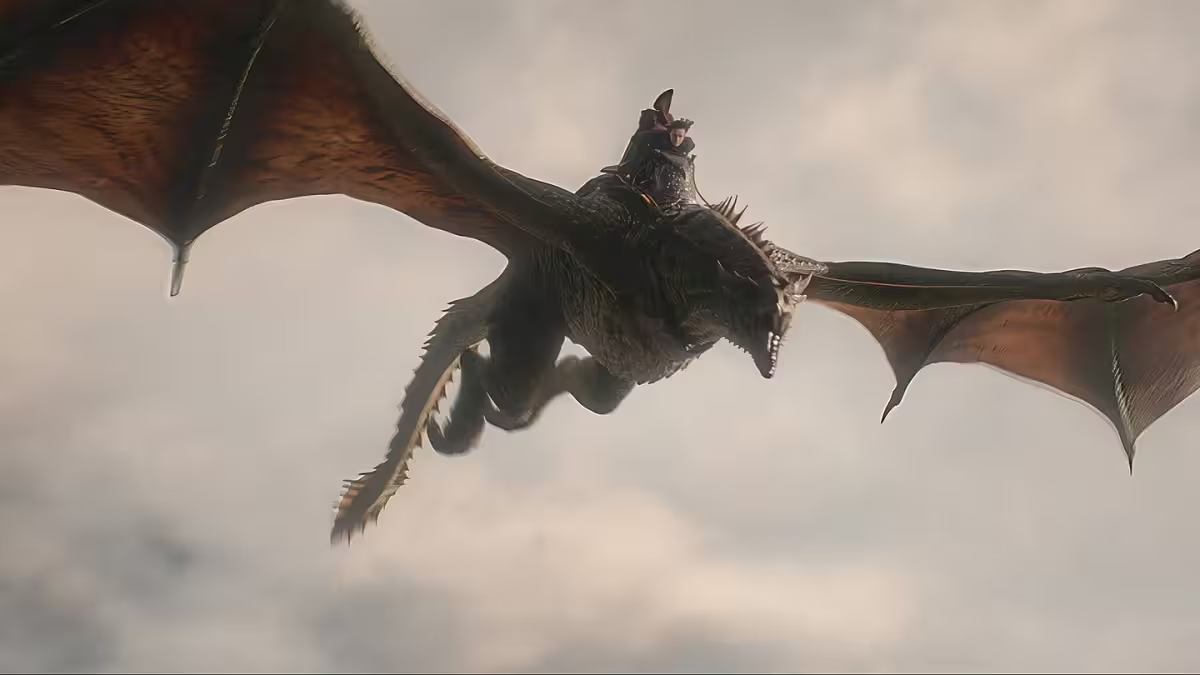
“These sequences, I will confidently say, are unlike anything that’s ever been done on television before,” Ryan Condal told a packed SXSW London panel, then walked the room through why he meant it: Season 3 of House of the Dragon opens, in episode one, with the Battle of the Gullet and a production scale Condal framed as both seminal and extreme.
The teaser shown before the panel supplied the numbers that back the claim — 15,000 stunt crowds, 3,500 props, 25 tons of propane and, the reel claimed, 23 stunt performers ignited in one take, described as a new world record. Condal said the sequence “has been haunting Jim and I for the better part of four years now,” and added bluntly that “the amount of construction that you guys did for just the one episode is kind of crazy and frankly irresponsible.”

Condal’s bluntness matters because Season 3 arrives June 21 and begins seconds after Season 2, which closed with family tensions erupting into full-scale civil war; the Gullet sequence is intended to be the lyrical, violent hinge that swings the story outward. Lord Corlys Velaryon, played by Steve Toussaint, will use his fleet to block the narrow stretch of water known as The Gullet on Rhaenyra’s side — a choice that sets the season’s opening tone as much as any line of dialogue.
That tone is personal. Toussaint said of Corlys: “When I first met Ryan, he said we’re going to start with a character who has everything, and we’re going to take it all away from him. Well, he’s on that journey. When we meet him at the beginning of Season 3, he’s still grieving his wife [Rhaenys Targaryen] and trying desperately to make links with his illegitimate son [Alyn of Hull], who doesn’t want anything to do with him, and so he’s having to deal with that, basically, and that’s a tough sell.”
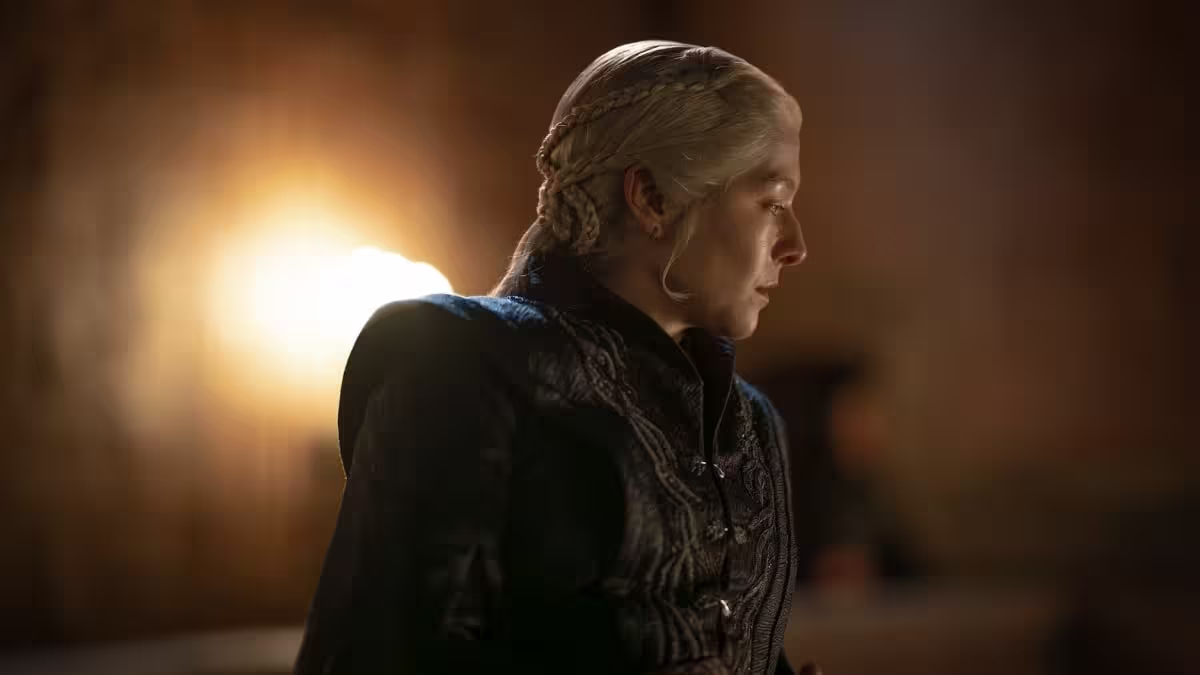
The cast framed the aftermath of Season 2 as raw and immediate. Harry Collett’s Prince Jacaerys, Collett said, is “just being a grumpy teenager” who nonetheless believes “he’s the best man in the room.” Abubakar Salim, who plays Alyn of Hull, described a character who was “very volatile and angry” at the end of Season 2 but “matures and evolves during Season 3.” Abigail Thorn, who plays Sharako Lohar, said she leaned on Herman Melville for tone: “I was really inspired this season by ‘Moby-Dick’… She’s Captain Ahab this season.”
Those personal stakes are the counterweight to Condal’s spectacle claim: if the battle is meant to be a defining centerpiece of the Targaryen civil war, it is also intended to test what the central characters will become under the pressure of the Iron Throne. “What does the Iron Throne do to you when you’re in proximity of it?” Condal asked rhetorically at the panel, naming the season’s thematic engine.
The friction in Condal’s account is plain. He described the Gullet sequence as necessary and long-gestating — “haunting” him and co-creator Jim Clay for four years — and then tossed in a warning about the scale, calling the episode construction “crazy and frankly irresponsible.” That admission reframes the production claims as deliberate risk-taking rather than mere bragging: the team chose a production scale built to feel unprecedented on television, even if it stretched resources and convention.
How the choice will read on screen is the open question Condal left the audience with. The production’s own numbers suggest an ambition to move television toward a cinematic battlefield moment, and the cast says the episode will land with the emotional consequences already in motion — grieving, estrangement, and a hunger for revenge embodied in characters like Corlys and Sharako. FilmoGaz’s preview coverage of Hbo Max June 2026 Releases: House of the Dragon Returns June 21, New Docs and A24 Films flagged the premiere date and the series’ central gamble.
Judge the result yourself: Season 3 premieres June 21, and episode one is designed to be both the spectacle Condal promises and the crucible Toussaint describes. Given the scale and the creative intent, the opening battle is primed to feel like a television first — cinematic, bloody and deliberately risky — and it will determine whether that risk reads as an artistic breakthrough or an overreach.



