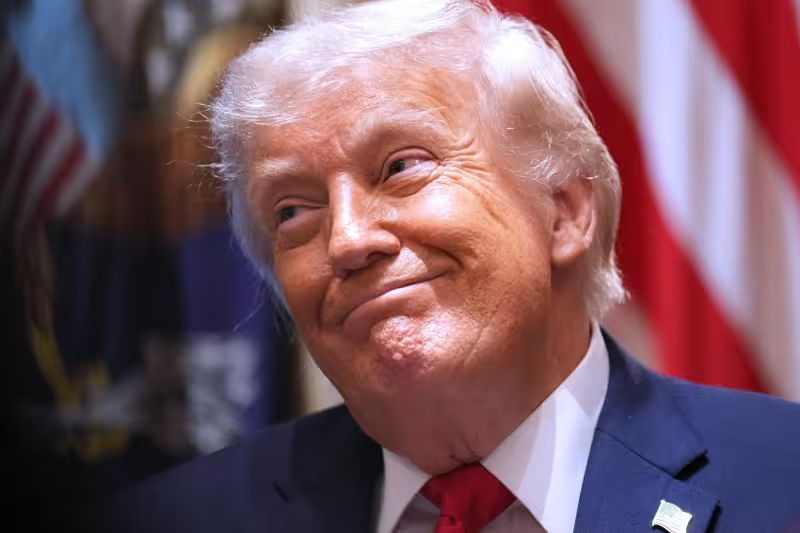
President Donald Trump disclosed earlier this month that his trust is actively trading individual stocks, a rare setup for a sitting president and one that now has his latest financial filing under a sharper microscope. The disclosure form showed more than 3,700 trades in the first three months of this year, amounting to tens of millions of dollars in transactions.
PBS White House correspondent Liz Landers reported that the arrangement is unprecedented in the modern era for a sitting U.S. president. The filing, known as a Form 278, is required of senior government officials by the U.S. Office of Government Ethics within 45 days of any financial trade, and Trump’s report landed earlier this month with a level of trading that immediately raised questions about what his holdings could mean for the decisions he makes in office.

The concern is not just that Trump owns stocks. It is that his actions, policies or even public remarks could end up moving the value of those holdings. That issue came into sharper focus on March 23, when Trump posted on Truth Social that the United States and Iran had been having very good and productive conversations and said he was extending a deadline for a deal by five more days. Oil prices then plunged nearly 11 percent on hopes the war was ending.
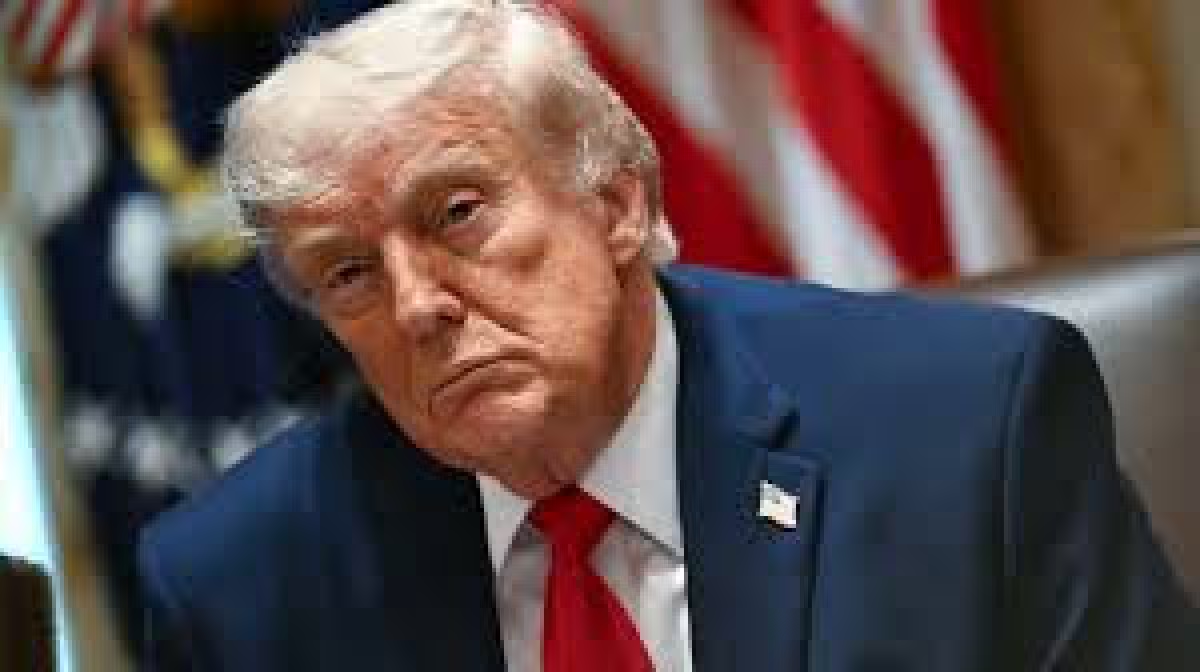
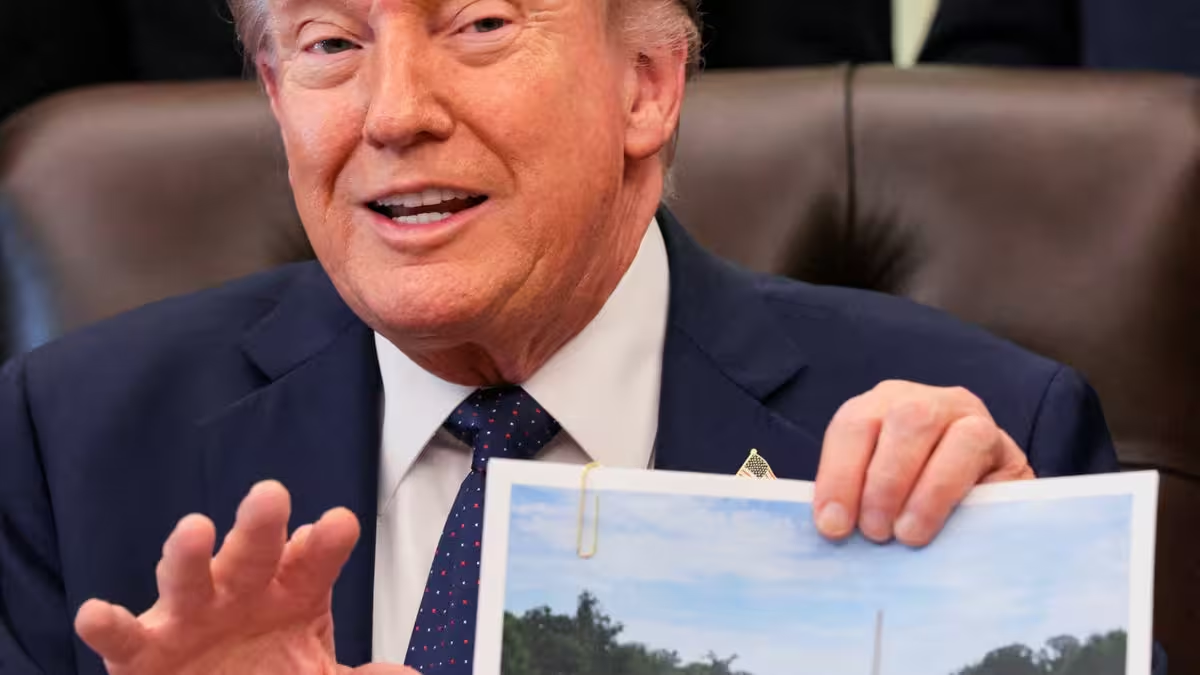
Trump has also publicly pointed to the market during a recent appearance, saying he had turned on the television and wanted to see how the stock market was doing, then noting that the Dow had hit 50000 and the S&P had reached 7000, before adding that the stock market was at the highest point in history. He later told viewers to look at the numbers and look at the stock market, an example of how his public messaging can intersect with the same markets tied to his personal holdings.
The Trump Organization says there is no direct control problem on its side. It said Trump’s investment holdings are kept in fully discretionary accounts run by independent third-party financial institutions, and that those firms have sole and exclusive authority over asset allocation, trading, rebalancing and portfolio management. It said investments are handled through automated model-based portfolios and direct indexing strategies administered entirely by those firms.
That explanation may reduce the appearance of direct involvement, but it does not answer the bigger question hanging over the filing: whether a president can make market-moving comments, shape policy and still be separated enough from his investments to avoid conflicts. Dan Alexander, speaking in the PBS report, said the key question is whether those holdings are influencing the decisions Trump makes, and he noted that answering it would require getting inside Trump’s head.
For now, the disclosure does not show that any specific policy was written to help a trade, or that any trade was made to capitalize on a specific policy. What it does show is an unusually large volume of stock trading by a sitting president at the same moment he is making public statements that can move markets, which is exactly the kind of overlap ethics rules are meant to illuminate.