



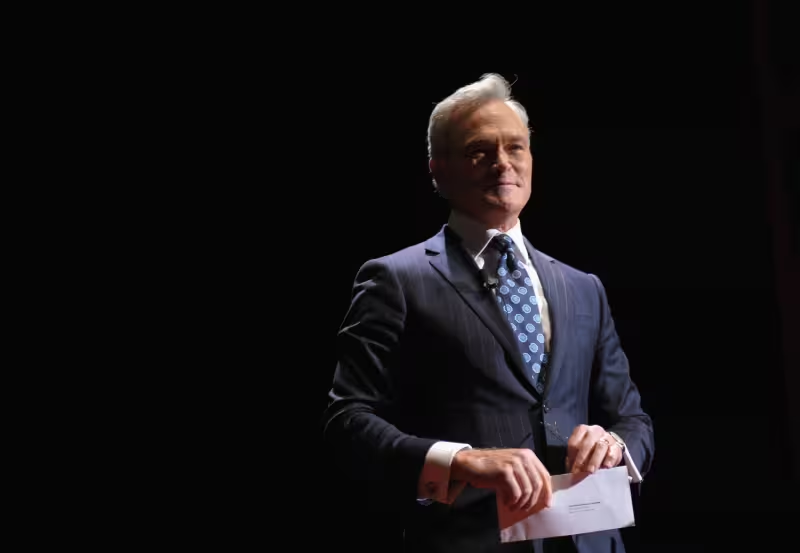
Scott Pelley was fired from 60 Minutes on Tuesday after confronting new executive producer Nick Bilton and pressing Bari Weiss for answers about the recent removal of longtime producers, a move that deepens the upheaval inside CBS News.
Pelley said Weiss and Bilton stonewalled him for ten minutes when he asked about the firings, and Bilton's termination letter later said Pelley had hijacked a staff meeting. Pelley, in turn, called Weiss' public account of the falling out disingenuous.

The dismissal removes one of the most recognizable figures from CBS's flagship news program at a moment when the network is still being reshaped after Skydance Media bought Paramount in an $8 billion deal in August 2025. David Ellison then named Weiss editor-in-chief of CBS News, placing her at the center of a broader overhaul that also follows a $20 billion lawsuit Trump filed against CBS and Paramount in October 2024 and a $16 million settlement reached in July 2025.
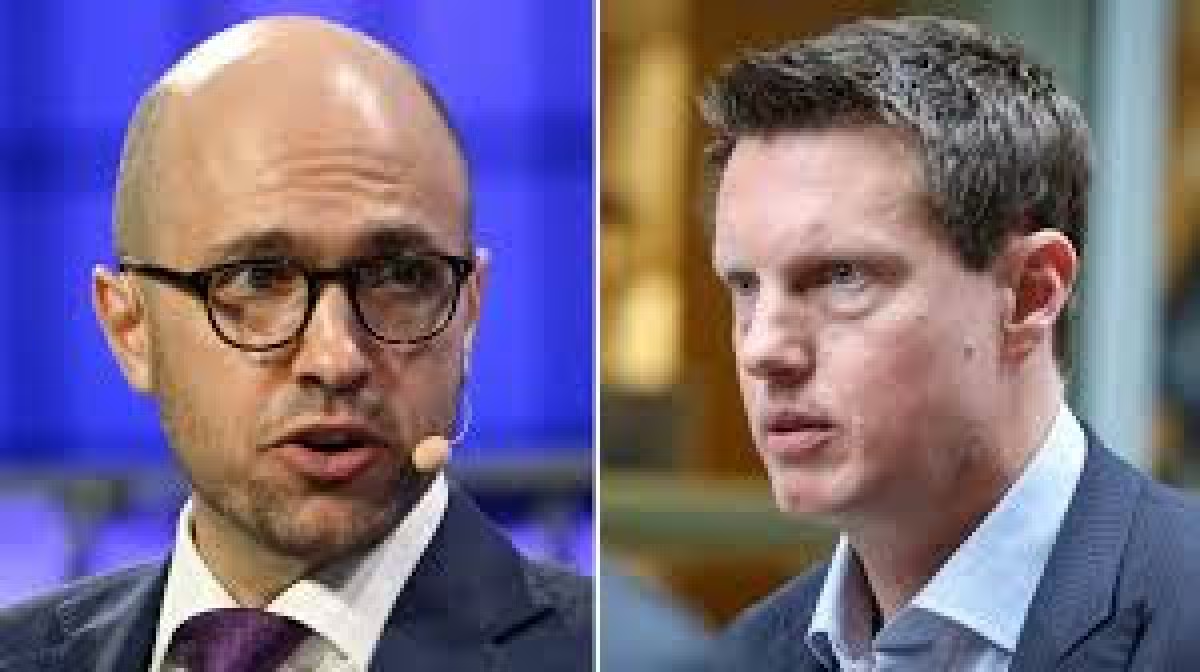
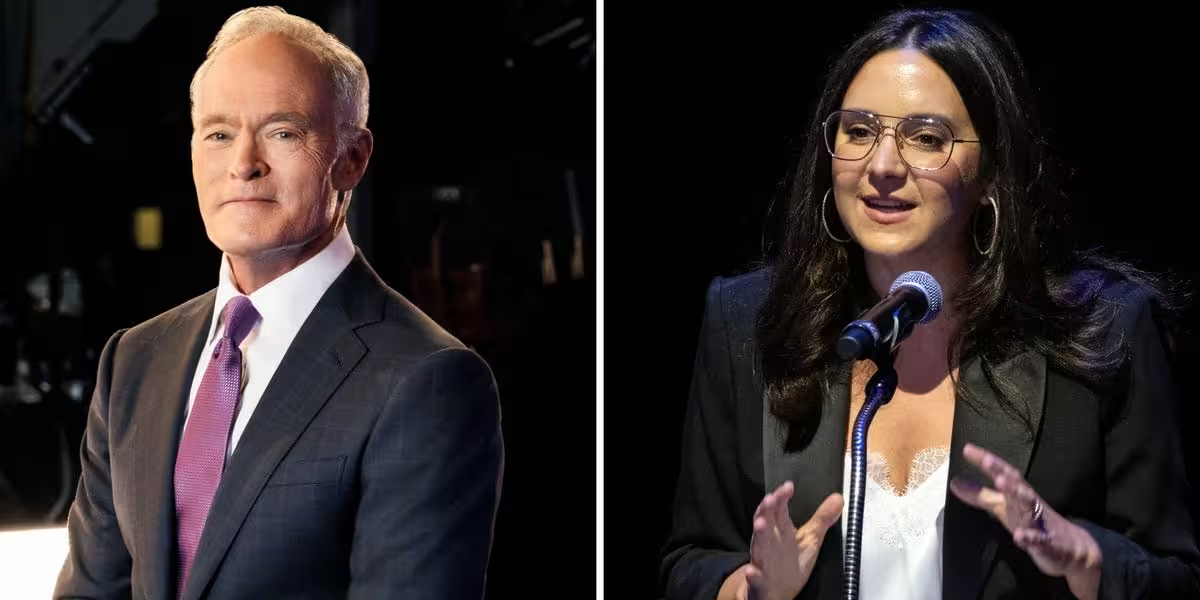
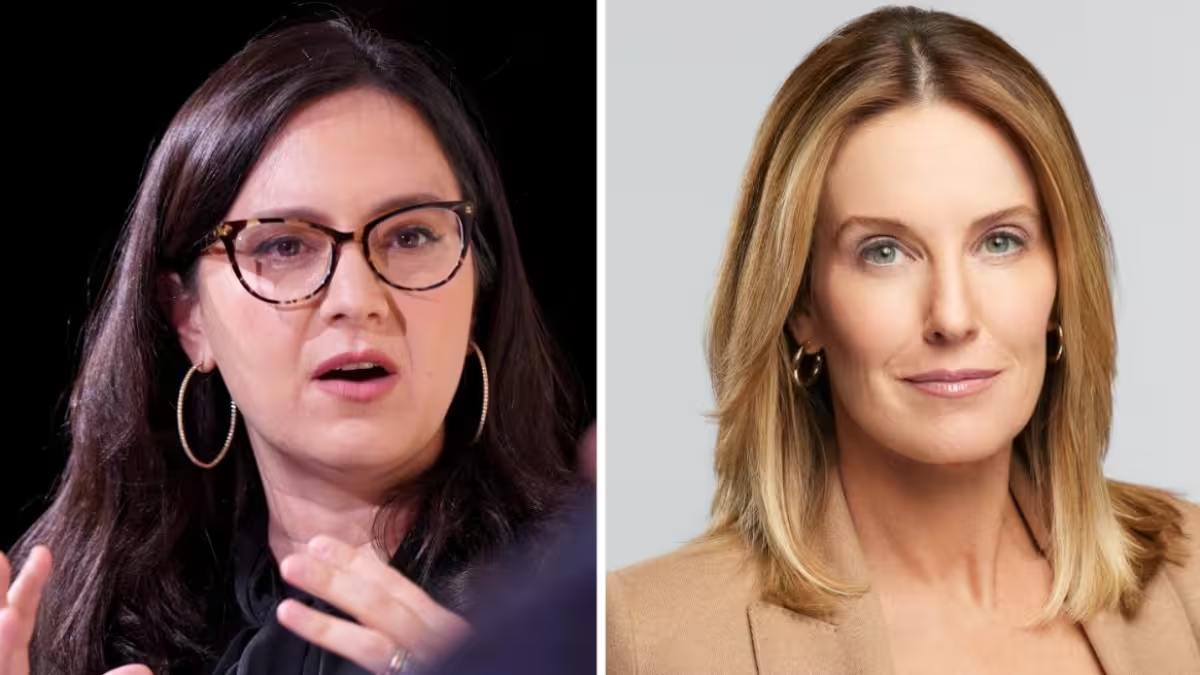
The shake-up has already pushed out several other familiar names. Bill Owens resigned as executive producer of 60 Minutes in April 2025, Anderson Cooper walked away on May 17, and the firings of Tanya Simon, Cecilia Vega, Sharyn Alfonsi and Pelley followed in quick succession. The network's recent internal strains also trace back to Sept. 30, 2024, when Tony Dokoupil interviewed Ta-Nehisi Coates on CBS Mornings about The Message.
Those tensions surfaced again on Oct. 7, 2024, when CBS News executives Wendy McMahon and Adrienne Roark were heard criticizing Dokoupil in a leaked editorial meeting, saying the interview did not reflect “the legacy of neutrality and objectivity that is CBS News.” Dokoupil had said Coates' remarks would not be out of place “in the backpack of an extremist,” a clash that helped define the network's internal fault lines well before the current leadership changes.
What remains unclear is whether CBS News has given any reason beyond the staff-meeting dispute for removing Pelley, a longtime institutional voice whose departure signals that the new leadership is not stopping with back-office changes. If the company intended to restore order, the firings have done the opposite: they have made the restructuring harder to separate from the politics and personnel battles that set it in motion.



