



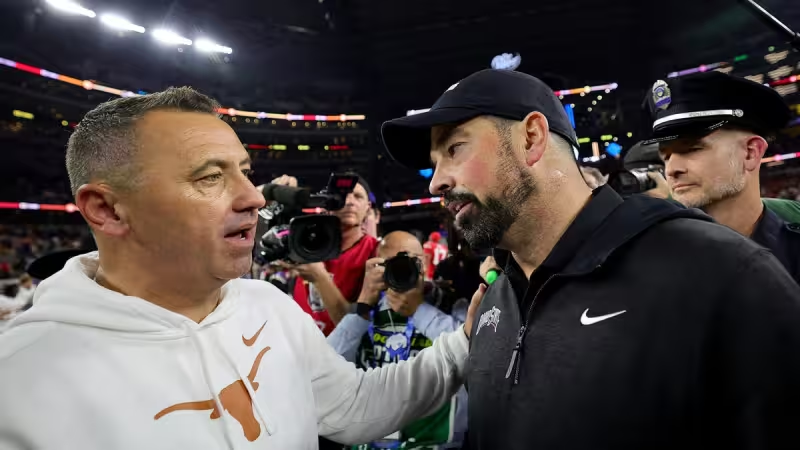
On Thursday, June 4, Texas coach Steve Sarkisian told the Always College Football Podcast with Greg McElroy that Curt Cignetti had done an extraordinary job turning Indiana into a national championship program in two years — and that part of the turnaround came from the Hoosiers’ approach to nonconference scheduling.
Sarkisian pointed to results that put Indiana on the map: an 11-1 regular-season push that earned an at-large berth into the 2024 College Football Playoff, a 3-0 start against FIU, Western Illinois and Charlotte by an average margin of 45.3, and a run that the program later capped with a national title and a 16-0 finish. Indiana’s Playoff loss to Notre Dame, 27-17, was only one chapter in a rapid ascent that forced other programs to notice.

“There’s a lot of ways to find the path to make it,” Sarkisian said, praising Cignetti’s work over the last two years and calling the turnaround something “no guy in our profession” could dismiss. He singled out several elements of the blueprint: the use of sixth‑year seniors, an influx of transfers, a veteran roster construction, the way the team practices and, crucially, the way Indiana’s nonconference slate was handled.
Sarkisian emphasized that Cignetti’s on-field development was paired with an intentional scheduling strategy. He noted that Indiana adjusted its schedule, played many players early in the year and leaned into veteran experience — a mix that, he said, helped the program accelerate wins and continuity.
That move to reshape nonconference opponents was signaled publicly months earlier. At Big Ten Football media days last July, Cignetti said Indiana had altered its nonconference slate to mirror an SEC-style philosophy. The program also canceled previously scheduled home-and-home games with Louisville set for 2024 and 2025 (a decision made in 2023) and pulled out of a 2027/2028 home-and-home with Virginia.
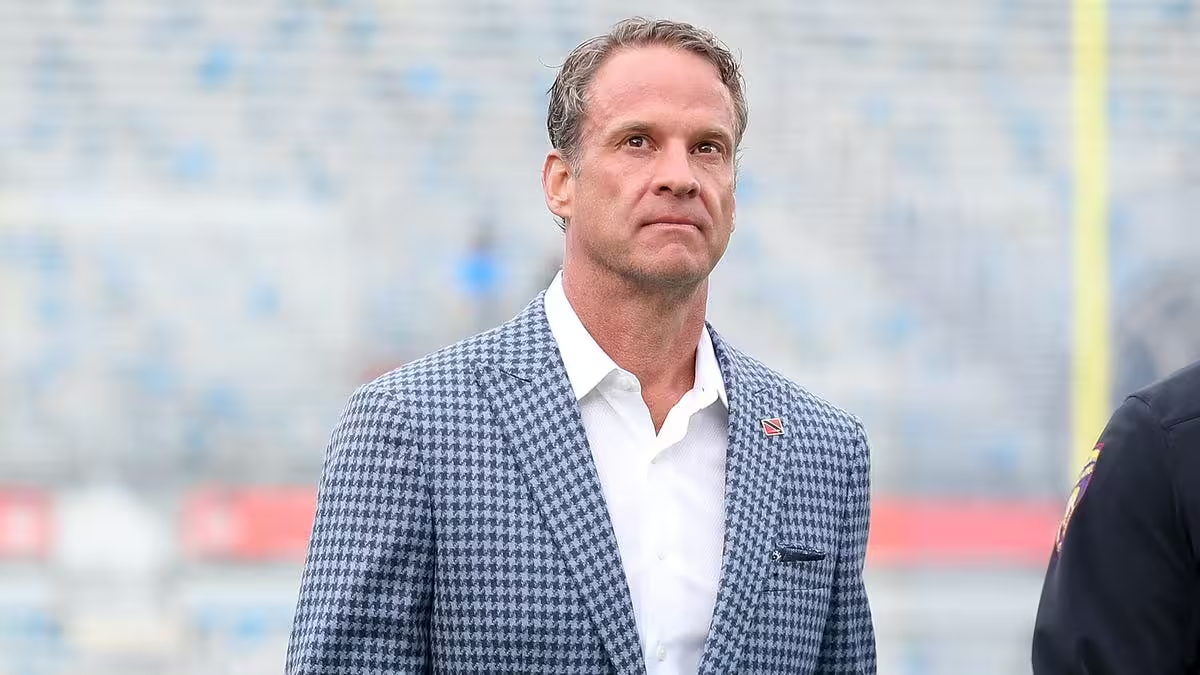
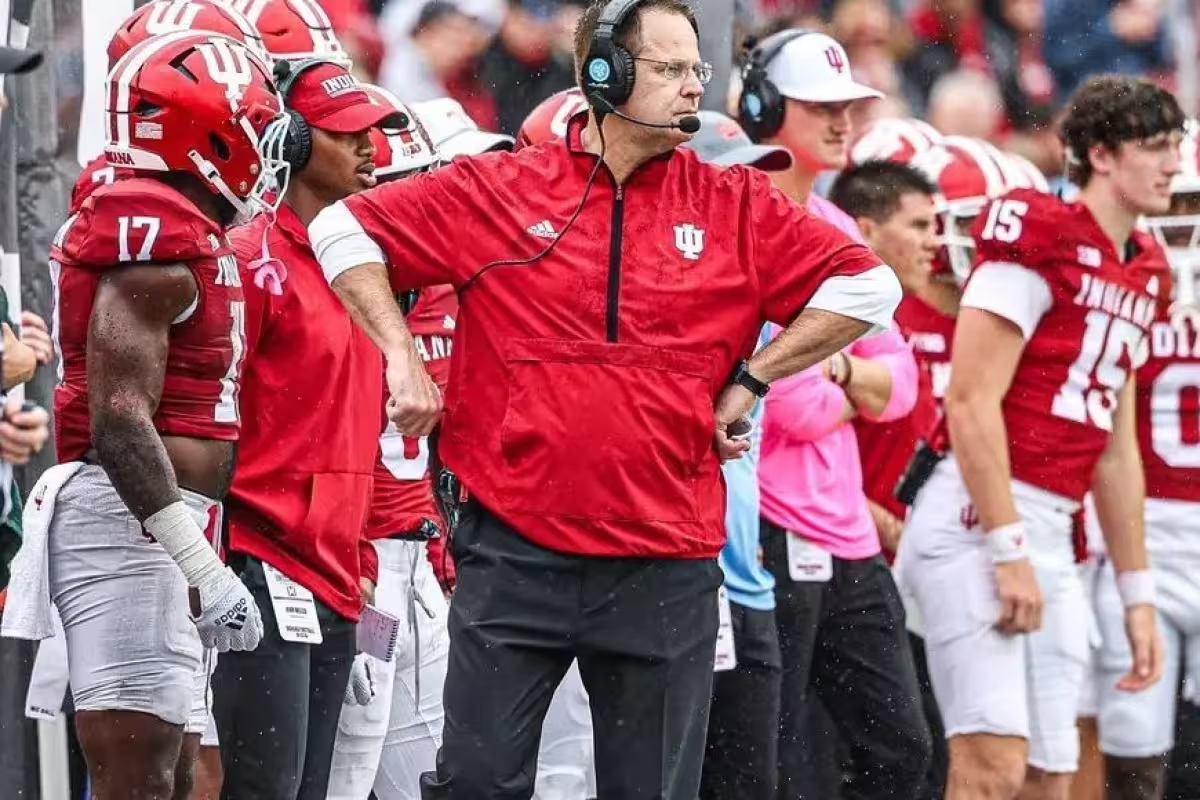
Where Sarkisian’s comments sharpen the conversation is on imitation versus selective adoption. He warned teams can’t cherry-pick parts of what Indiana did — the so-called “Indiana Way” — and expect identical results, and he noted a broader effect: other programs are beginning to tweak their nonconference schedules because they see the immediate value of another win, rather than prioritizing raw strength of schedule.
That observation lands inside a larger, ongoing debate. Conferences and programs are wrestling with whether to schedule tougher nonconference opponents to boost metrics and résumé, or to pursue easier matchups that increase win totals and bowl eligibility. The SEC’s move to a nine-game conference schedule with a mandated Power 4 nonconference game sharpened that tension; at the same time, coaches like Sarkisian are pointing to Indiana as evidence a different path can produce rapid results.
The debate has also affected perception. A recent FilmoGaz roundup highlighted how national rankings have adjusted as Indiana’s profile rose, noting Cbs Sports drops Kirby Smart to No. 2, puts Curt Cignetti at No. 1 ( a signal of how quickly Cignetti’s stock climbed in the eyes of some evaluators.
Still, Sarkisian did not prescribe which exact scheduling moves Texas or any other program should make next. He described Indiana’s blueprint in detail but stopped short of offering a playbook for replication, and he suggested programs face trade-offs when balancing roster construction, transfer strategy and nonconference decisions.
The most consequential unanswered question now is practical: which schools will fully embrace Indiana’s combined roster and scheduling model, rather than borrowing pieces of it as rhetorical cover? Coaches and athletic directors have signaled curiosity; the next concrete test will be the nonconference slates programs file for upcoming seasons — the moment when talk either becomes policy or remains posture.



