



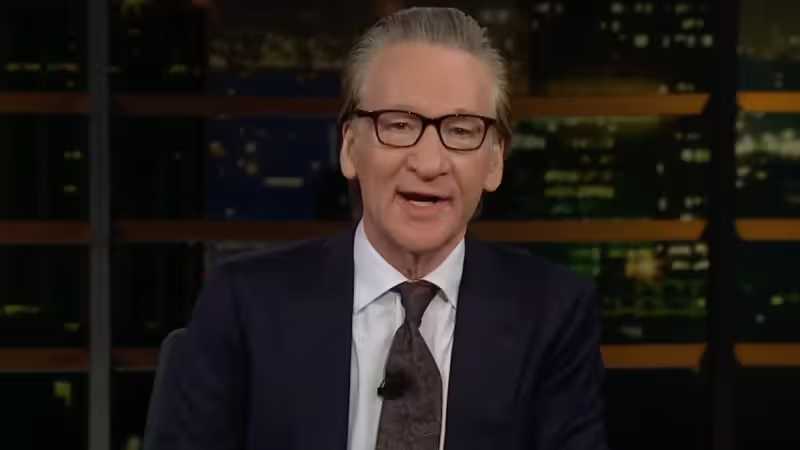
Bill Maher told viewers on Friday that he was "for it" when asked about the recent shakeup at '60 Minutes' and pushed back on senators' warnings that the program and the network had been captured by pro-Trump forces. "When I see actual evidence of that, I’ll be on your side," Maher said, adding bluntly, "I don’t feel like Scott Pelley was a national treasure."
Maher’s comments came days after Scott Pelley was terminated from '60 Minutes' on Tuesday following a clash with the show’s new executive producer, Nick Bilton. In an exit note, Pelley wrote that the network’s new owner was casting him aside apparently to curry favor with the Trump administration; he also accused editor-in-chief Bari Weiss of "murdering" the program.

The senator who raised alarm bells, Chris Murphy, framed the dispute as part of a larger effort by the president to reshape the media landscape. "Trump is using the powers that he has available as president of the United States to install only friendly ownership at the big media companies," Murphy said, arguing the administration was "using regulatory powers to punish people who oppose him." Murphy cautioned that the risk is not just what airwaves carry but what never makes it to air: "Part of what the allegation is, is that they are killing stories that would be embarrassing for the president," he said, adding, "So, it’s hard to know what you’re missing in a censorship environment."
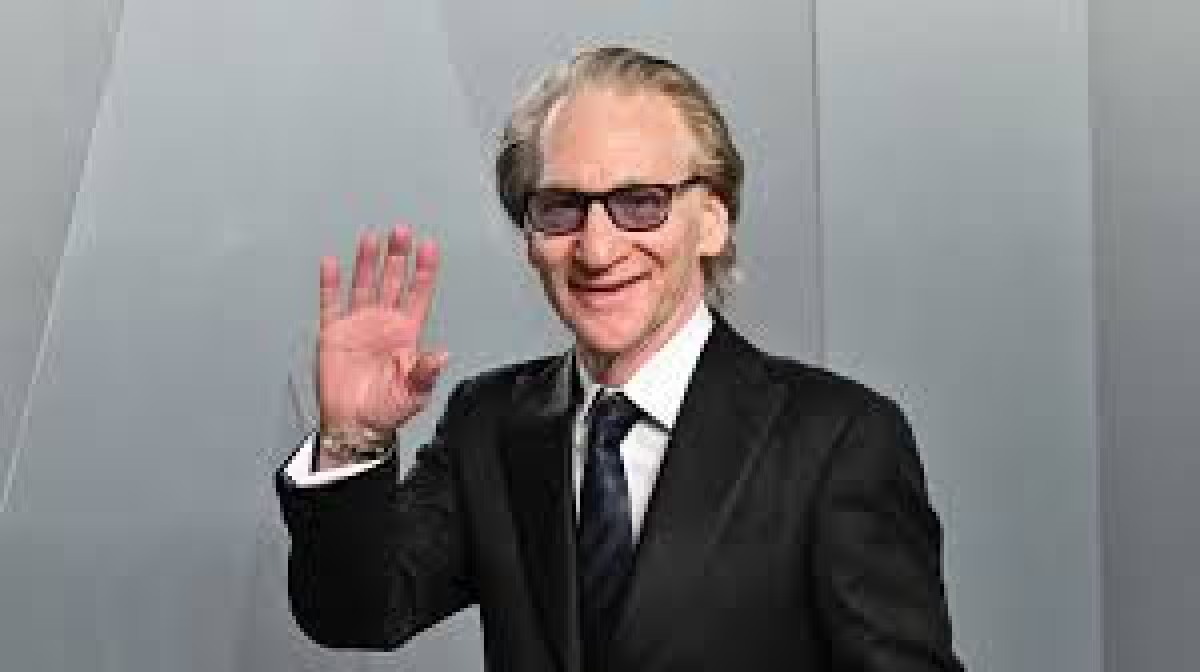
Maher met that case with skepticism rooted in his long familiarity with the show. "I watch ‘60 Minutes’ every week. I have since I was a kid," he said, noting he had seen recent segments still critical of Trump. "That’s a big charge that you just made, that ‘60 Minutes’ itself and CBS itself is now completely MAGA," Maher told his guest. He also quipped that "Also, I just don’t think being a ’60 Minutes’ correspondent is that hard," underscoring his view that the program’s work remains visible and, at least to him, unfinished.
Context for the clash has been building: late May saw the firing of Cecilia Vega, who later said producing teams had been pressured to insert political bias into stories and that reporters had pulled pitches out of fear of internal repercussions. Those allegations feed Murphy’s suspicion that editorial choices may be changing behind the scenes rather than on camera.
The friction between Maher’s demand for concrete examples and Murphy’s warning about suppressed reporting is the story’s clearest fault line. Maher repeatedly said he would side with claims of politicized editing once he saw "actual evidence," while Murphy warned the problem is precisely that such evidence can be invisible to viewers. Maher’s show has addressed other national controversies this season; for related commentary see
The decisive question now is concrete: which specific '60 Minutes' stories, if any, were altered or killed because of political pressure? Until named, verifiable examples surface, Maher’s insistence on proof will blunt claims that the network has become "completely MAGA," and Murphy’s alarm will remain an allegation about what audiences might not be allowed to see. That unresolved gap — the missing list of altered or buried stories — is the next thing both sides will have to produce if the debate is to move beyond accusation and rebuttal.



