




Dan Dakich publicly attacked Emmanuel Acho’s early-game judgment and brought Becky Hammon’s past line about Jalen Brunson’s size back into the spotlight after Brunson’s Game 1 performance in the NBA Finals.
Acho had posted on X on June 4, one quarter into the Finals, saying Brunson was confirming doubts that smaller guards can carry a team to a title and warning that as the stakes rise the game becomes more physical and Brunson’s body looked to be failing him. Dakich seized on that post on air, calling the assessment premature and also pointing to Hammon’s earlier suggestion that Brunson’s size could limit his ability to win at the highest level.

The game itself complicated Acho’s early take. A separate report noted Brunson briefly left after a right-knee hit, came back in the second quarter, and was later sent to the bench when his left ankle was stepped on — yet he still led all scorers with 30 points in the Knicks’ Game 1 road victory over the Spurs. Acho later acknowledged that Brunson displayed remarkable resilience, heart and toughness across the final three quarters.
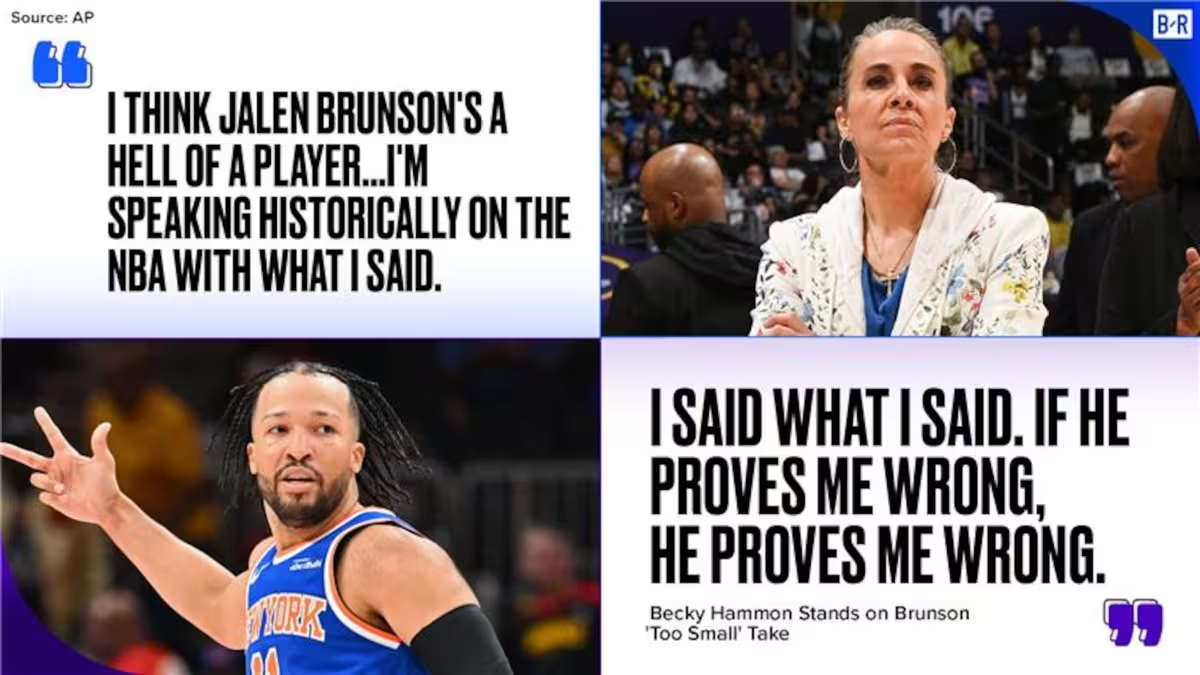

Those performance facts are the weight behind Dakich’s rebuke: an on-court sequence that looked worrisome in real time, followed by a 30-point finish that undercut a one-quarter judgment. The line Dakich resurrected from Hammon — that Brunson is too small to win — gains renewed traction precisely because it is easy to frame around visible contact and temporary exits, even when the player finishes strong.
Context matters. The debate over whether Brunson’s size is a championship handicap has recurred through these playoffs, fed by slow starts and instances where Knicks fans have seen him limp off and return. Supporters point to scoring outputs and leadership during stretches; critics point to physical mismatches as the postseason deepens. Dakich used the immediate postgame moment to argue that commentators who judge after a single quarter risk being wrong, and by name-checking Hammon he pushed the argument back to the broader question of Brunson’s ceiling.
There is a clear contradiction at the center of this exchange: Acho’s blunt, early assessment and Brunson’s eventual status as Game 1’s top scorer. Dakich’s on-air criticism amplified that contradiction and forced the old Hammon line back into public debate without adding new evidence in her favor. Acho’s later admission that Brunson showed toughness softened the original posture but did not erase Dakich’s charge that the first comment was rushed.
The point that remains unresolved and consequential is precise: what exactly did Becky Hammon say about Brunson’s ability to win, and how should that remark be measured against a 30‑point Game 1 that included brief injury scares and decisive stretches? Until the original phrasing is produced or Hammon offers clarification, Dakich’s attack will keep the dispute alive rather than settle it.



