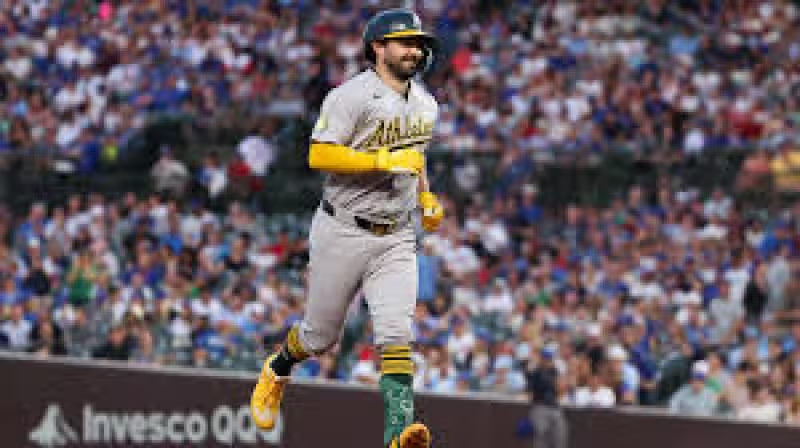
Pete Crow-Armstrong delivered the decisive blow, singling home the tying run in the ninth and giving the Chicago Cubs a 7-6 walk-off victory over the Oakland Athletics at Wrigley Field on June 4, 2026, after the Cubs erased a 6-1 deficit.
The rally came in a wild ninth: Chicago scored four runs on seven hits to finish the comeback, and Crow-Armstrong — who hit a home run earlier — capped the night with the game-winning RBI single. Shota Imanaga had a rough night, allowing four home runs, and the Athletics still left Chicago stunned until the final inning.

The victory snapped a demoralizing stretch for the Cubs. They had been 5-18 in the run up to this game, and a loss would have dropped them into last place in the NL Central by the slimmest of percentage points. The team’s knack for dramatic finishes is not new — six of their first 37 wins this season came in walk-off fashion — but this comeback arrived at a moment when the club needed one most.
Center field was central to the game’s strange arc. Crow-Armstrong made a rare misplay when a fly ball slipped past him and turned into an inside-the-park home run, a play he later called, “the first time it’s happened to me here. Pretty helpless feeling.” He shrugged off the miscue publicly: “But it’s about moving on. There’s not much you can do about that except hope you see it next time.”
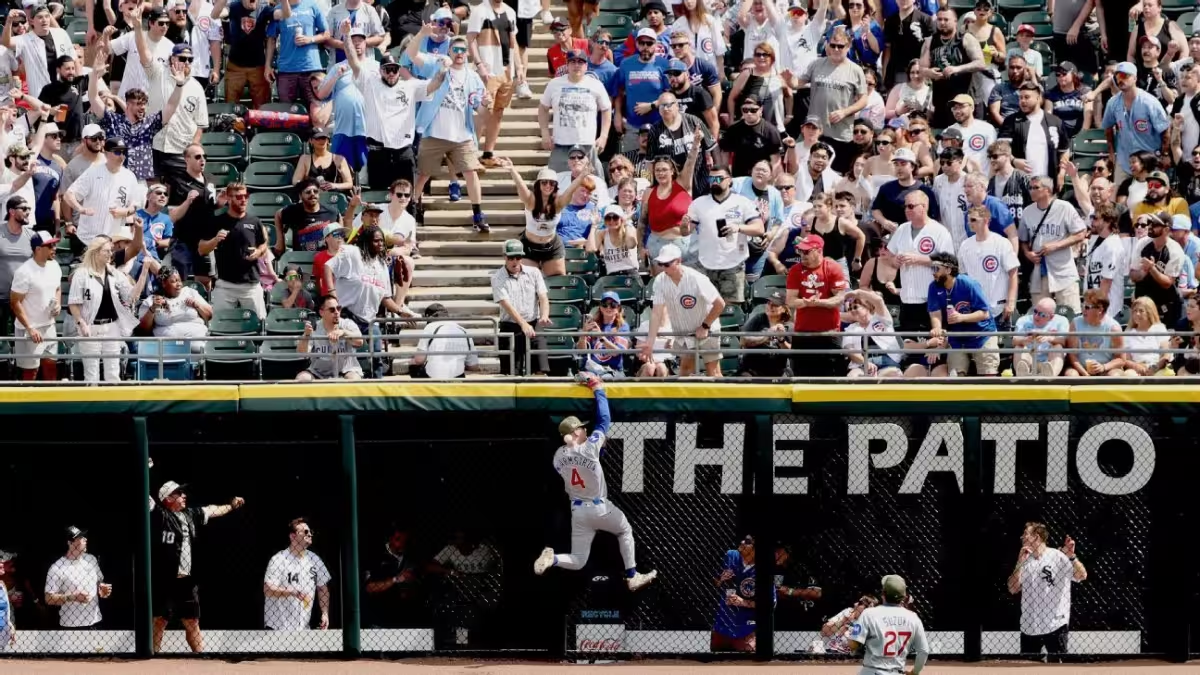
The friction between that error and his offense is the night’s defining contradiction. After hurting the Cubs defensively, Crow-Armstrong returned at the plate with urgency, slugging a home run earlier in the game and then refusing to hide in the ninth. “In the past, I might have dwelled on that, and that always ends up affecting how you go about the rest of your day. People having my back, me not hiding from the next at-bat, I’m growing up a little bit and proud of that,” he said, later adding, “Whenever you get to run and jump around like little kids, it’s always a blast.”
Dansby Swanson framed the win as a corrective: “This is who we are,” he said, and expanded on that, noting the club’s recent identity drift—“For the last three weeks, we’ve not been that. So for everyone to get [to see], ‘Hey, this is what we’ve been talking about, this is what we’ve been working toward, this is what this group is capable of,’ to have that show up in so many different ways, from so many different guys in the lineup … that’s what this group is about.”
Statistically, the game will be filed under both promise and warning. The Cubs’ nine-run, late-inning outburst proved the offense can still manufacture clutch hits; Shota Imanaga’s four home runs allowed underscored why the staff has to tighten up. The victory also replicated an earlier season rhythm: the club’s last walk-off had come on May 6, a stretch that, two days later, had the Cubs 15 games north of even during a 10-game winning streak. That memory cuts two ways — proof the team can roar and a reminder how quickly momentum can reverse.
This win will buy the Cubs breathing room and a boost to morale, but it does not answer the central question facing the team: can this performance be replicated enough to wash out a 5-18 slide? The comeback proved the roster still has depth and fight, and Crow-Armstrong’s night — error and heroics both — crystallized the club’s fragile pulse. The result mattered immediately; whether it marks the start of a turnaround remains the issue Chicago must resolve next.