




Ollie Robinson’s two wickets in four balls sent England within reach of a win at Lord’s on Saturday, with New Zealand stranded on 55-5 chasing 254 when rain and poor light stopped play after fewer than 10 overs.
Robinson dismissed Rachin Ravindra and Daryl Mitchell in a decisive burst on day three, a dramatic addition to a match in which he also finished with first-innings figures of 5-39; England had earlier restricted New Zealand to 113 in the first innings. England’s second innings produced 226 — Emilio Gay top-scored with 57 — and set the visitors the highest fourth-innings target ever offered at Lord’s: 254.

The immediate weight of the result is stark: New Zealand still need 199 runs with only five wickets remaining. At 55-5, Devon Conway was 19 not out and Tom Blundell two not out when play was halted. The visitors had been in trouble already at 36-3 at the close of Friday after Gus Atkinson took two wickets and Josh Tongue dismissed Kane Williamson.
Context sharpens the moment. This was the 150th Test at Lord’s and the pitch had favoured fast bowlers throughout, a factor that amplified Robinson’s impact; he had been absent from England’s Test setup for more than two years before returning to post his match-turning 5-39. England are also playing this match immediately after a heavy 4-1 Ashes defeat, so a victory here would quickly change the tone around their pace attack.

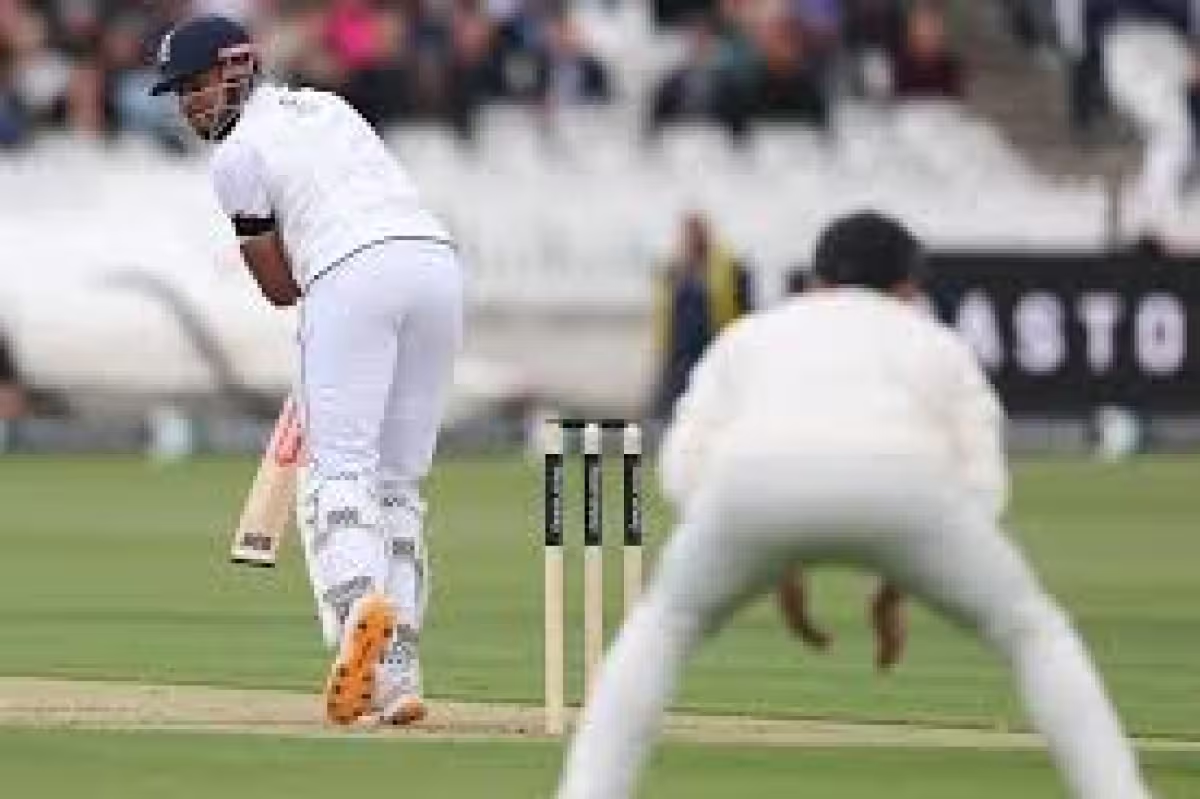
The match carries historical friction. The target of 254 is the highest ever set at Lord’s, and only five times have New Zealand successfully chased a greater total in Test cricket. Likewise, only four teams have scored more in the fourth innings to win at Lord’s, underlining how unusual — and difficult — the task facing the tourists would be if play resumes normally.
Play on Saturday was curtailed to fewer than 10 overs because of rain and poor light, the interruption that shaped the day as much as Robinson’s wickets did. That stoppage robbed England of time to press for the remaining five wickets and denied New Zealand a longer period to rebuild through Conway and Blundell; instead both batsmen were left stranded at the crease when umpires called play off.
The day’s decisive sequence — Robinson’s immediate double — was born of that pressure. With New Zealand already wobbling after being held to 113, England’s quicks repeatedly found movement and bounce; Robinson’s double-strike converted those conditions into the kind of breakthrough that typically finishes low-scoring Tests at a ground dominated by seam bowling.
What happens next is the single question that now decides the match: can England take five wickets when play resumes on a pitch that has favoured their quicks, or will New Zealand steady themselves and chase down the highest target set at Lord’s? The interruptions mean the final sessions will carry outsized importance, with a small window to convert control into a result or for the tourists to pull off a rare successful fourth-innings chase.



