



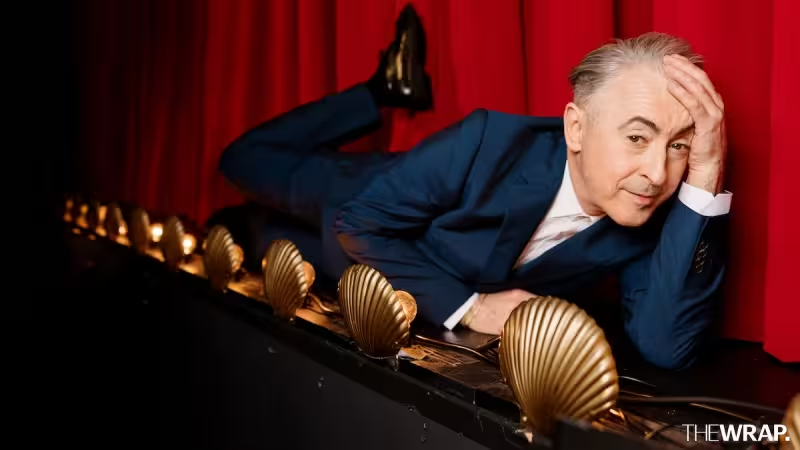
Alan Cumming was between stops on a tour of his musical The High Life when he laughed at how quickly contestants on the traitors stop behaving like contestants. In an April interview, Cumming said he watches players shed ordinary logic and sink into a group mentality that treats being a Traitor as a kind of moral stain.
"There’s a lot of poker face required in this job," he said, then admitted the moments when contestants lose control leave him stunned: "I just want to go, ‘What the f–k? Are you serious?’" The observation is blunt, and it explains why producers have leaned into the show’s extravagance as the U.S. version moves from Peacock to NBC and Cumming prepares to tape two seasons.

The weight of his point is visible in the numbers and the spectacle. The Traitors became a reality sensation here, even knocking RuPaul’s Drag Race off its favored spot with Emmy voters, and Season 4 ended with Love Island USA alum Rob Rausch convincing his peers he was faithful and walking away with more than $220,000. That mix of big money, betrayals and nightly round‑table banishments is what turns votes into television moments.
Cumming ties the craziness back to the format. Faithful players compete in challenges for a shared pot while hidden Traitors can "murder" others and, if they survive to the finale, steal the winnings. Faithful hold nightly round tables meant to root out the Traitors — a ritual that, Cumming said, often melts into herd behavior. "I hear people saying, ‘I could never be a Traitor!’ I go, ‘Yes, you could if I tapped you on the shoulder,’" he said, drawing a straight line between the game’s rules and the choices contestants make.
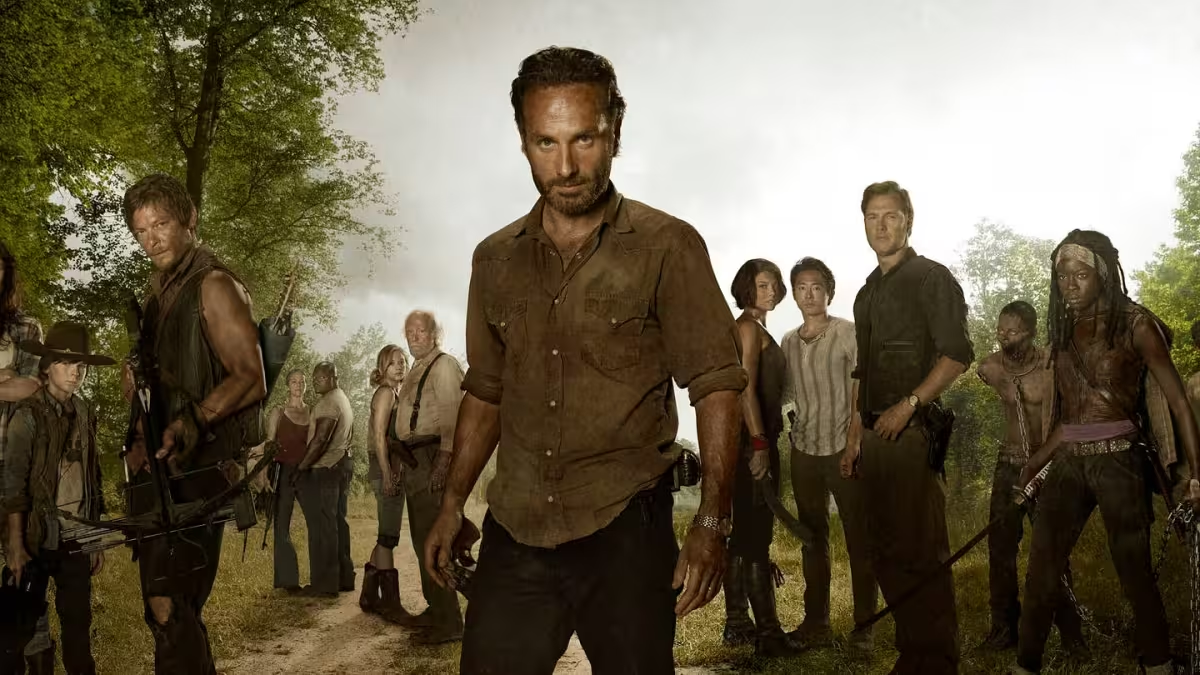
He also stressed the show’s look and tone as ingredients: the fashion, the grandness, the almost operatic staging. Cumming said he and producers talked about James Bond villains when shaping the U.S. version, and that the show’s over‑the‑top immersiveness amplifies small decisions into dramatic ruptures. "It’s psychological torture," he said, and the audience response suggests viewers are drawn to that particular kind of theatrical pressure.
The comment fits Cumming’s broader career moves. Taking a break from The High Life — a musical spun from a 1990s sitcom he wrote about a lousy Scottish airline — he plans another month on the road, a film, a new musical and a play about Liberace, plus a revival of My Fair Lady at the Pitlochry Festival Theatre, where he serves as artistic director. "I think that eclecticism is what keeps me interesting and interested," he said, connecting his theatrical instincts to the gilded, sometimes cartoonish production of the game show.
There is tension in Cumming’s verdict: the drama viewers call real is largely built. Contestants are mostly drawn from other reality franchises; five Real Housewives veterans appeared on the most recent season, demonstrating how preexisting personas are dropped into an engineered environment and then watchable chaos follows. Cumming sees the players as both vulnerable and predictable — they forget it’s a game, then punish one another as if a betrayal were an existential crime.
The next act is straightforward and unresolved at the same time. Cumming is scheduled to tape two seasons of The Traitors for NBC, a network move that signals confidence the formula still sells. What remains open — and the single practical question his interview leaves hanging — is which competitors will populate those taped seasons. Cumming’s answer about the phenomenon, though, is not a shrug: the irrational moments are a product of the format and the staging, and for him they are the point. He will be back to watch the pack fall apart, and to keep a straight face while it does.



