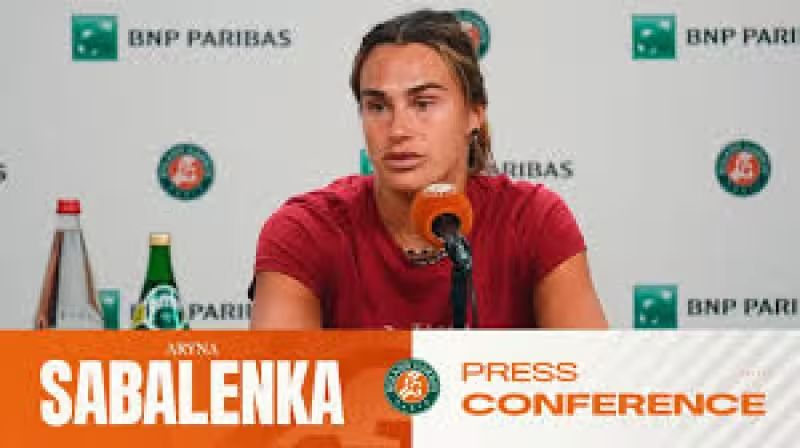
Diana Shnaider eliminated world No. 1 Aryna Sabalenka from the French Open on Wednesday, beating Sabalenka 3-6, 7-5, 6-0 to end the top seed’s run in the quarterfinals.
Shnaider closed the match by winning the final 10 games, turning a match that began with Sabalenka taking the first set into a lopsided finish. The Russian’s victory was her second top-10 win in 16 attempts and left Sabalenka unable to find a response as the match slipped away in the second set and collapsed in the third.

The decisive metric was streaks: after losing the opener, Shnaider rallied to take a tight second set 7-5 and then erased any comeback chance with a 6-0 final set. That run of 10 straight games underlined how quickly momentum can shift at this stage of a major and how fragile a lead can become when a challenger raises her level.
Wednesday’s result compounds a recurring pattern in Sabalenka’s career. She is the world No. 1 and has produced dominant results on faster surfaces — a 21-10 record in career finals on hard courts and marquee titles including Indian Wells and Miami earlier this year — yet her record on slower or slicker surfaces lags. She has three clay-court titles, all in Madrid, but a 3-8 record in clay finals overall and a 0-2 record in grass finals. She has played the French Open main draw nine times and lost the 2024 final on the same court and in similar conditions; she has appeared at Wimbledon six times without reaching its final, with a best result of a semifinal in 2021.
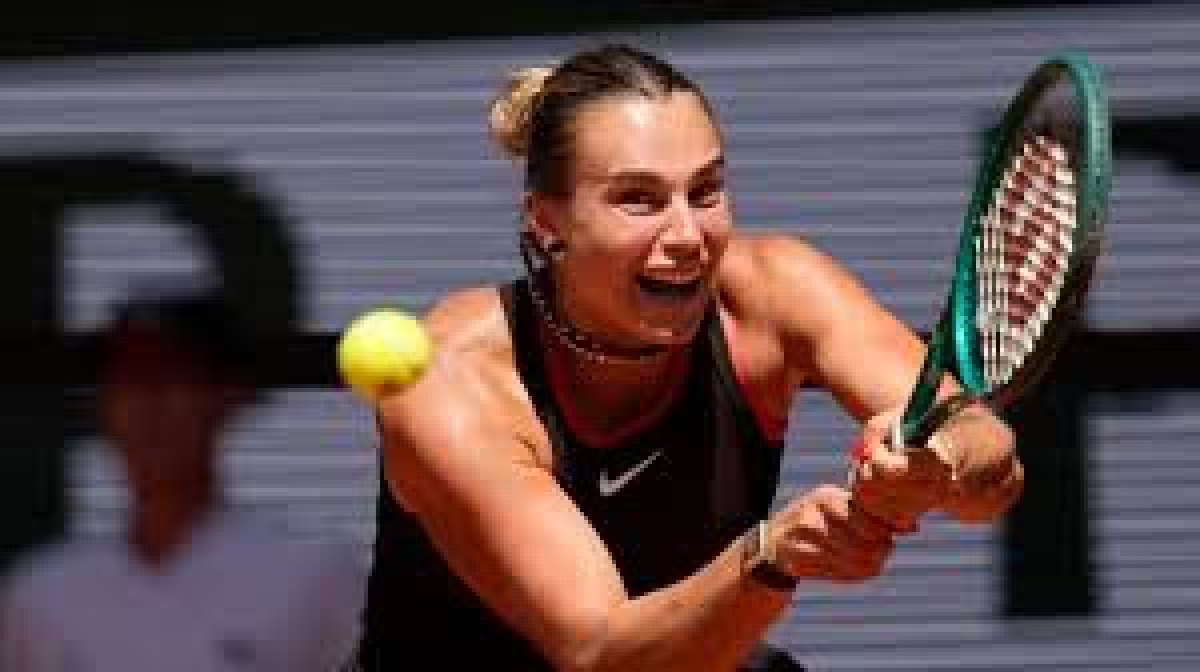
That contrast — clear success on hard courts and repeated shortfalls on clay and grass — is the central consequence of the Paris exit. Sabalenka’s résumé shows she can reach and win major finals: she reached the Australian Open final this year, where she lost to Elena Rybakina, and in 2025 she reached the finals of the Australian Open, French Open and U.S. Open and won the U.S. Open. Still, those achievements sit beside missed chances on the red dirt and on the lawns, and Wednesday’s loss deepens the mismatch between ranking and surface-specific Grand Slam outcomes.
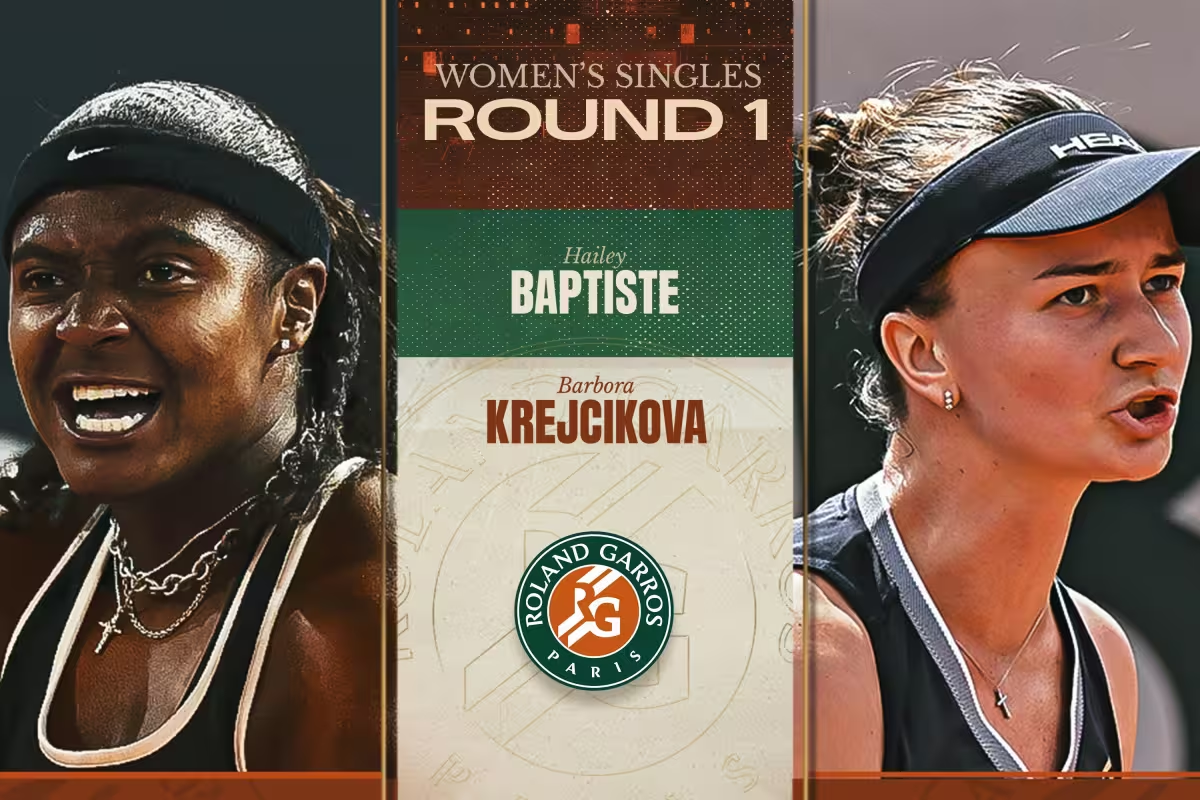
Surface-specific details matter here. Madrid’s conditions have yielded Sabalenka three clay titles, but Madrid differs from Roland Garros in ball bounce, altitude and court speed; success in one clay event has not consistently translated to the Paris test. Earlier this season she also had high-profile defeats in clay lead-ups: she lost to Hailey Baptiste in the Madrid Open quarterfinals despite holding six match points and fell in the third round of the Italian Open to Sorana Cîrstea. Those results show the same pattern resurfacing in different forms.
There are personal stakes, too. Sabalenka is 28 years old and has said she is interested in starting a family with her fiancé, Georgios Frangulis. That detail sits alongside a professional timeline that now requires choices: whether to alter preparation and scheduling with an eye toward clay and grass, or to maintain a path that continues to favor hard-court dominance. The facts do not record any decision yet.
For now, the clearest immediate consequence is simple: Sabalenka’s run at Roland Garros is over. What the loss changes next is the central unresolved question for her career — not whether she can win at the highest level, which she has proved she can on hard courts, but whether she will ever convert that standing into Grand Slam titles on clay or grass. Wednesday’s result did not answer that question; it sharpened it.