



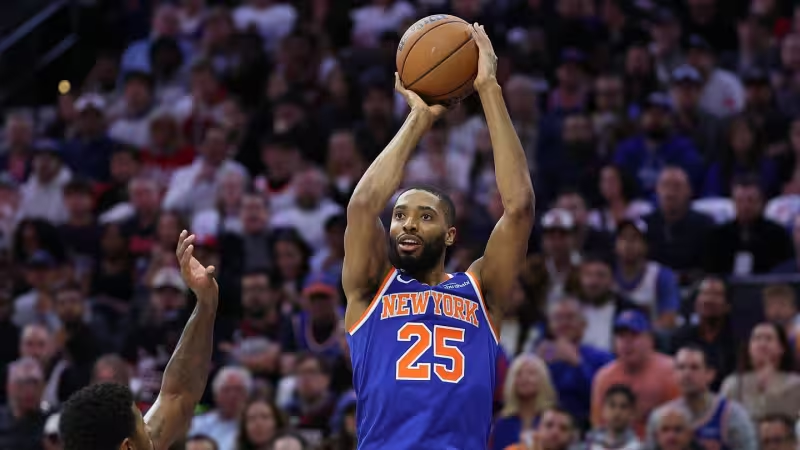
“That grit,” Tyneeha Rivers says, naming the trait she sees in her son and first learned from her own mother, Antonia Tucker. Rivers’ line — short, plain and repeated — is the image she offers as Mikal Bridges prepares to take the floor Wednesday in Game 1 of the NBA Finals against the Spurs.
Bridges arrives at the Finals in his eighth NBA season and in his second year with the New York Knicks. It will be his second Finals appearance, five years after his first, and a milestone that traces back to two national championships at Villanova and a childhood shaped as much by scarcity as by resolve.

Rivers’ story is small and stubborn: raised in West Philadelphia by Tucker, who brought up three children alone, Rivers was the first in her immediate family to go to college when she enrolled at Indiana University of Pennsylvania in the mid-1990s. She gave birth to Bridges in 1996 at 19, then returned home to find work and a way forward. Hired in the late 1990s to work in Vanguard’s mailroom, she began business courses at Cabrini College and, over the next 29 years, earned both a bachelor’s and a master’s degree while raising her son.
They moved between neighborhoods — a period in Overbrook, then a move to Devon in Chester County. Jack Bridges, Mikal’s father, stayed involved by phone and on occasion at games and McDonald’s visits in Conshohocken. Rivers took care of her younger brothers while her mother worked and, as she says of that upbringing, she recognized “that I was able to see in my mom” the same determination she would teach her son.
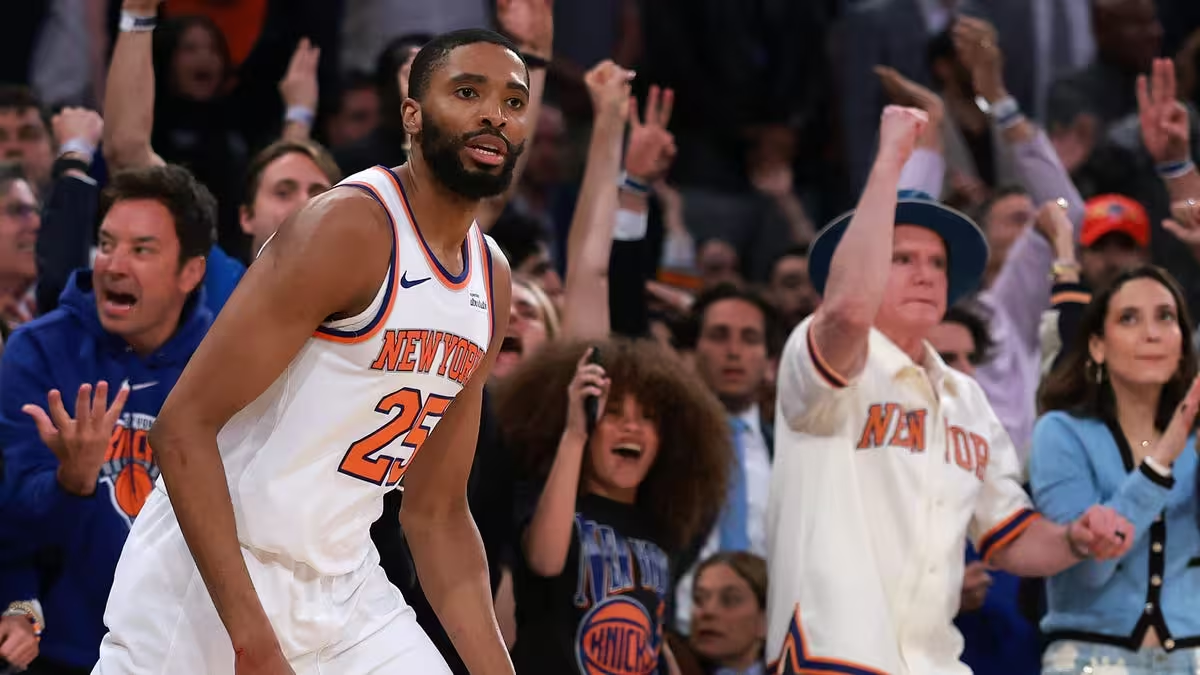
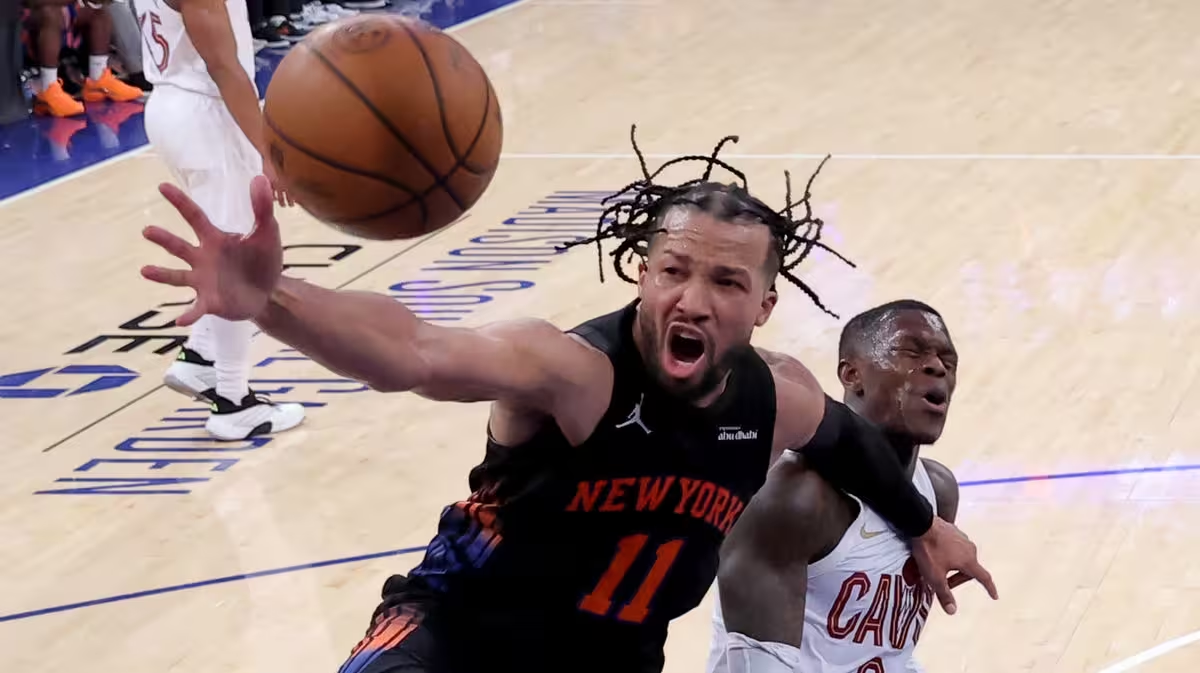

The stakes for Wednesday are plain: Bridges will try to help the Knicks win Game 1, with Game 2 scheduled for Friday night in Texas. Numbers underline how much the moment matters to New York — a player in his eighth season, now settled into a rotation role in his second year with the club, and returning to the Finals after a half-decade absence.
But there is a friction beneath the milestone. Bridges has been both praised for his two Villanova titles and criticized during stretches for uneven shooting and scoring. Fans have, at points, questioned whether he fits the Knicks’ long-term plan after the club paid significant assets to acquire him. Those doubts have not been lost in the locker room: teammates have made a point of backing him publicly, with Karl-Anthony Towns saying, “We know the value he brings to our team” and adding that “all the chatter outside of that locker room doesn’t mean anything to us.” Towns insisted that talk “shouldn’t mean anything to him,” that it is teammates’ job to “continue to uplift him, keep it positive and also remind him how great he is.”
Stat lines illustrate the unevenness that fed the debate — periods of efficient offense and a 37.1% three-point mark at times, and other stretches when shooting dipped (figures have shown shooting in the mid-30s overall and three-point rates as low as the mid-20s). Those swings fed impatience among some fans when the Knicks invested in him; they also frame the question heading into the Finals: can Bridges deliver consistent two-way impact on the league’s biggest stage?
Rivers answers that question with the only kind of certainty memory allows. She remembers nights without dinner and the rent slipping out of reach. She remembers holding the household together while her mother worked. Bridges himself has called those years formative — telling a reporter in 2018 that he could not imagine how his mother managed and that he was grateful for everything she did.
So Wednesday is not just another playoff tip. It is an intersection of a son’s professional peak and a mother’s three-decade effort to finish what she started. The immediate next chapter is simple and public: Game 1 in New York on Wednesday, Game 2 in Texas on Friday. The sharper question — the one Rivers’ life suggests matters most — is whether the steadiness she instilled will show up under Finals pressure and quiet the old chatter for good.



