



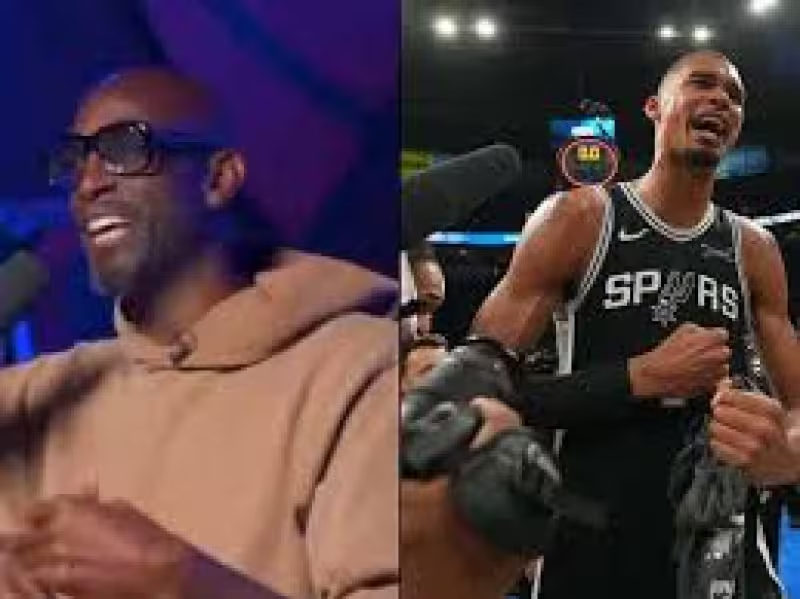
Victor Wembanyama sat on the San Antonio Spurs bench visibly emotional as the team closed out a playoff victory over the Portland Trail Blazers, and after the game he told a French reporter, "Personally, I refuse to carry the burden of having to hide my emotions."
The 7-foot-4 center is in his third season and has already become one of the NBA’s biggest stars; earlier in his career he cried after leading the Spurs to the NBA Finals. That history makes his decision to show feeling in a big postseason moment more than a viral image — it is a deliberate stance about how he wants to exist in the game.

Brad Stulberg, a University of Michigan professor and author of The Way of Excellence, framed Wembanyama’s choice as a performance issue. Stulberg called the idea that caring deeply can be mistaken for weakness an "epidemic of nonchalance," and warned that hiding emotion can act as a "built-in handicap."
Stulberg went further on the mechanics: "So many athletes and people in general spend so much time and energy on putting up a facade of how they think they should act or how they think other people are going to perceive them." He added, "And that’s just wasted time and energy that could be used for competing. Give yourself permission to really lay it on the line. I think so many even elite athletes are self-handicapped in this way."
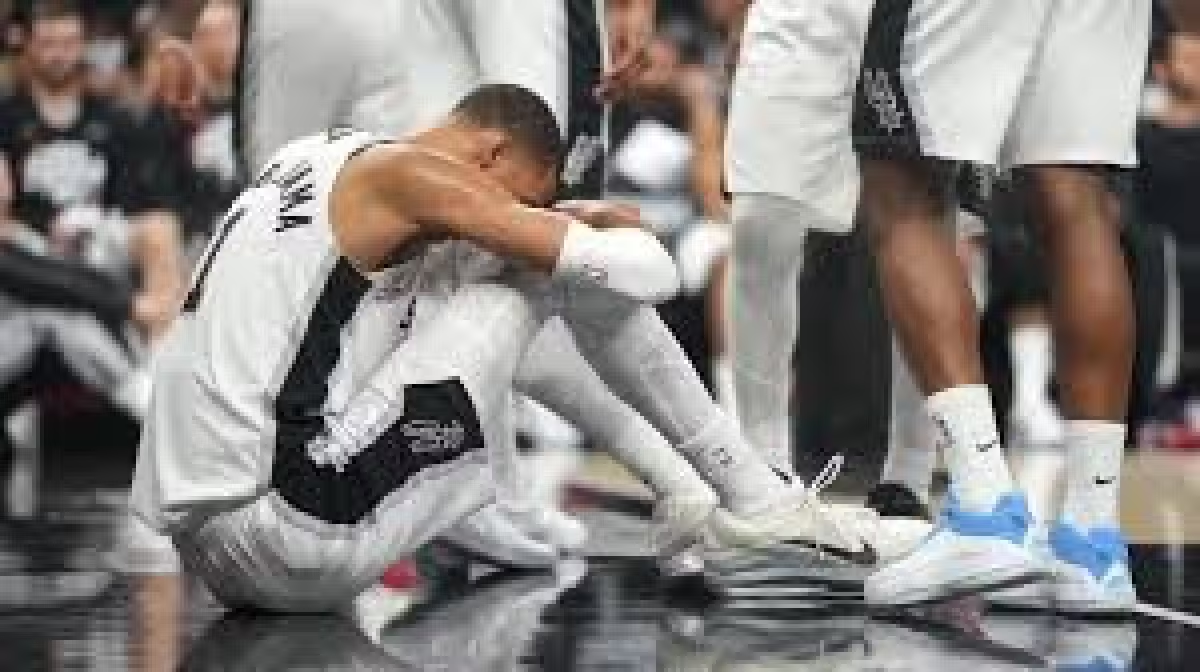
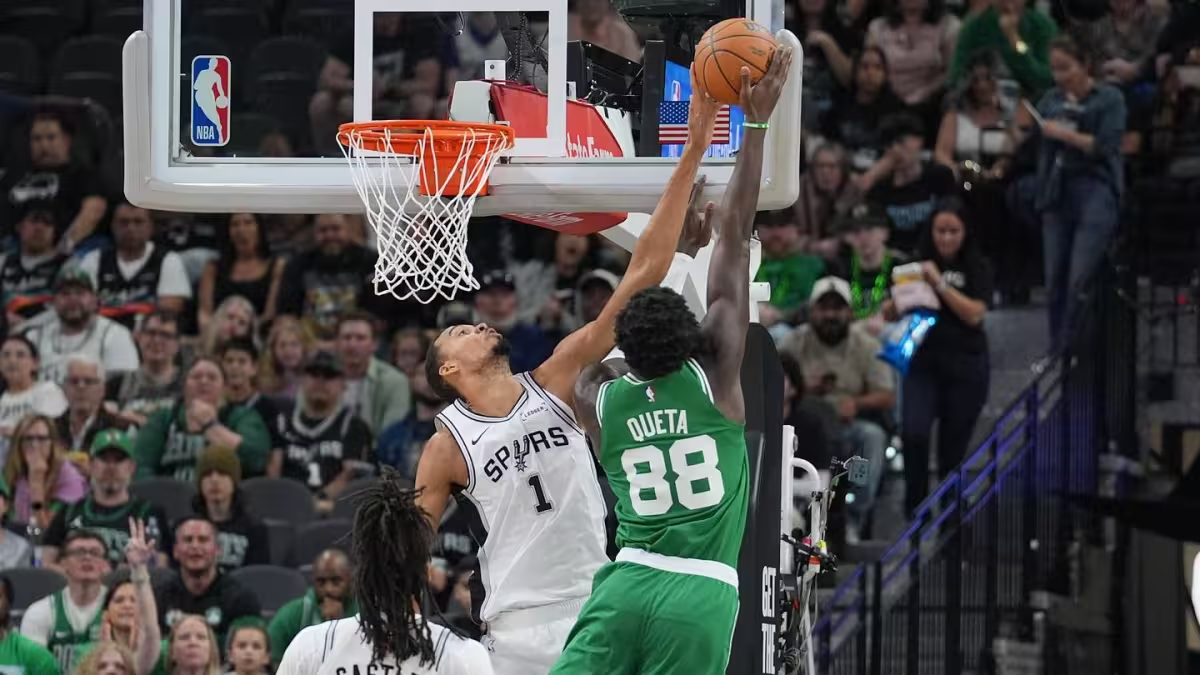
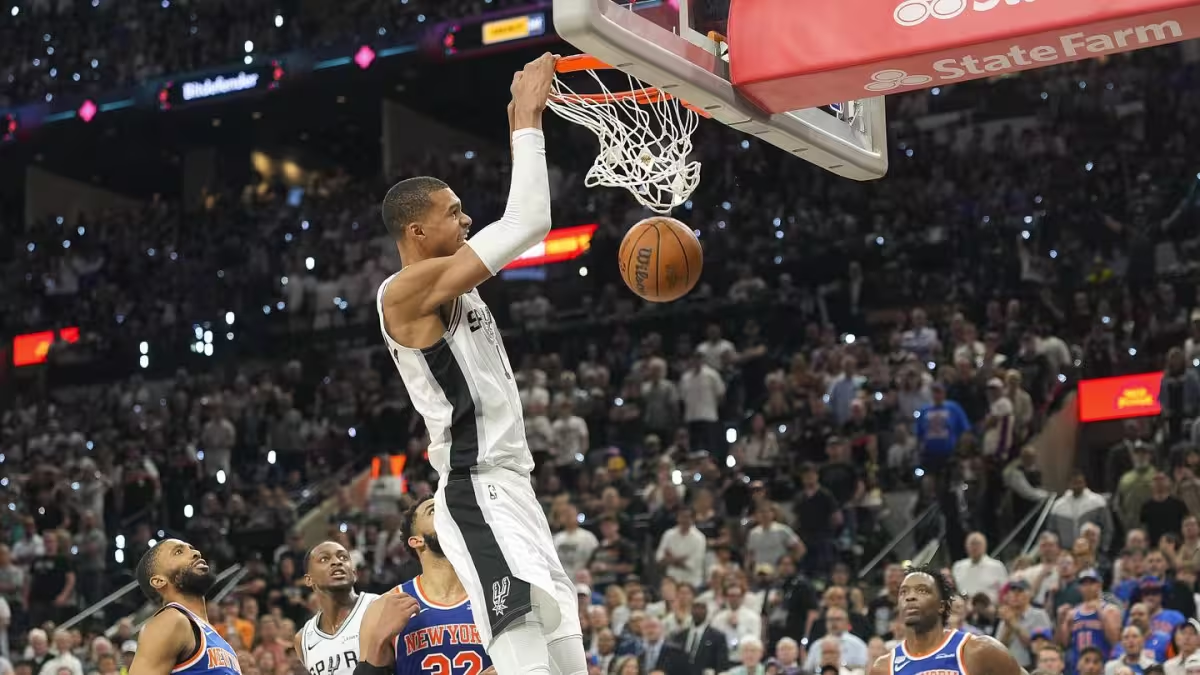
Those are not abstract prescriptions. Stulberg, who researches and teaches human performance at the University of Michigan School of Public Health, said great performers often develop psychological flexibility — "It’s the ability a lot of elite performers have," he noted — the capacity to bring emotion into performance when it helps and to step back from it when it does not.
That balance is the point of friction in Wembanyama’s public declaration. Openly caring can energize focus, sharpen competitiveness and bind teammates; visible emotion can also become a distraction or a vulnerability opponents exploit in the most pressured moments. Wembanyama’s refusal to mask feeling rejects the old script that equates toughness with stoicism, but he has also signaled he is still learning when an emotion helps and when it starts to work against him.
The moment sits inside a wider league conversation about authenticity and optics. Public rows over broadcast and league leadership have sharpened attention to how stars present themselves — a separate episode involving Adam Silver and Charles Barkley fed that debate and underlines how much scrutiny accompanies every public choice by elite players (see Adam Silver faces Charles Barkley's ire over MVP leak and TV chaos:
For Wembanyama, the declaration is both personal and practical. Refusing to hide feelings reduces the cognitive load of constant self-monitoring; as Stulberg warned, putting energy into a performance facade is a kind of wasted resource. But the Spurs and their 7-foot-4 centerpiece now face the practical test of converting authenticity into reliability under playoff pressure.
Can Wembanyama turn visible feeling into a repeatable competitive advantage in the high-stakes crucible of the postseason, or will some playoff moments demand the restraint he says he refuses to carry? That question will determine whether his openness becomes a sustained edge or a lesson that reshapes how he channels emotion on the game’s biggest nights.



