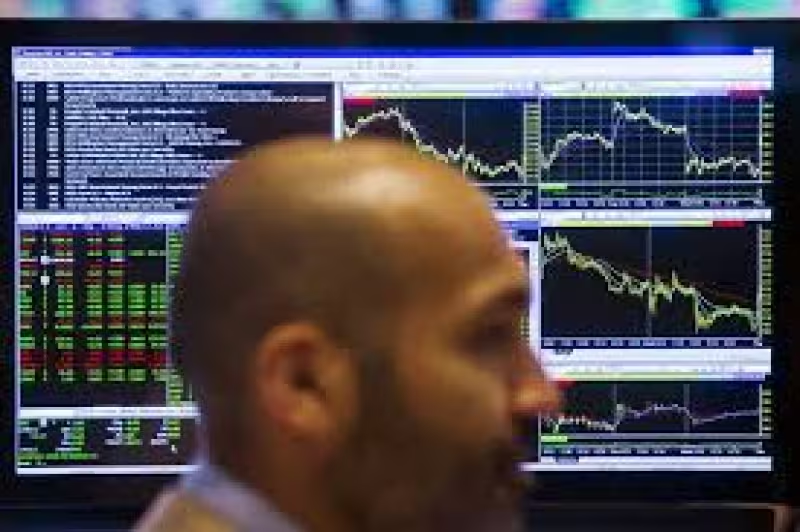
Traders are used to reading the Cboe Volatility Index as the market’s fear gauge and the U.S. Dollar Index as a map of safe-haven demand. Right now, both are pointing in the same direction: extreme, structural complacency.
That matters because the two gauges usually rise together when investors are running for cover. In a risk-off period, volatility climbs and the dollar often strengthens as money seeks the reserve currency. Equity traders and forex traders watch that alignment closely because it can say more about global liquidity and capital positioning than either index does on its own.

The relationship is not fixed. The VIX and the DXY can break apart when fear is local to the United States, such as a domestic banking crisis, a surge in U.S. inflation, or uncertainty over federal fiscal spending. In those cases, the dollar can behave like a funding currency and fall even as the VIX rises, a pattern tied to internal U.S. structural instability rather than broad global stress.

That is what makes the current setup so notable. A nine-week win streak in the dollar, a 4% move in one direction, or a jump in the VIX to levels last seen in May 2008 would each tell a different story; together, the point is simpler. The tape is not showing a clean fear trade. It is showing a market that has become unusually comfortable with the current backdrop while the usual warning signals stay muted.
The same market tape also undercuts a trading-forum narrative that Treasury Secretary Scott Bessent wants to artificially weaken or contain the rise of the U.S. Dollar. That claim is factually incorrect, and the institutional tape is presented as the evidence. If the dollar and volatility are both behaving as complacently as they appear, the better question is not whether policy is driving the move, but whether traders are misreading a broader shift in positioning.
The Cboe Volatility Index and the DXY are worth watching together because they can reveal whether the market is pricing simple calm, or a delay before a more forceful repricing. For now, the message is not that fear has arrived. It is that the usual fear gauges are barely blinking, and that is the signal traders should keep testing in the sessions ahead.