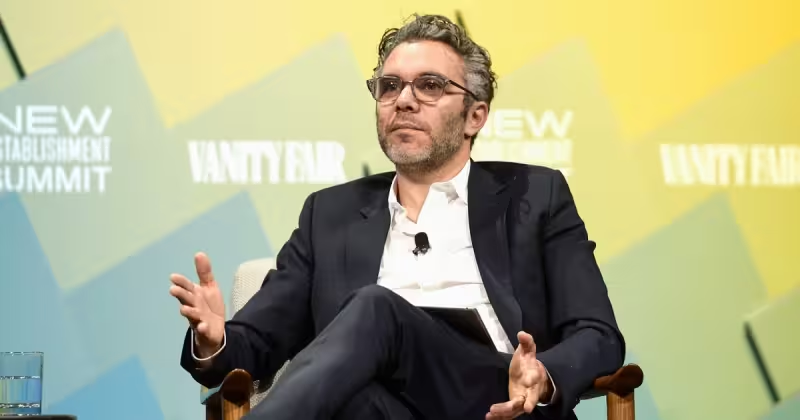
Nick Bilton was hired this week as executive producer of '60 Minutes', and the move set off a meltdown inside CBS News as staff and former colleagues reacted in sharply divided terms.
Eleven of Bilton’s former colleagues spoke to reporters after the hiring; their responses captured the split inside the newsroom, ranging from a one-word cheer, "Absolutely!", to an outright rejection, "Lord, no!"

The immediate consequence was internal turmoil at one of America’s historically top-rated network news programs: the appointment touched off urgent conversations about leadership, experience and the direction of the show.
The debate has a clear friction point. Supporters argue Bilton brings fresh ideas and a technology-savvy perspective to a legacy franchise; critics counter that he is a broadcast novice whose lack of traditional newsroom credentials makes him a risky choice to shepherd a flagship program.
That split — visible in the blunt, polarized reactions from the eleven former colleagues — helps explain why the hiring produced such an intense reaction this week inside CBS News. The network’s newsroom, already managing daily editorial pressures, was forced to contend immediately with internal questions about who should run its marquee magazine show.
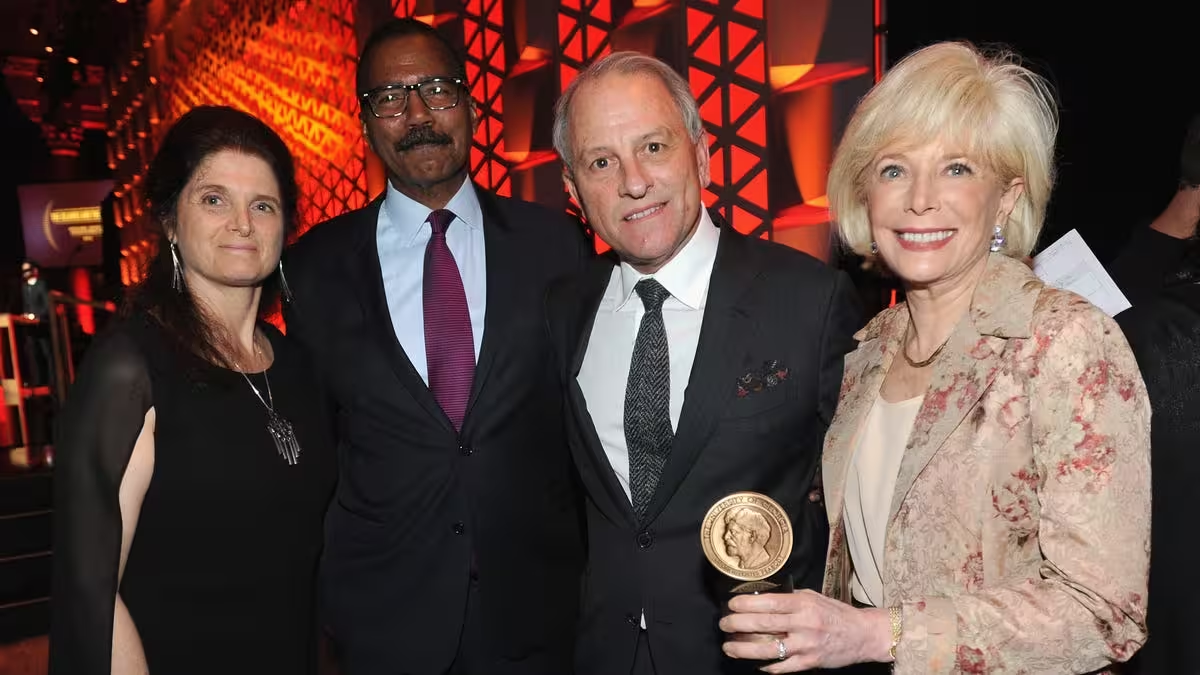
Context matters: '60 Minutes' is widely regarded as one of the country’s most storied and top-rated network news programs. Any leadership change there carries heightened scrutiny because the program’s brand rests on institutional experience and editorial judgment built over decades.
The tension goes beyond personality. Colleagues and newsroom observers now differ on what qualifies someone to lead '60 Minutes.' The hiring crystallized that disagreement into a visible rupture — not a quiet personnel change but a public moment of dissent played out inside the organization.
For now, there is no testing period or timetable from the network in the reporting that followed the hire. The unanswered question that emerges from this week’s fallout is straightforward: can Bilton bridge the divide inside CBS News and persuade skeptical staff that he can protect and modernize a franchise without eroding the editorial standards that built it?
The practical urgency is clear. If CBS backs Bilton fully and gives him runway to reshape the show, the network will need to manage turnover, morale and the incoming producer’s editorial choices under a microscope. If the network retreats or moderates his role in response to the backlash, the appointment could be seen as a misstep that deepens internal distrust.
In the end, the hire itself is the story: a single personnel decision this week that exposed a sharp fault line inside a major news organization. Whether Bilton can succeed will be decided not in statements but in what he does next — the assignments he greenlights, the team he keeps, and whether the divided chorus of reactions coalesces into support or fracture.