



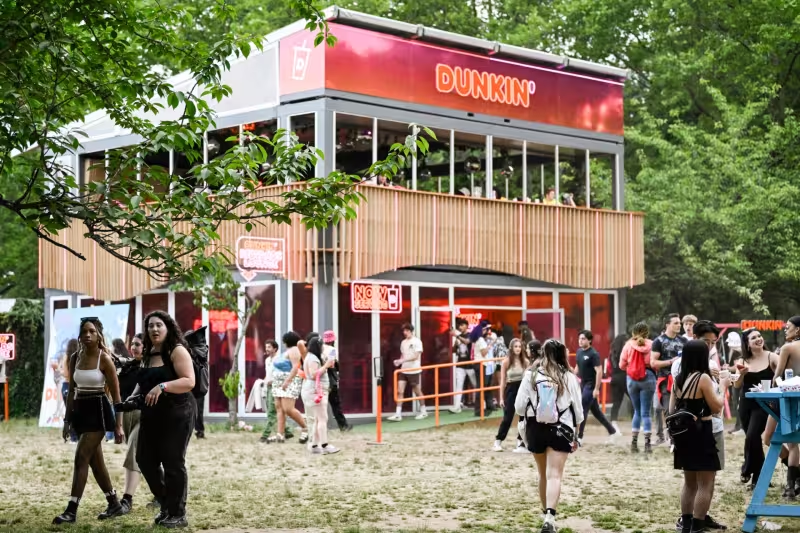
Gov Ball’s sponsorship business now generates eight figures annually as the festival turns its June 5–7 weekend in Flushing Meadows into a marketplace for more than 30 brands.
The scale is immediate: Governors Ball draws about 150,000 fans a day, and organizers say each branded activation on site reaches between 5,000 and 30,000 people over the weekend. That audience — predominantly 18 to 34 and with household incomes that outpace many comparable festival markets — is the raw currency sponsors are buying.

Alex Joffe framed the strategy simply: "It starts with intention," he said, and organizers say every choice since the move to Flushing Meadows Corona Park in 2023 has been deliberate. Joffe noted the festival now activates 30+ brands annually and that the sponsorship business is eight figures and still growing. The combination of attendance and targeted demographics is the engine behind that revenue.
The on-site picture this year illustrates how the money is put to work. Brands including Coca‑Cola, Verizon, Citi, DoorDash, Lyft, Samsung and others are running experiences from a Coca‑Cola skating ring to DoorDash food stands, a Tindr music playlist match-up and a Slurpee Street. Those experiences are designed to keep thousands of fans inside branded spaces for substantial portions of the weekend.
Putting numbers next to the activations matters. If activations draw 5,000 to 30,000 people each, a single well‑executed brand presence can reach a sizeable share of the daily crowd across three days. Multiply that reach by 30-plus activations and the sponsorship footprint becomes comparable in scale to ticket revenue or artist guarantees for a single festival weekend.
Context for the jump is straightforward: the festival relocated to Flushing Meadows Corona Park in 2023. Organizers say the site and the curated mix of talent and partners have enabled bigger, more immersive activations. The fan base Joffe describes — young, affluent and engaged — is precisely the audience global brands want, and that alignment explains why sponsorship is no longer peripheral to the festival’s business plan.
There is, however, a practical tension beneath the headline number. The festival’s origin story emphasized building something that people would come to on their own; now, the ground itself is crowded with corporate activations that shape attendees’ experiences as much as the lineup. That contrast—between a grassroots gathering and a commercial ecosystem designed to hold attention—remains unresolved in the figures released.
Another gap in the public record is the revenue composition. Organizers have confirmed the sponsorship business totals eight figures and that activations are abundant, but they have not broken down how much of that sum comes from on-site activation fees and audience engagements versus other forms of brand deals. That distinction matters to anyone trying to judge whether the growth is driven by deeper per-guest monetization or by a larger roster of headline sponsors buying visibility.
For now, the practical consequence is clear: Gov Ball has turned brand activations into a major revenue stream that leverages its 150,000‑a‑day crowds and favorable demographics. What comes next is disclosure — either more detailed reporting on activation revenue versus broader sponsorship contracts, or a shift in the activation model if organizers choose to reassert a less commercial feel. Absent that breakdown, the eight‑figure claim is the clearest metric available to measure how sponsorship has reshaped the festival's economics.



