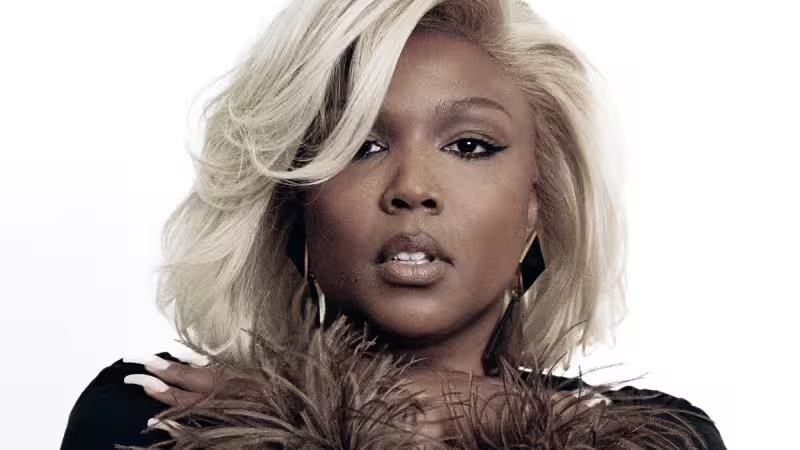
“That was the last song I wrote for the album,” Lizzo said, then laughed: “I was freaking out over some hair that I found and then realized it was from a wig I wore.” She kept the moment — the humiliation, the joke, the human slip — and turned it into music. The record she finished with that line, Bitch, is out today.
Bitch arrives as Lizzo’s first new album in four years. The 12‑track set opens with “Toast” and, by the artist’s own account, is meant to be a taking-back: “I don’t think I have to redefine myself. I think this is about reclaiming who I am.”

The album’s construction underlines that intention. Lizzo said the title was inspired by a Katt Williams joke, and she built a song around a sample of Missy Elliott’s “She’s a Bitch” and an interpolation of Meredith Brooks’ “Bitch.” “It was very intentional,” she said, explaining why she changed the project’s name from Love in Real Life to the blunt, provocation-ready Bitch.
Those choices are the weight of the moment: a familiar pop star reclaiming an insult by enlisting two famously abrasive predecessors. Musically, the record folds in R&B, hip-hop and pop with go-go beats, saucy synth-funk and a jazz-tinged track called “Too Nice” that features Lizzo’s flute — a melodic through-line she’s mining beyond music, into a children’s book due Sept. 8 called Lil Lizzo Meets Sasha B. Flootin’, which centers a “smart and brassy flute.”
Lizzo framed the album as a corrective. “A lot of my identity has been manipulated by people outside of me, so this album is me taking that back — showing the Lizzo everybody knows and loves, letting her tell her side of the story and just letting her play again,” she said, pointing the record toward both personal explanation and performance.
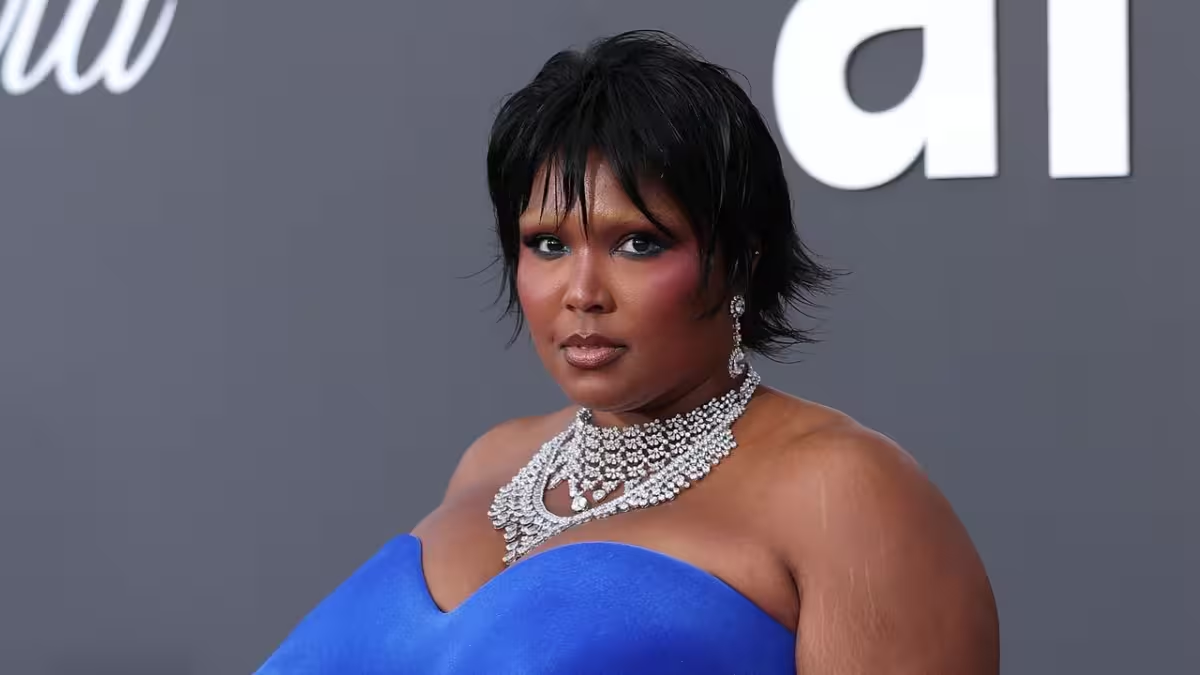
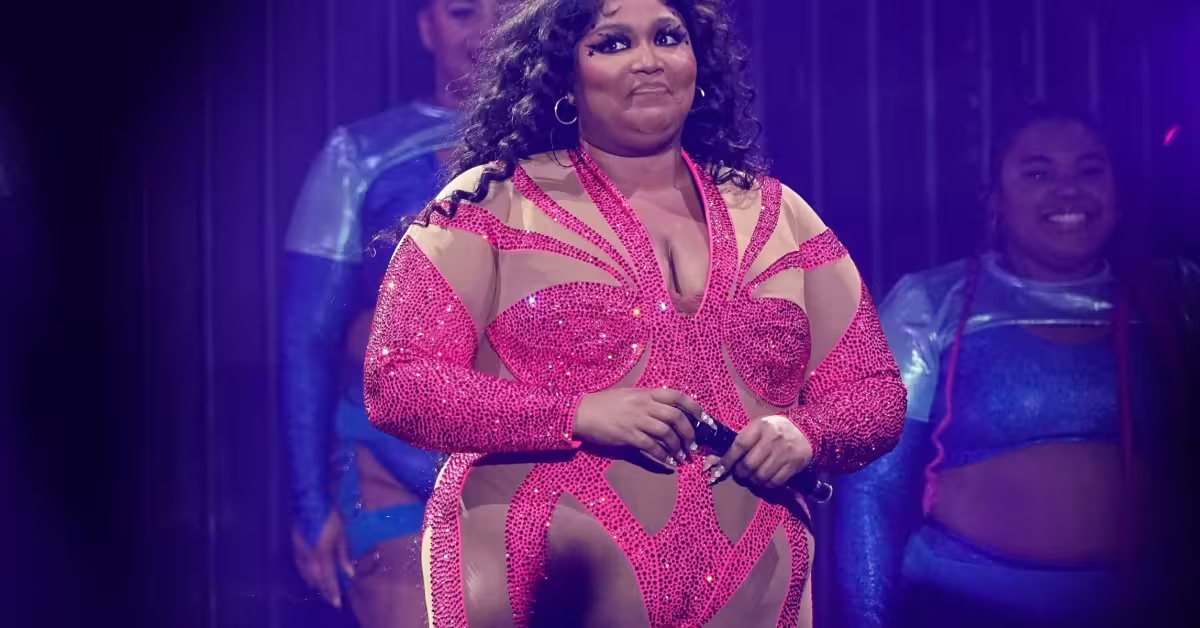
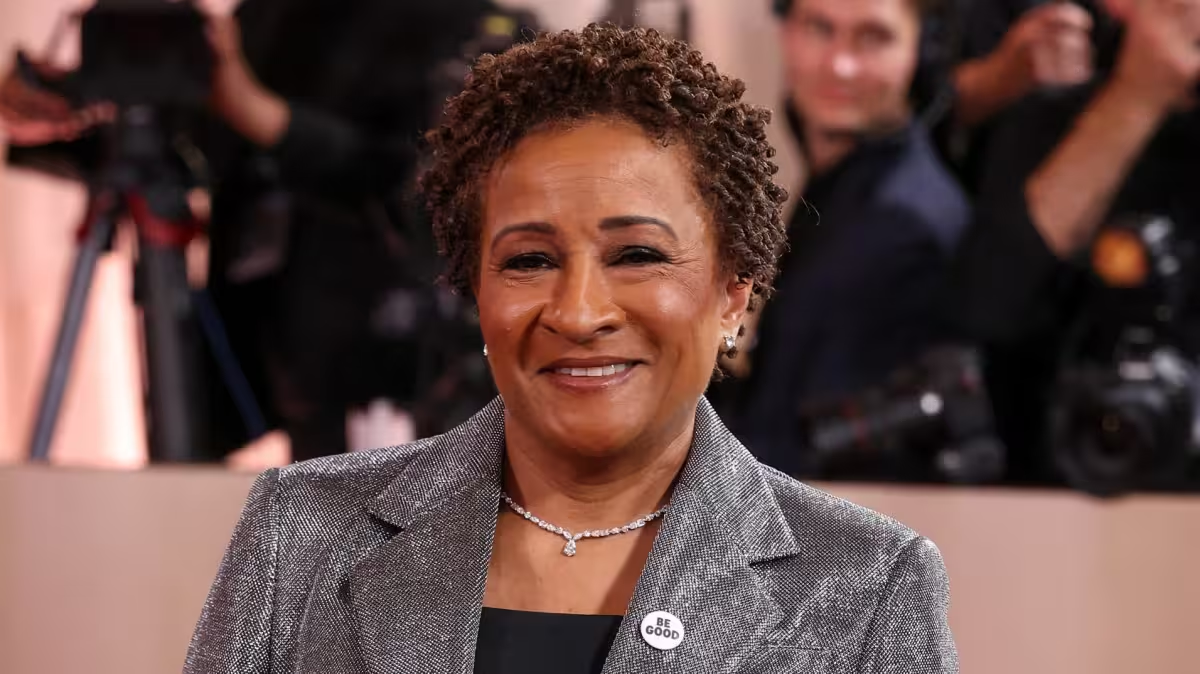
She did not shy from how public scrutiny shaped the work. “They'll come for anybody. They came after Lizzo and she's unproblematic, but that just goes to show, you could be fat, you could be Black, but you can't be no fat, Black bitch,” Lizzo said, adding that the stakes are higher for Black women: “God forbid, you're having a bad day or God forbid you weren't rainbows and sunshine one day. You will get crucified, especially as a Black woman in this industry and in society.”
That tension — reclaiming self while acknowledging outside manipulation — runs through the album. Lizzo told interviewers the world has shifted in ways that demanded a different response: “The world has changed a lot in the last few years — not just politically, but emotionally and psychologically. I had to change with it.” She added a broader artistic claim: “Artists don’t project what the world should be, we reflect what it is. Right now, we’re in a time of conflict. So I’m fighting for myself, and that’s where the energy of this album comes from.”
Those lines explain the title change from Love in Real Life to Bitch: a pivot from a softer framing to an explicit reclamation that matches the record’s samples and sonic bite. The album is built to foreground Lizzo’s perspective, to let the public-facing persona answer the distortions she says were placed on it.
Still, the specifics of what happened during the four-year gap — which exact episodes pushed her to frame this as a reclamation — are sketched more as pressure than as a list. Lizzo points to public attacks, emotional and psychological shifts in the culture, and her own “dark period,” and then makes the record the response. She turned a private, ridiculous wig moment into a relatable lyric and used musical references to stake the title as a deliberate act of ownership.
On the concrete timeline, the album is out now and will be followed in September by her children’s book, which places a flute character at its center — a clear sign she intends this era to move across mediums. WBUR reported the album’s release (it drops Friday), and noted the record’s stylistic expansion and jazz-flavored flirtations with Lizzo’s signature flute.
The clearest takeaway is simple: Lizzo made a deliberate choice to stop letting others shape the headline. She wrote a record that samples past provocateurs, retitled it to match the world she hears, and closed the sessions with a song born from a small, human embarrassment. The music is her answer; the next public line is a children’s book on Sept. 8 that literalizes the playful side she says she’s determined to let play again.