



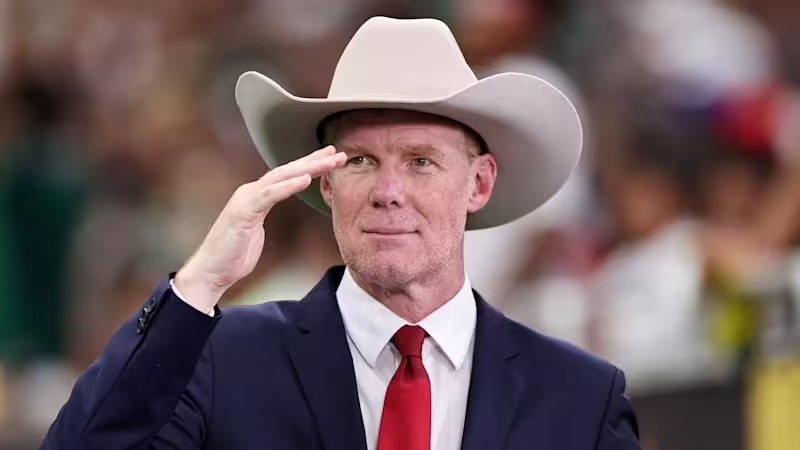
Alexi Lalas told Tony Popovic to print his remarks and stick them on the walls of the Socceroos’ dressing room — “I hope that they print it out. Make sure you spell my name correctly,” he said — and added, “I hope that it’s wallpaper all around the Australian dressing room, because they’re going to need all the help they can get.” The on-air provocation arrived this week as Australia prepares to meet the United States in Seattle on June 20 AEST in the World Cup.
It was not empty bluster. Lalas, the former United States international long linked to big opinions since his playing days in 1994, placed Australia 36th out of the 48 teams in his personal power rankings and did not pull punches: “This is an average team by any measure, and certainly not a great team.” He warned the Socceroos “are going to struggle to score goals, to maintain possession... against better quality competition and the elites of the world,” and repeated his belief that, for the U.S., the draw is favorable: “If you believe in the soccer gods, you should be thanking them. This is not just a good group, this is a great group. This is a group you should expect this United States team to win.”

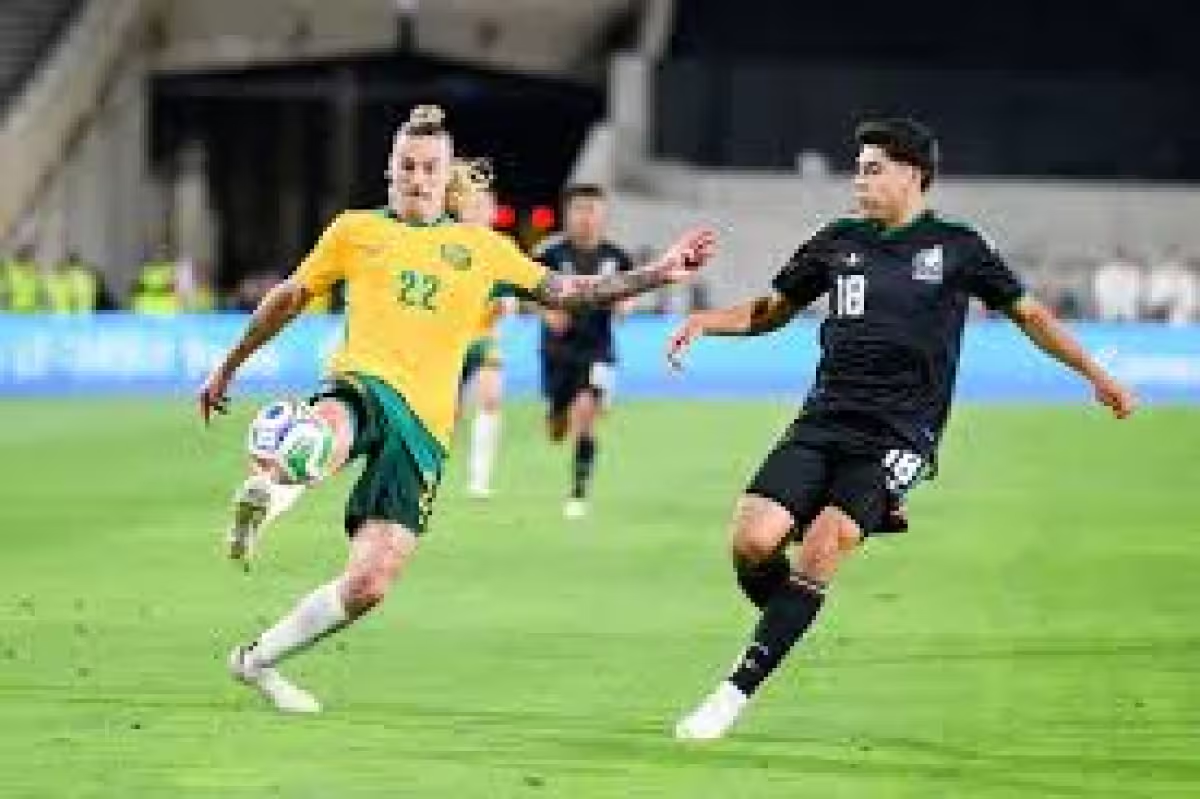
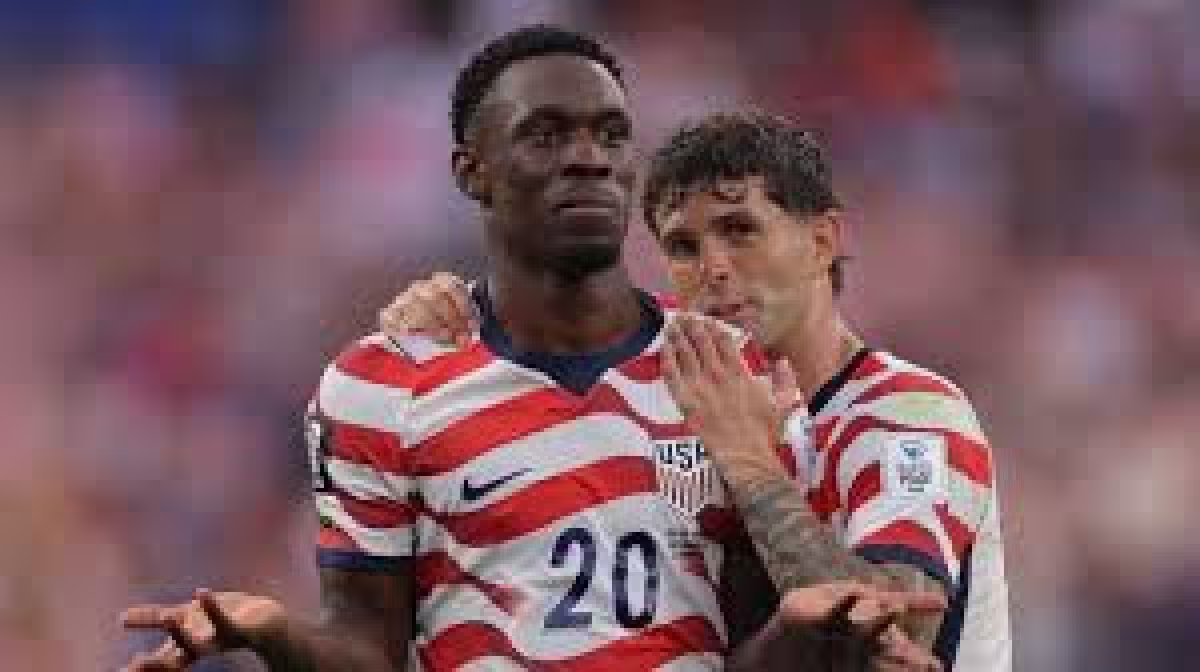
That blunt assessment lands now because Australia was drawn into Group D with the United States, making the two teams direct opponents in a match that can shape both nations’ tournament paths. Australia arrived in pot two as the lowest-ranked team in that pot, which is the statistical context for Lalas’s claim that the Socceroos were the best possible opponent for the co-hosts. Lalas has built a second career as a defining voice of American soccer; his views travel beyond punditry because he says what he thinks and watches for reaction.
The comments expose a split in tone. Mike Grella, earlier calling the Socceroos a “lay-up” on CBS Sports and saying the U.S. should not be at the World Cup if it can’t beat Australia, occupies the more cavalier lane. Lalas landed harder: he dismissed Australia as average while also insisting the group is “winnable” for the United States “for a number of different reasons,” and he added a diplomatic aside about Australia’s character — “Because the one thing that I’ve learned from travelling to Australia is, while you are a mighty and proud nation, you’re also a realistic nation, and a nation of truth. There is total truth in what I said.” That mix of dismissal and qualification hands the Socceroos a clear bulletin-board moment — the very thing Lalas invited when he told Popovic to print the remarks out.
The friction is simple and useful: Lalas has painted Australia as beatable and mediocre, yet he also says the U.S. still must deliver on the field to make that assessment matter. Those competing notes — condescension on paper, conditional confidence in results — are exactly the kind of provocation teams can convert into focus. Whether Popovic, whom Lalas explicitly named as the person who should post the words in the dressing room, will oblige is an open, easily answered by-action question: will Australia hang those lines and let them drive performance, or will the Socceroos respond to the taunt by settling the argument where it counts?
The next chapter arrives on June 20 AEST in Seattle. The match is the clearest test of Lalas’s take: if the United States wins comfortably, the punditry will look prescient; if Australia responds with a result, the wallpaper will read like a provocation that backfired. Either way, the words are on the record — and Tony Popovic, the players and the crowd in Seattle will decide how they age.



