



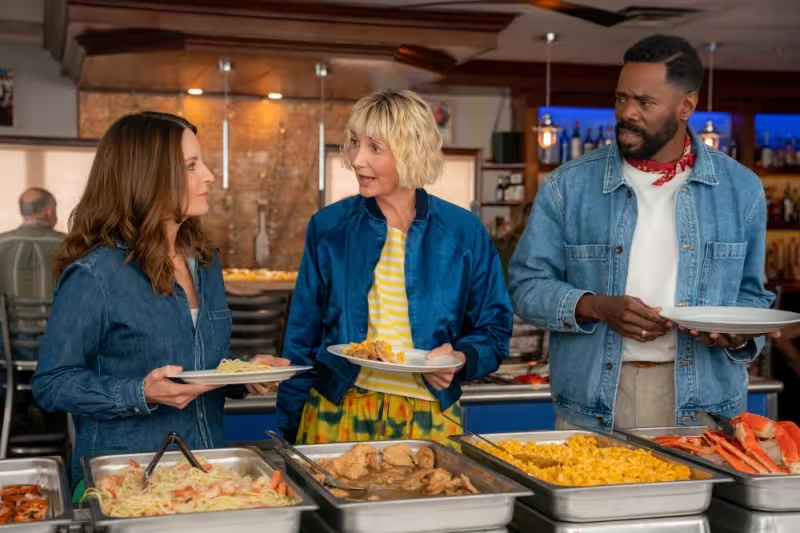
Netflix’s The Four Seasons returned for a second season that trades much of the original’s whimsy for a quieter, sadder look at grief, mid‑life crises, parenting and the way long relationships fray after loss.
The series, an adaptation of Alan Alda’s 1981 film created for television by Tina Fey, Lang Fisher and Tracey Wigfield, restarts with a smaller group: the three couples from Season 1 have become a five‑person circle after Nick’s death and the revelation that Ginny is carrying his child. The season opens in spring with the friends in the Catskills to scatter ashes, and Ginny and her baby turn up through the year “sometimes in tow.”

Tina Fey has openly framed the show’s feeling as intentionally domestic — “I love the tone of the film, and that’s something we’ve tried to maintain,” she said, and added, “‘Cozy’ is the word that I keep using — and everyone here probably wants a drink every time I say it.” That impulse remains: the hour still invites relaxed watching. But the mood has shifted; Fey’s aim for a “joyful, relaxed watching experience” now sits beside longer, quieter scenes about mourning and what comes after.
The weight of Season 2 rests on what Nick’s death does to the group. Will Forte’s character is taking the loss the hardest, and the season uses that grief to test the most stable relationship among them. Kate has signed on to train for a marathon that Jack — the man most undone by Nick’s passing — signed them up for together, and that plan becomes a measuring stick for how they navigate distance and shared obligation.
Other couples are scrambled in different ways. Claude and Danny find themselves in crisis after a conversation about children; Danny appears keen on fatherhood but lacks experience, and the cries of Ginny’s baby become a blunt, recurring wake‑up call about the realities of parenting. Ginny, newly single and raising a child whose father died before the baby was born, is the season’s most visible case of altered plans.


Small turning points populate the episodes. Anne spends Episode 4, On the Boardwalk, exploring what life looks like untethered, and Kate discovers a dream she had not realized she had in the summer episodes. The summer and winter chapters still carry traces of the original’s lighter tone, but elsewhere the show’s humor and the reappearance of Terry feel muted, and the camera often holds on moments of introspection rather than punchlines.
What makes Season 2 notable is how it keeps the group’s domestic comfort while probing darker interior territory. The show examines long‑term marriages and friendships under a realistic microscope: habits that once felt reassuring now read as brittle; rituals meant to bind the group together sometimes only underline how each person is changing. That contrast — a “cozy” surface and a sediment of sadness beneath — is the season’s central friction.
That friction plays out most clearly around Jack and Kate. Their partnership is described as the season’s most grounded, which makes the widening distance between them more consequential. Kate’s new ambitions and Jack’s stubborn, unprocessed grief pull them along different tracks, and the marathon training becomes less about fitness than about whether the two can still pace themselves together.
The series was conceived originally as a limited run, and the loss of Nick in Season 1 left the cast smaller and the stakes more intimate. Season 2 does not tidy those stakes. Instead it leans into the uncomfortable fact that grief reshapes options: some relationships tighten, others loosen, and parenthood arrives as both a balm and a burden.
By the end of this season the show has not delivered a neat reconciliation for Jack and Kate. The narrative choice feels deliberate — the creators have tilted toward realism over sitcom shorthand — and the most likely outcome the season lays out is continued strain rather than a quick fix. Jack’s inability to move past Nick’s death and Kate’s discovery of private ambitions make a slow drift toward separate lives the more plausible next chapter, with the future of their partnership hanging on whether either will truly change course.



