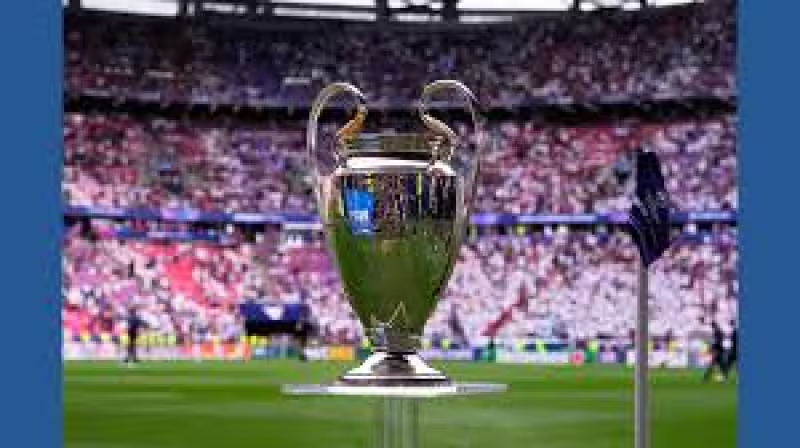
The Champions League final between Paris Saint-Germain and Arsenal finished 1-1 in the second half of extra time on Saturday, May 30, 2026, and headed to a penalty shootout to settle the title in Budapest.
The shootout marked only the eighth time a final has been decided that way since the European Cup was rebranded as the Champions League in 1992; the last time was 2016, when Cristiano Ronaldo converted the decisive kick for Real Madrid. Referee Daniel Siebert was the match official in Budapest and, as the game tipped toward its conclusion, he was recorded giving directions that shaped the final phases of play.

Arsenal manager Mikel Arteta pushed for fresh legs at the start of extra time, bringing on Eberechi Eze and Martin Zubimendi while Myles Lewis-Skelly and Kai Havertz were taken off. That move helped the visitors hold shape late but could not produce a decisive goal before the shootout.
The closing minutes of extra time were frenetic and fractious. Noni Madueke had a penalty appeal turned down after a challenge by Willian Pacho; the decision to deny Arsenal that spot kick came at a critical juncture and drew immediate reaction. Declan Rice was shown a yellow card after reacting angrily to the non-award, underscoring how thin the margin had become between control and chaos as the match reached its final moments. Arsenal supporters sang "We love you Arsenal, we do" as their team defended desperately.


Off the pitch, the crowd reaction split across borders. Supporters of PSG gathered in Paris while the final played out in the Puskas Arena in Budapest; some let off flares and a bus shelter window was smashed, prompting riot police to charge individuals wearing PSG jerseys. The scenes echoed unrest that followed PSG’s first title last year, when widespread disorder led to hundreds of arrests nationwide.
The refusal to award a penalty to Arsenal is the friction point that will dominate post-match debate: with the score level and only minutes remaining in extra time, the club’s clearest route to a late winner was blocked by the referee’s call. That decision—given amid Siebert’s directions and the audible protests from players and supporters—left the final to be decided by spot kicks rather than open play.
Warren Zaïre-emery’s name circulated among viewers and pundits as PSG and Arsenal prepared for the shootout, emblematic of the tournament’s focus on individual moments within a collective test. Yet whatever role he or any single player might have played, the immediate fact was simple and decisive: the trophy would be determined by penalties.
The unanswered question now is which side will hold its nerve from 12 yards. The shootout in Budapest will decide the champion, and the record books will record whether this final becomes the rare eighth decider by penalties since 1992 or whether memories of the late non-awarded penalty will overshadow the winners. For fans on both sides—and for a referee whose late-match directions were scrutinized—the next half-hour would deliver the result the match itself could not.