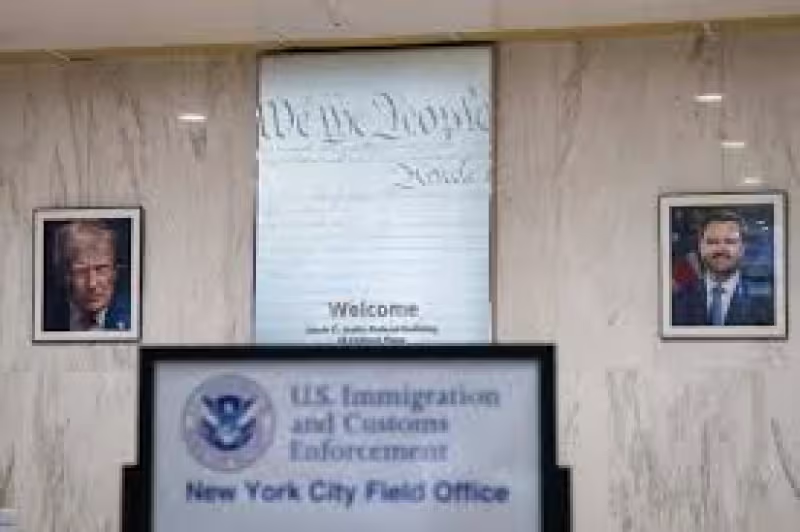
Last week, U.S. Citizenship and Immigration Services issued a policy memo that could force many people already living in the United States to leave and pursue green cards through their home countries. The change does not end every path to permanent residency, but it may narrow where thousands of applicants can finish the process.
For many foreign nationals, a green card has usually been available in one of two ways: through a U.S. consulate overseas or from within the country through adjustment of status. The new memo appears to move many applicants already in the United States toward the first route, even if they have been building lives here for years. A USCIS spokesperson told Semafor last week that the agency was “merely restating and reasserting” its interpretation of congressional intent on immigration status changes.

The practical effect is broad. The policy has created confusion and fear among hundreds of thousands of visa holders and families who had expected to keep pursuing permanent residency without leaving the country. USCIS said people whose applications provide an economic benefit or are otherwise in the national interest will likely be able to continue on their current path, but others may be asked to apply abroad depending on individualized circumstances.


That leaves the new guidance with an important carveout and an equally important uncertainty. The memo suggests some applicants may stay on course, yet it still appears to require many others already in the United States to depart while their cases are pending. For families that have organized jobs, homes and school plans around the promise of adjustment of status, the difference is immediate.
One 34-year-old Indian software engineer in Washington said he had spent several hundreds of thousands of dollars in the EB-5 investor program in hopes of getting a green card faster and finding stability for his family. He said the new policy could mean losing a job and selling a home if he has to switch to consular processing. In Portland, Oregon, a 30-year-old resident said her Mexican husband received a green card through the adjustment of status process in February, and that his residency is conditional because they have been married for less than two years.
The EB-5 route is one of the clearest examples of what is at stake. The program lets foreigners obtain a green card by investing several hundreds of thousands of dollars into a U.S. enterprise that creates at least 10 full-time jobs for American workers. Under the new memo, even that path may not protect some applicants from being pushed abroad before their cases are finished.
The deeper shift is political as well as administrative. The policy has added to uncertainty for foreigners in the United States after Donald Trump’s immigration focus moved from illegal immigration to legal immigration pathways. USCIS says operational details are still being worked out, but the immediate message is plain: some applicants may be able to stay put, while many others could be told to leave the country and continue their cases from overseas.