



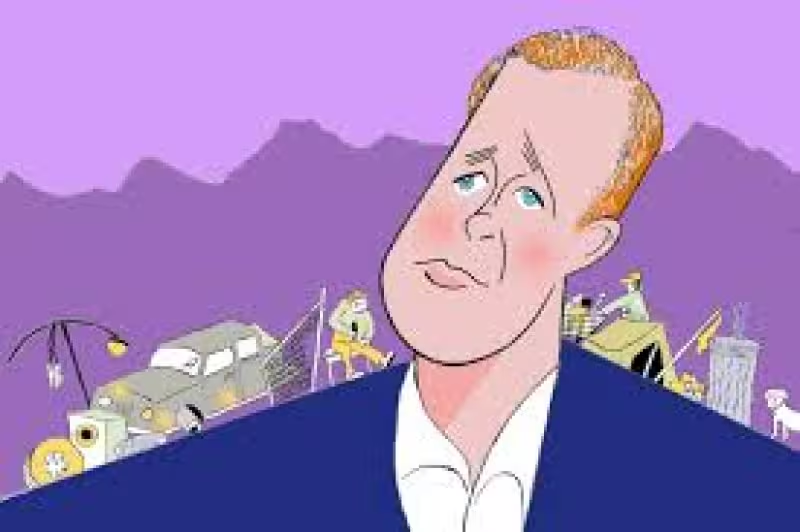
“I would say the only edge that reality TV and fame has given me is just to prepare for the amount of negativity and threats,” Spencer Pratt said, framing a mayoral bid that began earlier this year and now shows signs of life in Los Angeles polls.
Pratt, 42, has turned the notoriety that followed him from early-2000s television into a political message: the hard experience of public dislike, he says, readied him for the blunt scrutiny of local government. He told interviewers that after losing his family’s home in last year’s wildfires he has been “fighting for his community for many months,” and that announcing his campaign in front of thousands of fire victims was a turning point — “everyone cheered so much that I kicked off with a new path of being taken seriously.”

Those moments are the weight of Pratt’s argument. He has repeatedly insisted he would not change where his life began as a public figure: “Life’s all about learning. I met my wife on reality TV, [got] my two kids, for that alone I wouldn’t change anything.” He and Heidi Montag met on The Hills and married in 2008 during season 5; their sons, Gunner, 8, and Ryker, 3, figure into the personal case he is making for public office.
Pratt has not limited his pitch to biography. He says he is “running for all of Los Angeles” and that his brand and his party are “common sense.” His campaign has reported some early momentum: he says he is emerging in the polls against established candidates such as Karen Bass and Nithya Raman, a claim he pairs with vivid language about the stakes of municipal governance — “No normal person would want to fight this demonic machine of evil that wants people to die on the street [and] doesn’t care about our lives.”
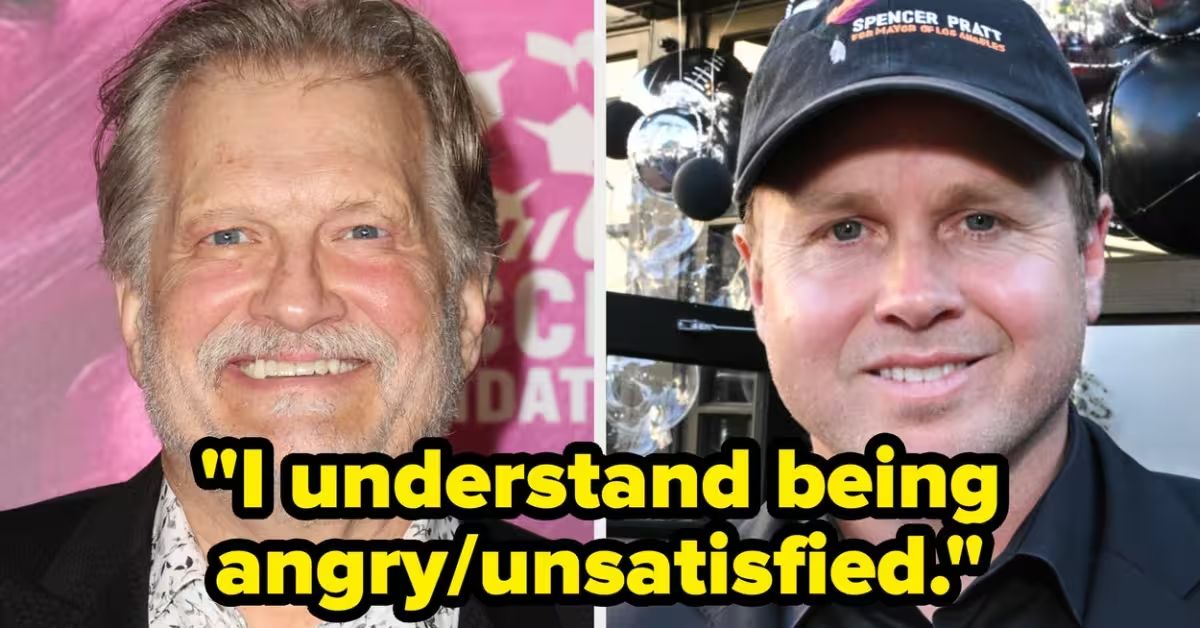
Contextually, Pratt’s path is not unique: the Los Angeles mayoral race is nonpartisan and no party appears on the ballot. What is notable is a reality TV figure trying to translate notoriety into votes in a city that has elected mayors with longer local resumes. Pratt rose to fame on The Hills, and he has used that platform as the through-line for a campaign that leans on personal resilience and the sympathy of communities affected by the wildfires that took his home.
The campaign also contains friction. Pratt has said he is not running as a Republican even as his candidacy has drawn attention from politicians across the country, including President Donald Trump. The contradiction is more than rhetorical: insisting on political independence while accepting national spotlight risks blurring the line between local credibility and celebrity support. Pratt admits the run is grueling: “You have to be a crazy person to do this as just a functioning normal, experienced human being.”
That tension is the ballot’s immediate practical problem. Pratt says crowds have cheered him and that personal loss pushed him into public service, but applause and online attention do not equate to votes in a sprawling, demographically diverse city. He is framing himself as an outsider who knows the city’s pain firsthand; his challenge is converting notoriety and sporadic momentum into the organized support a winning municipal campaign requires.
The next milestone is straightforward: the Los Angeles mayoral election. Pratt has positioned himself to be judged there, arguing his personal history equips him to handle the hostility and threats public life can bring. The unresolved question — and the decisive test — is whether Los Angeles voters will accept that argument at the ballot box and move him from emergent candidate to elected mayor.



