



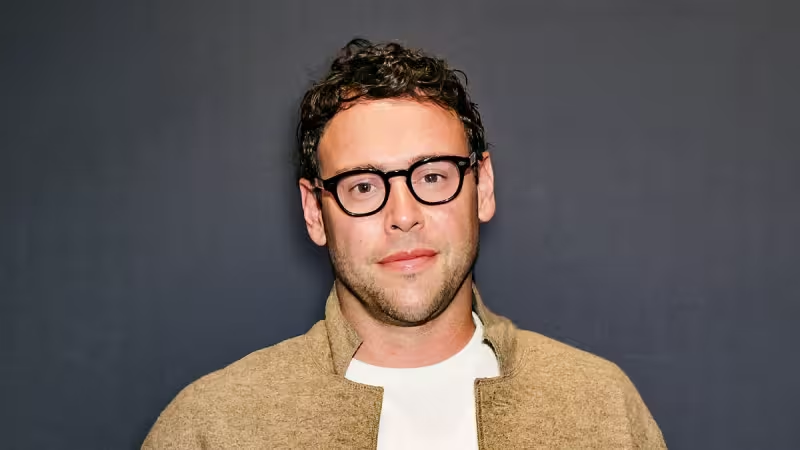
Scooter Braun told Suzy Weiss in a Second Thought interview published Thursday that he does not disclose his ballot and cast himself as politically centrist: "I never tell people who I vote for. I’m a moderate, so I kind of vote both ways."
In a wide-ranging conversation for The Free Press, Braun moved quickly from politics to music. He praised reality star Spencer Pratt for surfacing issues he said others had ignored, saying, "What I really do appreciate about what Spencer [Pratt] is doing is he is bringing a lot of things to light that no one has brought to light, and I think he’s speaking for a lot of people who are very frustrated and want common sense and want people to speak plainly and address certain things." Braun added: "It’s very interesting to watch. I think it’s very possible he can win."

Braun also revisited the episodes that have defined his public profile in the music business. He told Weiss he first saw a 12-year-old Justin Bieber on video in 2007 and then signed him as a client in 2008, calling Bieber, "He was one of the most extraordinary talents, he was charismatic, he was brave." Braun said his acquisition of Big Machine Records in 2019 led to buying the rights to Taylor Swift’s first six albums — a move he acknowledged provoked Swift’s ire — and noted that he later sold those rights, and Swift now owns them.
Those transactions remain the clearest facts that shaped Braun’s reputation. He told Weiss that his public standing shifted almost immediately after the 2019 purchase: his reputation "changed overnight" when the Swift masters came under scrutiny, a sequence he described plainly during the interview.
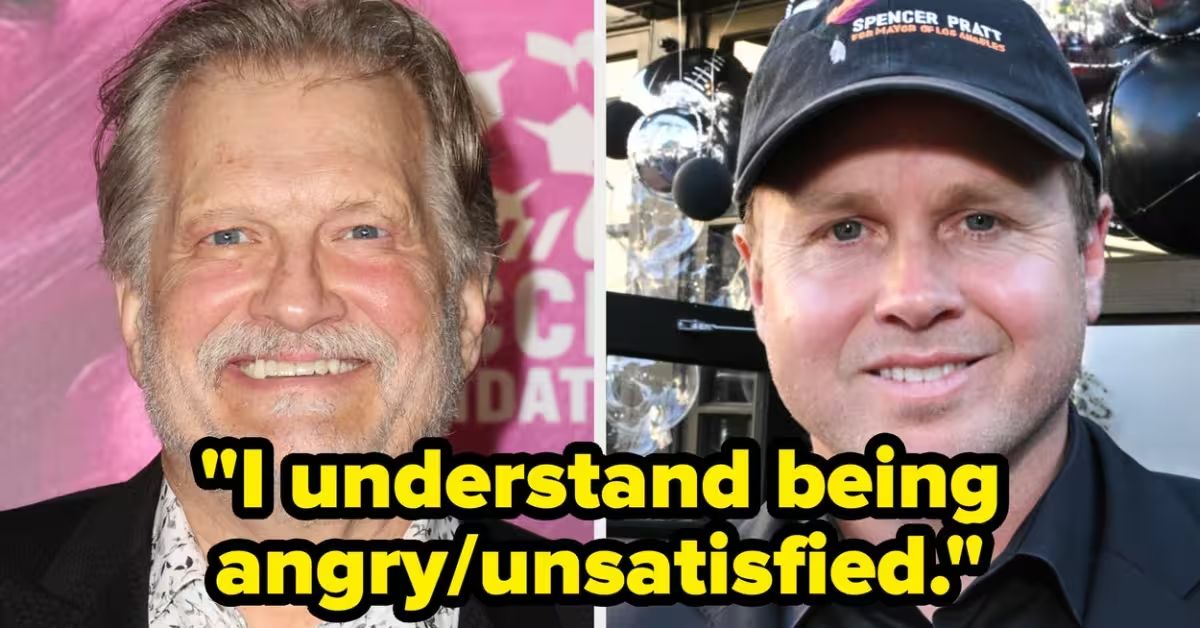
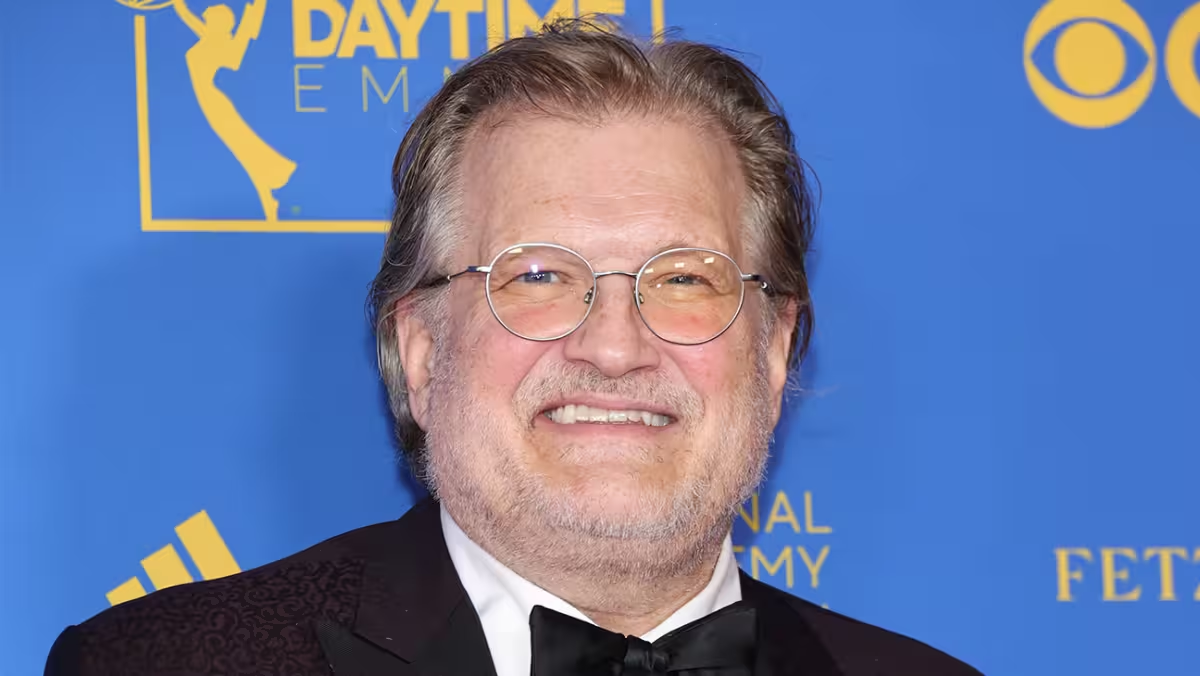
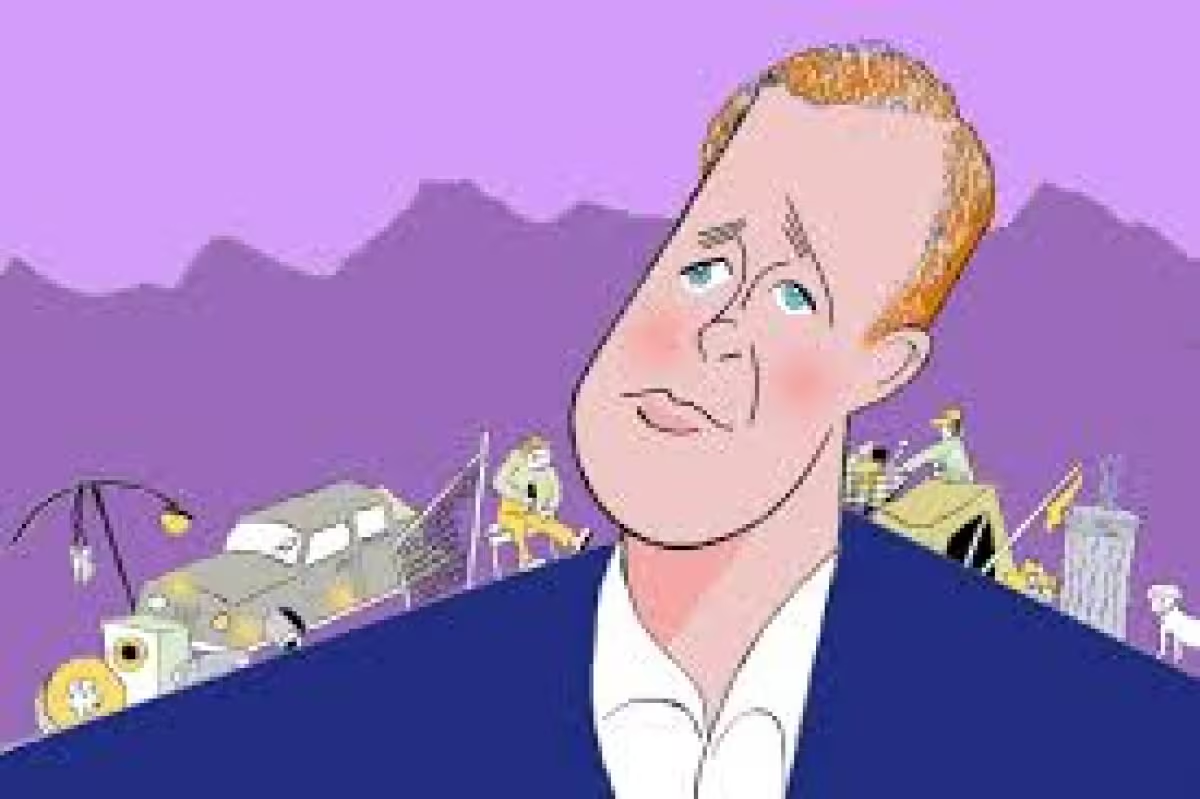
Context: Braun retired from management and stepped down as CEO of Hybe America last year. Swift had previously asked to buy the rights to her masters from Big Machine Records, and Braun’s 2019 acquisition made him a long-term target of criticism from Swift’s fans — background that the interview revisits only after he has laid out his account.
The interview contains its own contradiction. Braun insists on keeping his vote private while publicly applauding a controversial public figure and forecasting that candidate’s viability. He framed that tension as part of his personal code: keep private the act of voting, but speak openly about what he perceives others are saying and feeling. That stance sits alongside his effort in the interview to tidy up the most charged chapter of his business life by noting the sale of the Swift catalog back to Swift.
He threaded through the hour a recurring theme about instincts and timing. "Sometimes it’s like you get a download or a cheat code and it almost tells you, ‘This is the path, do not doubt yourself [although] everyone else is going to doubt you,’ right? ‘But do this,’" Braun told Weiss, framing both artist development and political endorsements as moments that demand conviction despite outside skepticism.
By the end of the interview Braun had answered, in concrete terms, what the headline asked: he praised Pratt and said Pratt could win; he acknowledged the master-record controversy began with his 2019 purchase of Taylor Swift’s first six albums and that he later sold those rights so Swift now owns them; and he recounted discovering Justin Bieber in 2007 and signing him in 2008, calling Bieber an extraordinary talent. He also kept to his personal rule on voting — public about some opinions, private about the ballot itself.



