



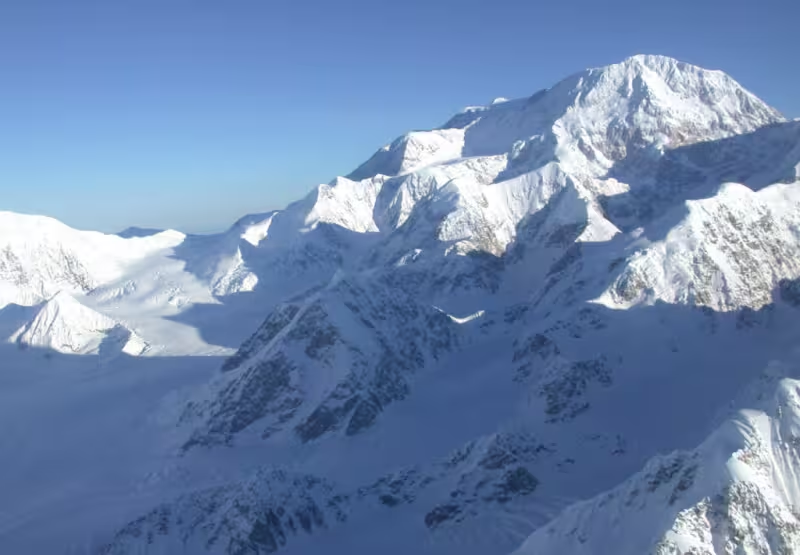
Three climbers on Alaska’s Mount McKinley died after falling near Denali Pass this week, and a fourth member of the same Latvian expedition was brought off the mountain late Thursday afternoon, park officials and the group said.
The accident has put Mt Mckinley — North America’s tallest peak, about 20,310 feet above sea level — back in the spotlight because the fall occurred on the West Buttress route, the mountain’s most popular path to the summit and an exposed corridor climbers often search for in summer.

Four members of a seven-person Latvian mountaineering expedition fell near Denali Pass on Wednesday, roughly 18,200 feet above sea level, the team and park agencies said. Three other teammates tended to those who fell before returning to camp. By late Thursday afternoon, Denali National Park and Preserve search and rescue personnel had brought one of the fallen climbers off the mountain alive; the Latvian group announced on Friday that three of the climbers had died.
The numbers underline how dangerous the section can be: the West Buttress is known for crevasses, steep ice and exposed ridges, and the park has recorded more than 130 deaths in its history. Most fatalities along the traverse between high camp and Denali Pass have happened while climbers were descending, and park rangers and mountain guides install and maintain snow pickets between high camp and Denali Pass to reduce risk. "There were 516 climbers on the mountain as of Thursday," Scott Carr said.


Two other climbers who were not with the fallen group were evacuated by helicopter on Wednesday, a separate response that the park said occurred the same day the Latvian team fell.
Park officials initially reported that the extent of injuries and the condition of the climbers remained unknown while rescue crews assessed the scene; the later confirmation that three climbers had died came from the Latvian mountaineering group. That sequence — uncertainty from the park followed by the expedition’s announcement — left a gap between the first emergency reports and the final accounting of lives lost.
The fall unfolded amid a routine seasonal picture on the mountain: about 1,000 to 1,200 climbers attempt the summit each year, trips that typically take roughly 17 days, and less than half of those who try made the summit last year. The park and the National Weather Service had forecast isolated snow showers through the end of the week, but officials have not linked weather to this accident.
What caused the four climbers to fall remains unexplained; the immediate evidence confirms only the location, the number of people involved and the outcomes. Park officials said additional information would be released when it becomes appropriate, leaving the cause of the fall — the single unresolved fact that will determine whether this was a moment of misfortune, an equipment failure, route conditions or something else — still unanswered.



