




Chase Meidroth has quietly become a productive big leaguer for the Chicago White Sox after being one of the players Boston sent away in the Garrett Crochet trade: he’s hitting.269 with a.732 OPS, has five home runs and sits fifth on the White Sox in RBIs as the team occupies a postseason position.
Garrett Crochet’s name is back in the conversation because the package that brought him to Boston included Meidroth. The Red Sox acquired Crochet before the start of last season and shipped Kyle Teel, Braden Montgomery, Chase Meidroth and Wikelman Gonzalez to Chicago; Meidroth’s steady production this season is the clearest, most immediate evidence of what the White Sox received in that deal.

Measured against his own rookie year, Meidroth has taken a step forward. After debuting last season and hitting.253 with a.659 OPS, Meidroth is up to.269 and a.732 OPS in 2026. He’s added value with the glove as well — a fielding run value of plus-three and an outs above average of plus-one — numbers that matter for a club trying to protect narrow leads late in games.
There’s a small, telling image that captured the moment: a photo from Chicago on May 27, 2026, showed Meidroth after the White Sox game against the Minnesota Twins at Rate Field, an unglamorous frame that, for now, doubles as proof of a player doing the job he was asked to do following a big transaction.

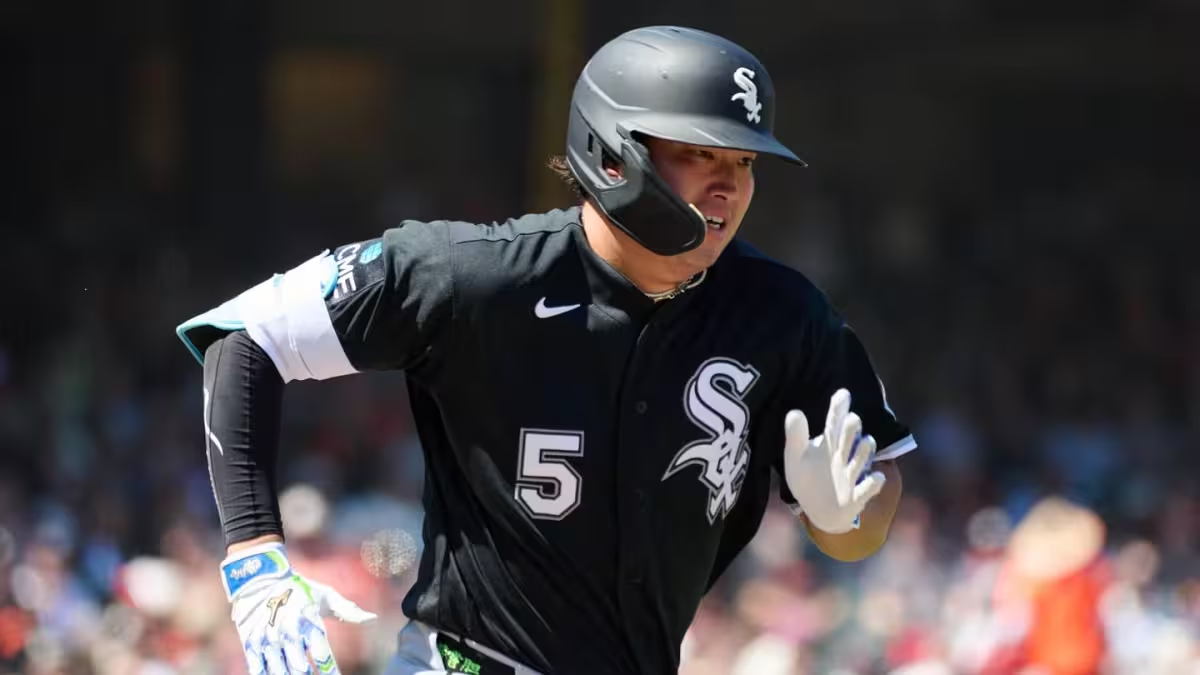
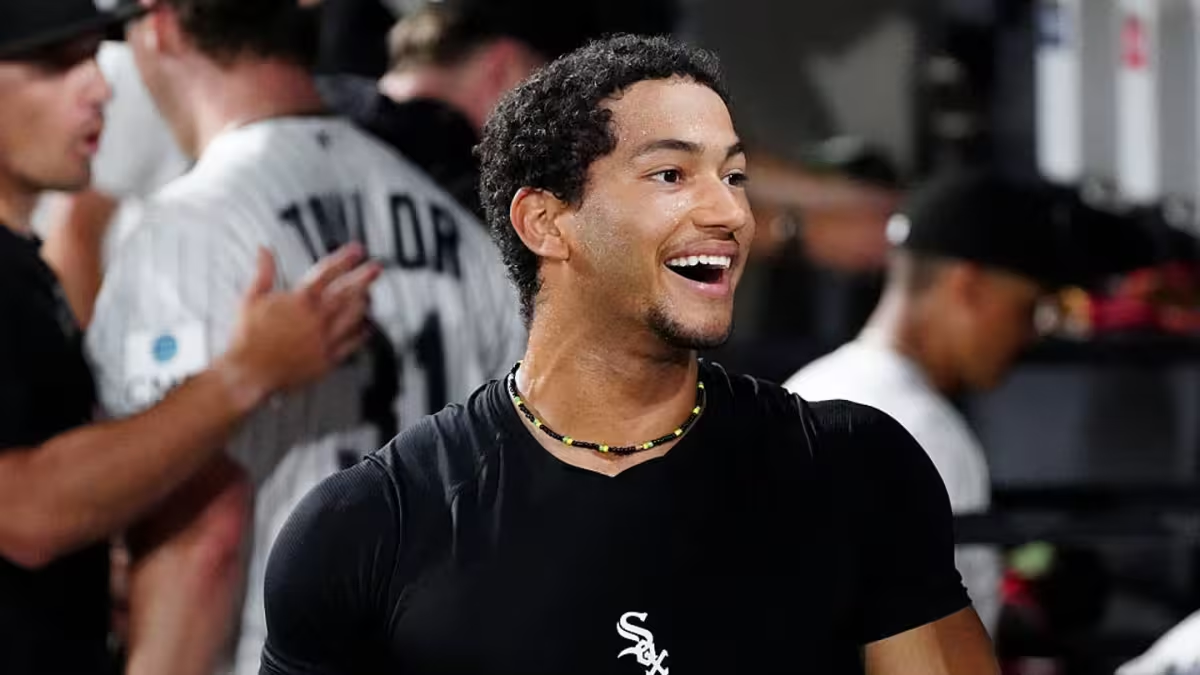
Those onlookers who track prospect lists will find the development striking. At the time of the trade Meidroth was Boston’s No. 19 prospect; Marcelo Mayer was the Red Sox’s No. 1 prospect and ranked No. 15 in all of baseball. Yet on the field this season Meidroth has the clearer counting-line: he has played in 82 more big-league games than Mayer overall, and he has 22 more hits this season despite appearing in only four more games. Mayer has three stolen bases to Meidroth’s two. The tidy projection that Mayer would develop into the superior everyday big leaguer has not, so far, resolved in Mayer’s favor.
The contrast matters to both clubs in concrete ways. For the White Sox, Meidroth’s bat and glove are contributing to a playoff push; his five home runs and run production give the roster extra, inexpensive offense. For the Red Sox, watching a player included in the Crochet trade provide tangible returns on the other side of the transaction is likely a source of frustration even if Crochet himself remains a longer-term asset for Boston.
The friction is not only about rank on a prospect list. It’s about opportunity and timing: Meidroth has been available in Chicago’s lineup and has translated that playing time into production. Mayer, despite higher pedigree on paper when the deal was made, has not matched those counting numbers in the majors so far. That discrepancy exposes the gamble every front office makes when it swaps present pieces for future upside.
What comes next will determine how the trade is remembered in the short term. If Meidroth sustains a.269 average, a.732 OPS and the defensive value he has shown, the White Sox will have a clear, immediate payoff from the players they acquired. If those numbers retreat, the narrative swings back toward Boston’s long-term calculus in securing Crochet. The unanswered question — and the one that will shape evaluation of the deal over the summer — is whether Meidroth can maintain this level of production for the remainder of the season and through a playoff push.



