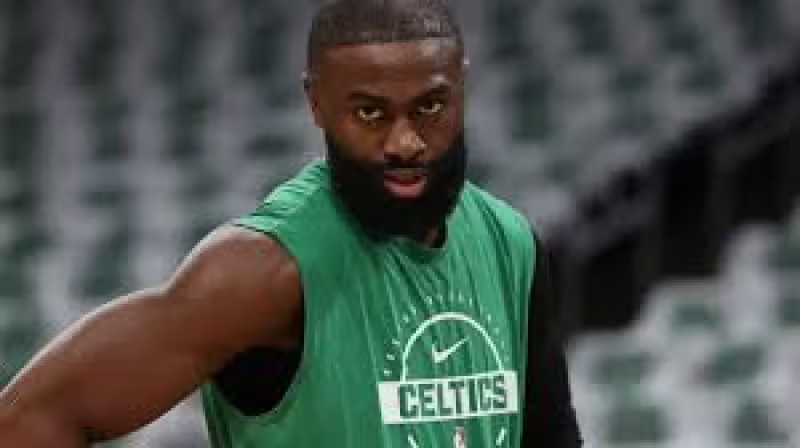
Over the weekend Marc Stein reported there is a belief in some corners of the league that Atlanta, Houston and Portland all have legitimate trade interest in Jaylen Brown, injecting fresh urgency into Boston’s offseason planning.
The timing matters because Brown delivered the best season of his career: the 29‑year‑old averaged 28.7 points, 6.9 rebounds and 5.1 assists while shooting 47.7 percent from the field, 34.7 percent from three and 79.5 percent from the line, earned a spot on the All‑NBA Second Team and finished sixth overall in the MVP voting — all after the Boston Celtics compiled the second‑best record in the Eastern Conference despite Jayson Tatum missing significant time.

Those numbers are why league executives and front offices are paying attention. Interest from three specific franchises moves talk toward tradeable frameworks, and two concrete packages have circulated in the background: one scenario gives the Houston side a realistic salary match, with the Rockets able to cover Brown’s $53.1 million through a deal that would send Clint Capela, Jabari Smith Jr. and Alperen Şengün out; another hypothetical sends the Celtics a young core from San Antonio in exchange — including Dylan Harper, Devin Vassell and Carter Bryant — with Harper coming off his rookie year as the No. 2 pick in the 2025 draft, averaging 11.8 points and 3.9 assists across 69 games and Vassell contributing 13.5 points per game while shooting 38.4 percent from deep.
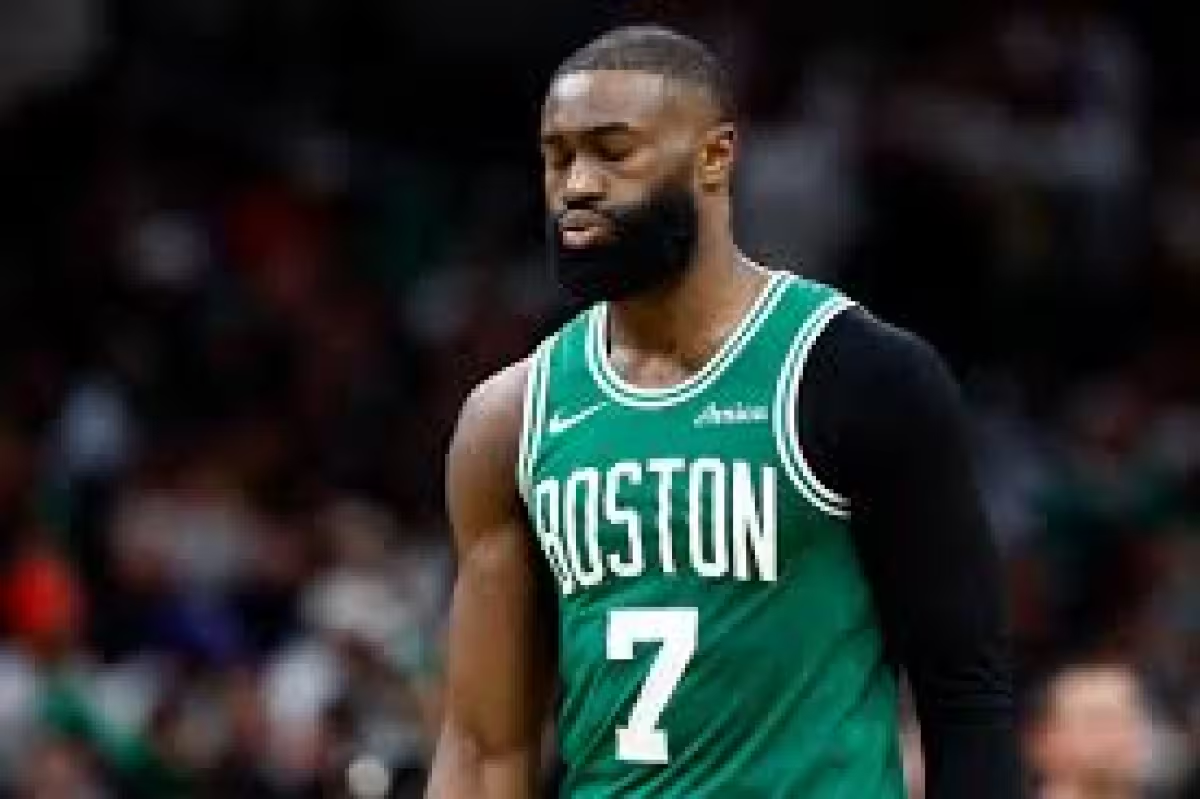
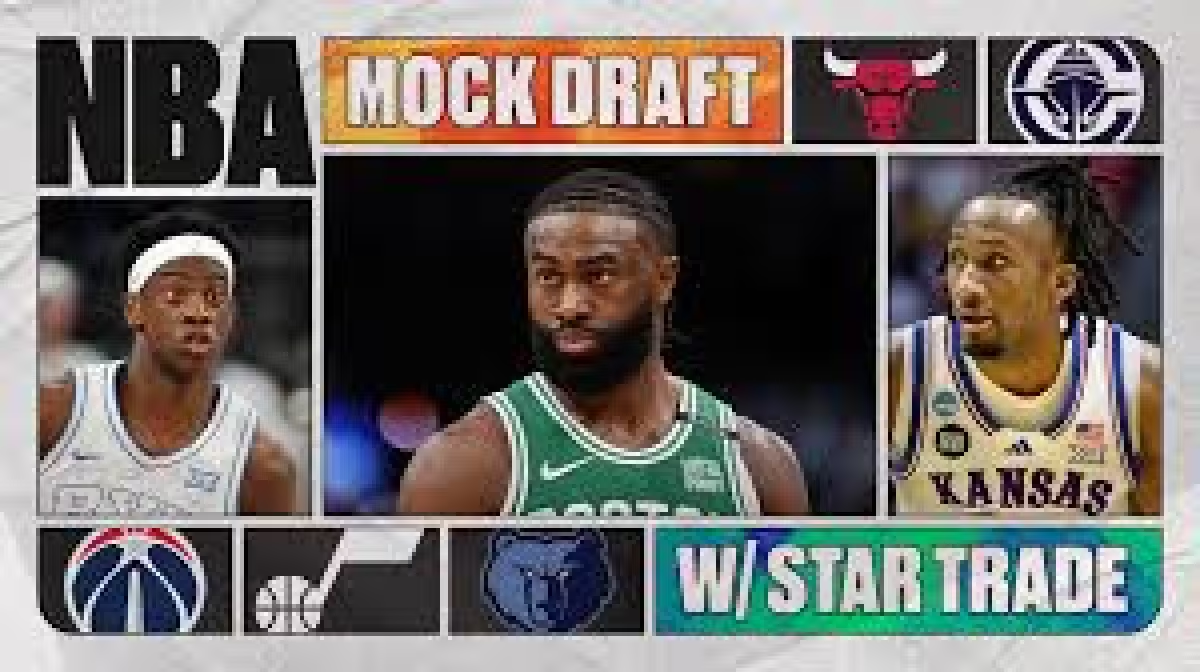
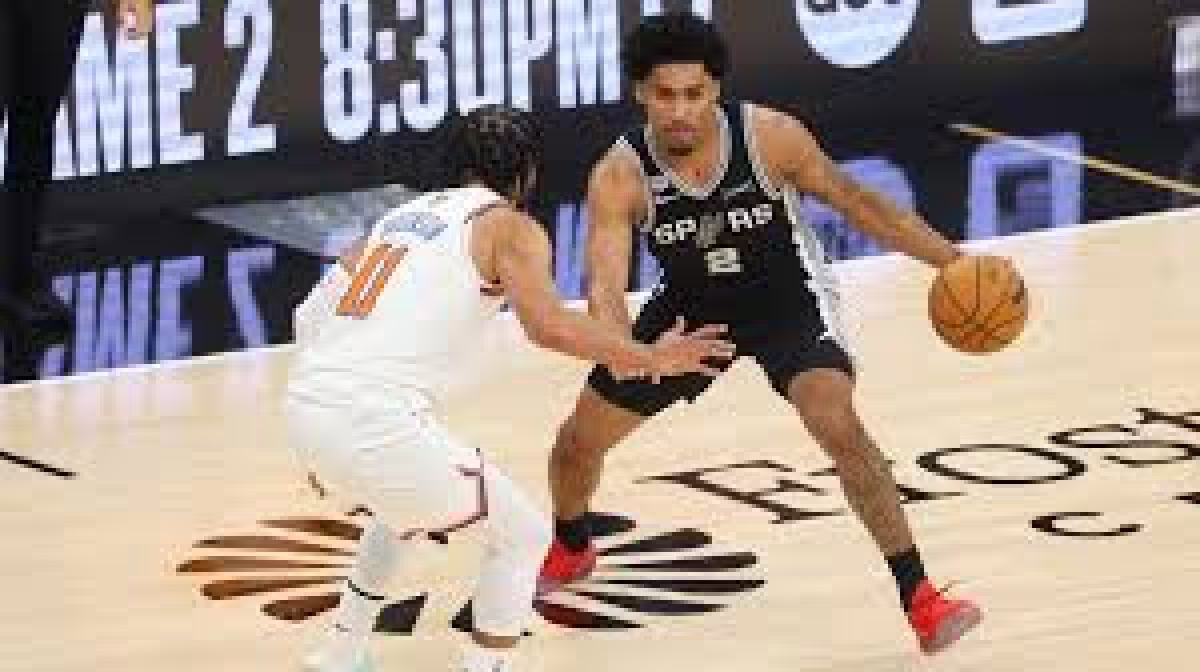
Not all of the noise pulls the same direction. One report frames Brown’s future in Boston as uncertain and suggests the team might be open to moving him; another cautions that Houston would only consider pursuing Brown if the price is right — a caveat that matters because the Rockets have organizational ties to Brown through Ime Udoka and are coming off another first‑round exit. That split — Boston possibly willing to listen versus a suitor saying it will move only on a bargain — creates a gap between theoretical interest and an executable trade.
For Boston, the calculus is straightforward on paper: Brown is a 29‑year‑old All‑NBA scorer coming off a career year, and any firm offer must match that production while satisfying salary and future‑asset demands. For the teams named by Stein, the questions are tactical — can Atlanta, Houston or Portland assemble packages that match salary, satisfy Boston’s valuation and survive the Celtics’ preference for either immediate rotation help or high‑upside young pieces like Harper and Vassell?
The most consequential unanswered question is not whether there is chatter; it is which team, if any, will convert that chatter into a concrete offer that meets Boston’s price. Until one of the three puts real assets on the table, Brown’s status with the Boston Celtics remains the hinge of an offseason that could reshape both his career and the league’s trade market for high‑salary stars.