



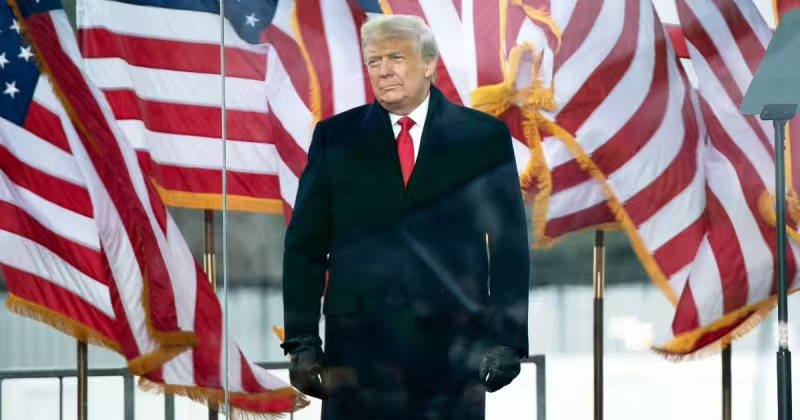
A federal judge on Friday temporarily blocked President Donald Trump’s $1.8 billion Anti Weaponization Fund, halting any transfer, review or payment of money while a lawsuit over the program moves ahead. The order from U.S. District Judge Leonie M. Brinkema in the Eastern District of Virginia freezes the fund at the center of an unprecedented settlement with Trump, his family and the Trump Organization.
The timing matters because people who say they were targeted by the government have already asked for money, and the administration has been preparing the fund with little public visibility. The Justice Department is operating it, but the process to apply cannot officially begin until five commissioners are chosen to decide how the money will be distributed. Brinkema said the pause was needed to make sure no funds are irreversibly disbursed while motions to block the distribution are pending.

The lawsuit was brought last week by Andrew Floyd, a former Jan. 6 prosecutor, and others seeking to stop the fund. Floyd filed a declaration on Thursday saying he had helped investigate and prosecute people after the Jan. 6 attack before he was dismissed in July, putting a personal face on a fight that has become both legal and political. In that filing, he said the fund was “gifting the people I helped investigate and prosecute after January 6,” and accused the administration of rushing money out the door to perceived political allies while treating him and others like disfavored enemies.
The Trump administration has said it will make whole people who were persecuted for political purposes, but critics say the fund is an illegally created slush fund for political allies. The dispute has sharpened as the administration begins erasing press releases about Jan. 6 prosecutions from the Justice Department’s website and after Trump mass pardoned roughly 1,500 Jan. 6 defendants on his first day back in office last January. A Justice Department social media account has also said the administration will do everything in its power to make whole those who were persecuted for political purposes.
For now, Brinkema’s order means the fund cannot move forward in any meaningful way until the court hears the pending motions. Who the five commissioners will be, and how people will formally apply for money, remains unresolved, and the fund is already facing other lawsuits in Washington. That leaves the administration’s signature attempt to compensate its allies and grievances stalled before the first check can go out.



