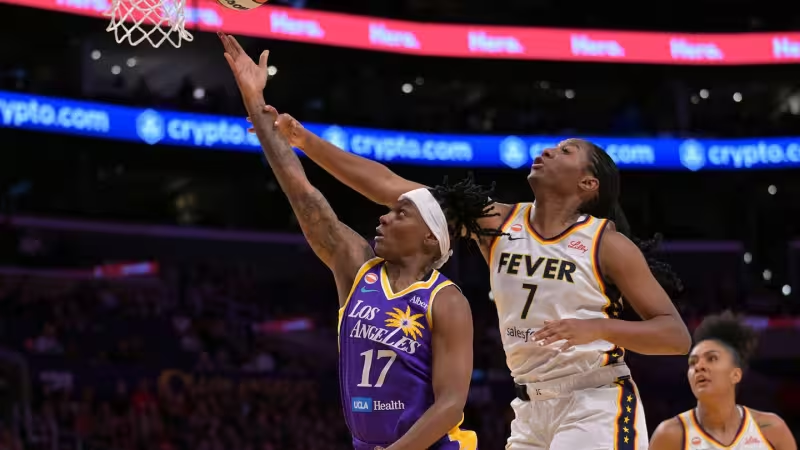
Aliyah Boston, one of the Fever's most reliable interior presences, had an uncharacteristic night as the Indiana Fever beat the Los Angeles Sparks on May 13.
Boston finished with 4 points and 7 rebounds in 23 minutes, but she had no points in the first half, finished the game without a field goal — the first time in her WNBA career she did not make a shot — and fouled out in 23 minutes.

Those numbers matter because they speak to how Boston's availability and rhythm affect the Fever. She could not find the basket and could not stay on the floor long enough to make an impact, and the box score shows a starter who was present in rebounds but absent in scoring.
After the game, head coach Stephanie White put Boston’s night down to foul trouble. “You think it was LA? I mean, I think it was foul trouble. I think it was foul trouble. She didn't get a chance, really. And I think it's hard to get into a flow when you're getting called for all those quote-unquote fouls,” White said, and she added that Wednesday's game felt like a regression in the league's officiating issues.
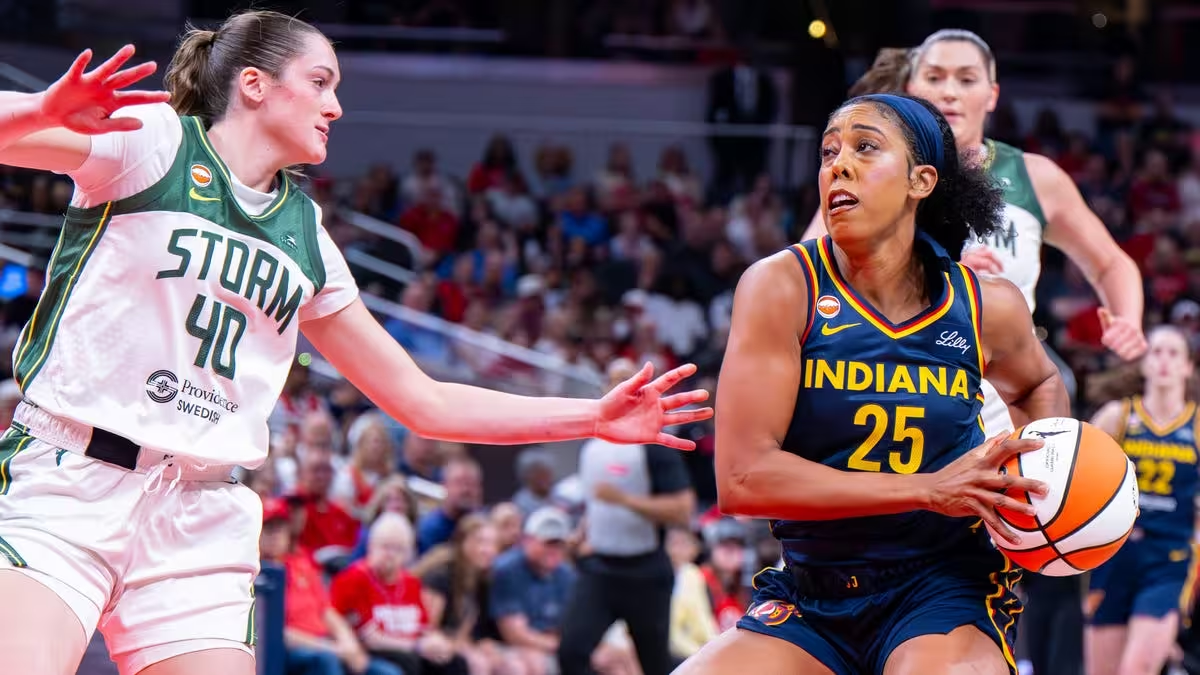

That comment lands on top of an ongoing conversation the coach has been engaged in. White spent time in the offseason trying to address officiating; Wednesday's exchanges served as a blunt example of why those conversations have not yielded a cleaner middle. The article says Boston is one of the WNBA's premier post defenders and that physicality is a key part of her game — and when physical play draws whistles, the player who built her impact on contact can be sidelined by calls.
The tension is immediate: Boston's defense relies on contact and positioning, but the game against Los Angeles showed how quickly those strengths can be neutered by foul trouble. The Fever won the game, but the victory came with a caveat — their primary post defender was limited, and the pattern of calls that night undercut the assertive style that defines her play.
The schedule does not give the Fever long to reset. They were scheduled to play the Washington Mystics on May 15, which turns Boston’s availability into a practical problem rather than a statistical oddity. The article says more fouls will likely get called in the WNBA, meaning Boston and the Fever may face similar constraints again soon.
Conclusion: if officiating continues to penalize physical post defense at the rate it did on May 13, Boston's minutes and influence will be constrained in ways that require either a change in how she defends or a strategic adjustment by the Fever to protect her from foul trouble — a simple reality born out by a single night that was otherwise a team win.