



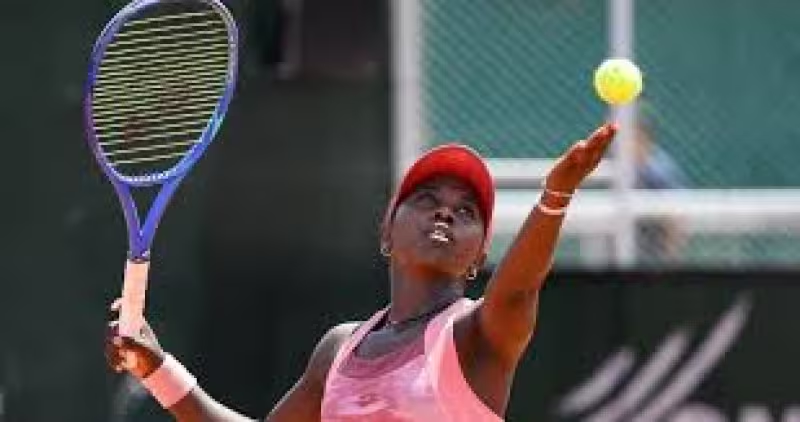
Yasmine Kabbaj gave Morocco a result it had not seen in 14 years on Tuesday, beating Berfu Cengiz 7-6, 6-3 in the first round at the Grand Prix SAR La Princesse Lalla Meryem. On the same day, Sada Nahimana made more history for Burundi by defeating Ajla Tomljanovic 6-3, 7-5, while 19-year-old Ukrainian wild card Yelyzaveta Kotliar earned her first tour-level win after a comeback over Francesca Jones.
Kabbaj, ranked No. 334, became the first Moroccan player to win a match on the WTA Tour Driven by Mercedes-Benz since 2011. She is only the fourth Moroccan woman to win a tour-level match in the Open Era, and the result added to a breakthrough run that has been building for months. Last month, she beat Diane Parry for her first career Top 100 victory in the first round at a WTA 125 event in Saint-Malo, and her career high remains No. 331.

The win also fit a familiar pattern for Kabbaj in Rabat. She made her WTA main-draw debut there as a wild card in Rabat 2024, then returned with another milestone that mattered far beyond one scoreboard. For a player who has hovered near the edge of the top 300, this was the kind of result that changes how a home crowd sees her and how the tour has to treat her. She is now the third-highest ranked Moroccan woman in WTA history.
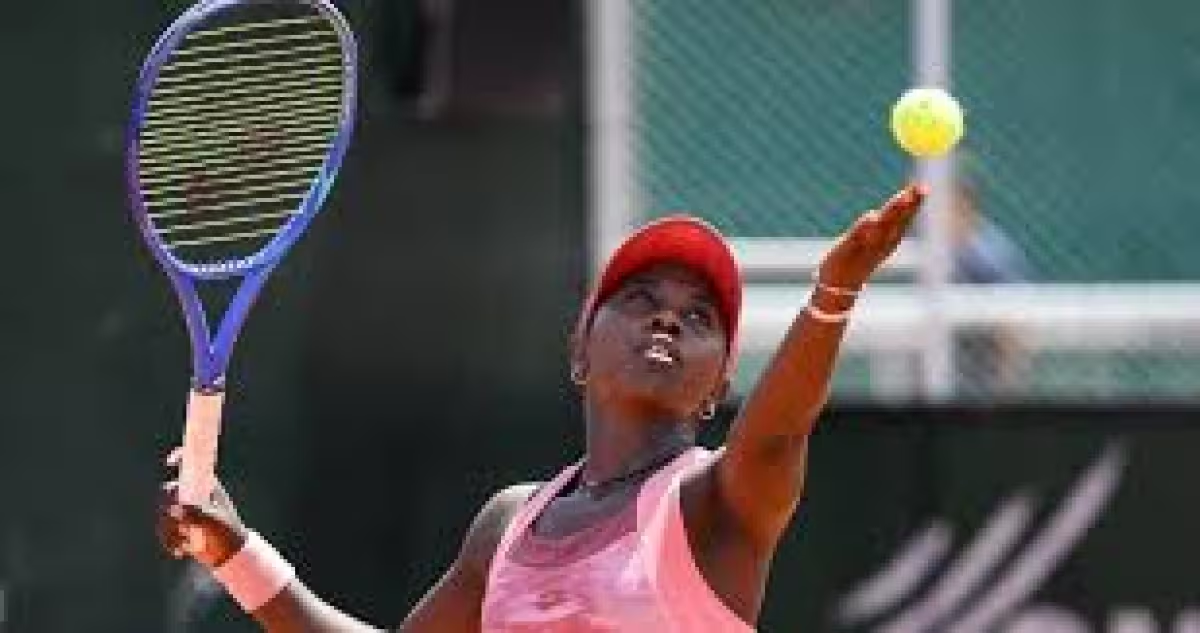
Nahimana’s victory carried a different kind of weight. The 25-year-old from Burundi, ranked No. 231, upset three-time Grand Slam quarterfinalist Tomljanovic to become the first Burundian to score a victory over a Top 100 opponent. It was also another step in a fast-moving rise: she became the first player from Burundi to compete in a WTA main draw in Rabat in 2023, then became the first Burundian to win a tour-level match in 2025 by defeating Aya El Aouni to reach the second round.
That run has not come out of nowhere. Nahimana reached the finals of the Bujumbura W50 and Platja d'Aro W35 in her four prior tournaments, then reached the semifinals of the Zagreb W75 last week before arriving in Rabat. Her win over Tomljanovic was not just an upset; it was evidence that the results from the past few weeks were part of a real climb.
Kotliar’s victory rounded out a day of firsts. She trailed Jones 4-0 in the third set before pulling through 2-6, 6-3, 6-4 in 2 hours and 20 minutes, turning a match that looked gone into a milestone of her own. The three results gave Tuesday’s Rabat session a rare sense of accumulation: one national breakthrough leading to another, with history arriving in different forms but on the same court.
For Morocco and Burundi, the significance is immediate and concrete. Kabbaj has ended a 14-year wait for a home victory by a Moroccan player on the WTA Tour Driven by Mercedes-Benz, and Nahimana has pushed Burundi one step further again after first opening the door in Rabat two years ago. Those are not abstract markers. They are results that change records, rankings and expectations at once.



