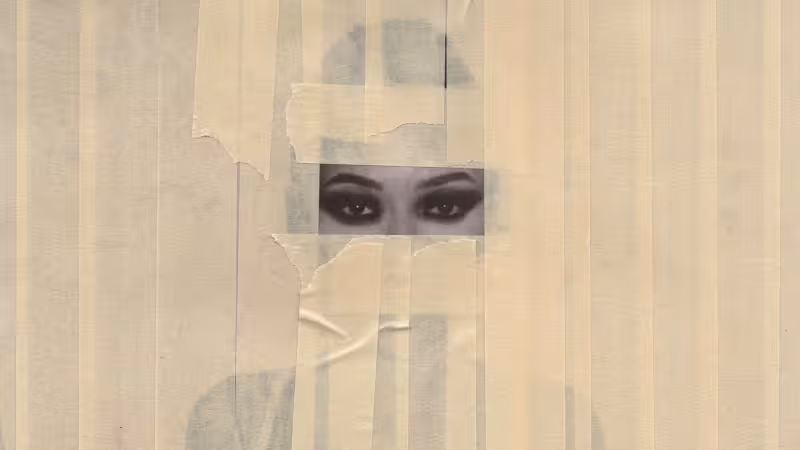
Pitchfork reviewed Drake’s new album HABIBTI after its release as part of what the outlet calls his comeback bill, and the verdict is blunt: 11 tracks that lean on familiar moods but lack the vivid detail that once set him apart. Drake, the artist at the center of that return, surfaces here in fragments—nostalgic textures more often than sharp confessions.
The review zeroes in on sound and line-level moments. It notes morose R&B melodies that feel beamed from Take Care’s deleted scenes and says the opener, Rusty Intro, uses guitar strums mutated by Broward, Florida producer DJFrisco954. An early cut called WNBA arrives with an intro where Drake’s voice warbles and strains through lyrics about long-distance communication issues. The review flags I’m Spent as a duet with Loe Shimmy and describes Hurr Nor Thurr as if its ghostly hums and drums were covered in molasses — a track that also features Sexyy Red. Pitchfork quotes lines tied to the record’s tone, including Drake’s: "They so pressed about the beef, it’s panini" and the casual, recurring motif "peach bellini."

The numbers are small but telling: 11 tracks, contained atmospheres, and repeated callbacks to the sonic territory of Take Care and Dark Lane Demo Tapes. For a listener sorting the album against the noise of the moment, those specifics give HABIBTI its weight. They also give the review its most pointed criticism: Drake’s writing on the record feels smoothed over and starved of evocative detail, even when the production reaches for intimacy.
Pitchfork places HABIBTI in the context of Drake’s recent run — ICEMAN, $ome $exy $ongs 4 U, Her Loss, and For All the Dogs — and argues the new record is part of a pattern. Early in his career, the review notes, Drake often wrote poetic, vulnerable songs scored by moody confessions and romantic melodrama. Views and What a Time to Be Alive are recalled as stages where mafioso talk joined that melodrama. More recently, however, his music has been shaped by two of the most high-profile rap beefs of all time and hours of public speculation about his personal life; taken together with those projects, HABIBTI is cast as another attempt to balance private feeling with public posture.
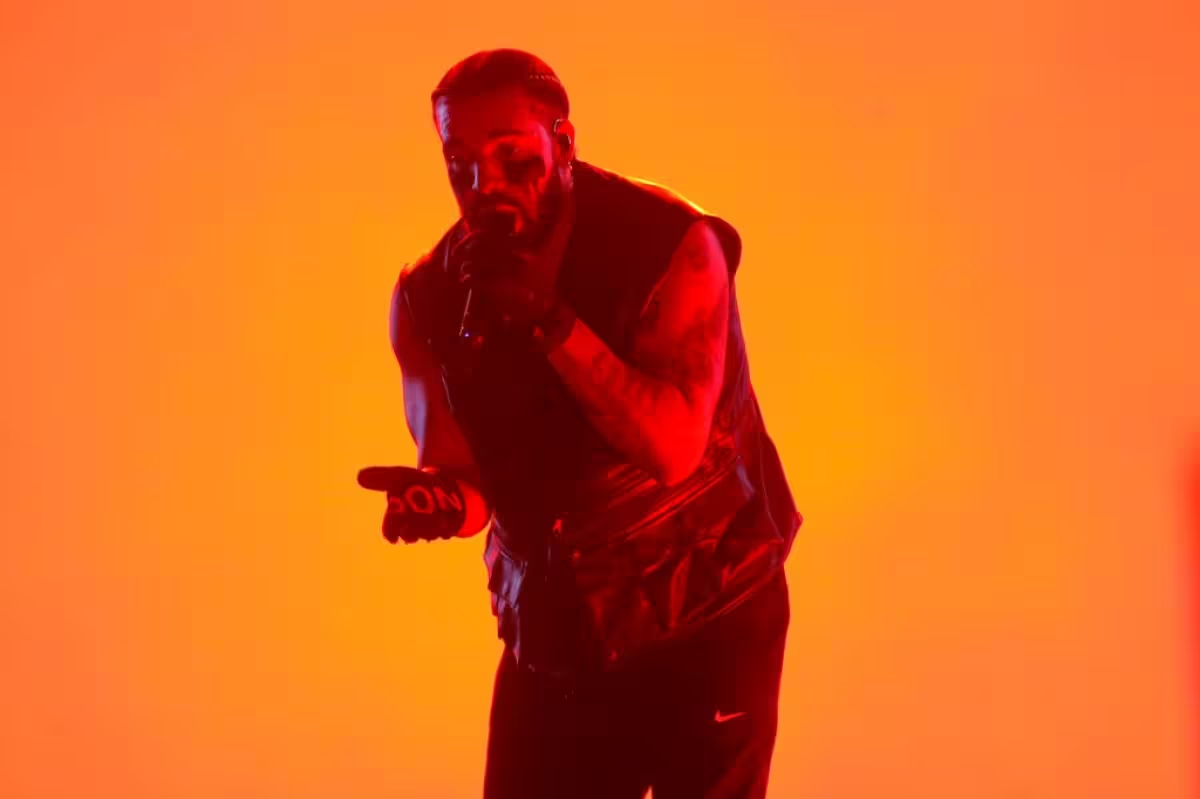


The tension in the review is simple and sharp: HABIBTI sounds like a record trying to return to a softer, more confessional Drake while simultaneously insisting on distance. Pitchfork hears morose R&B melodies and production flourishes that echo earlier breakthroughs, but it also hears writing that retreats from specificity — a desire to hide any wounds rather than expose them. That contradiction leaves the album, in the reviewer's view, nostalgically familiar but emotionally flattened.
That tension shows up in the record’s moments of bravado and blunted feeling alike. Tracks that might have been small theaters for vulnerability instead become textural exercises; lines that could sting land as clever turns. Even collaborations that should shift perspective — Loe Shimmy's presence on I’m Spent, Sexyy Red’s appearance on Hurr Nor Thurr — are, in the review’s reading, folded into the album’s overall reluctance to linger on the messy human detail that once defined his best work.
For readers watching charts, the review offers an implicit answer to the question of whether HABIBTI represents a raw, restorative return: it does not, according to Pitchfork. Instead, the record reinforces the pattern the outlet describes across Drake’s recent releases — a refined defensive posture that favors texture over the kind of evocative songwriting that made his earlier albums feel lived-in.
If the record’s sonic callbacks to Take Care and to Dark Lane Demo Tapes provide a familiar map, Pitchfork concludes they are not the same road back to emotional clarity. HABIBTI is framed as a backward glance dressed in modern studio sheen — a comeback move that shows craft but not the kind of candid, granular feeling that once made Drake feel indispensable.