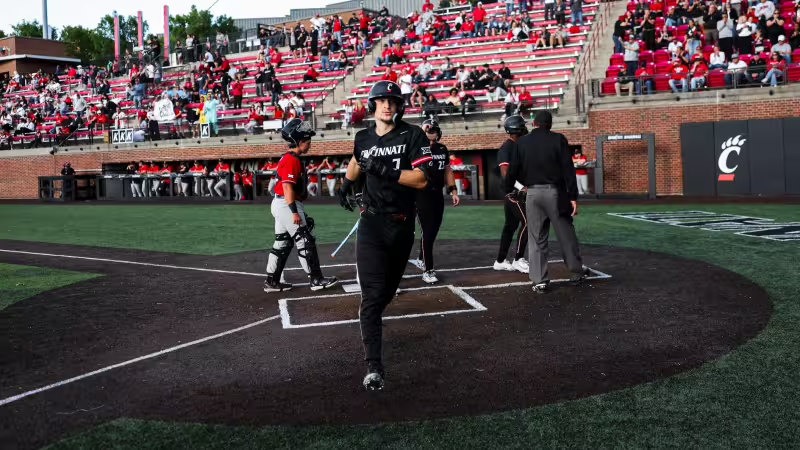
Landon Hairston, the Big 12 Player of the Year, took the mound of attention Thursday night as No. 21 Arizona State faced No. 17 Cincinnati in the Big 12 Tournament quarterfinals at Surprise Stadium in Surprise, Arizona.
Game No. 8 of the tournament kicked off at 8 p.m. MST (11 p.m. ET) on May 21, 2026, and was carried on ESPNU with a stream available on FUBO. Both programs arrived in the quarterfinals by virtue of double-byes, setting up a top-25 clash between two nationally ranked teams in a single-elimination setting.

The raw numbers underlined the stakes: Arizona State entered the night as the No. 21 team in the country and was identified in the tournament as the No. 3 Sun Devils; Cincinnati came in as No. 17 nationally and was listed as the No. 6 Bearcats in the Big 12 bracket. The matchup put conference seeding against national perception in a late-night slot that promised high leverage for both clubs.
Nathan Taylor, a First-Team All-Big 12 honoree, stood alongside Hairston as the kind of player a coach hopes to depend on when a season narrows to a single do-or-die game. Those honors — Hairston’s Player of the Year and Taylor’s First-Team selection — were the clearest, most concrete previews of how each team might try to decide the quarterfinal. Beyond the award labels, the game was a test of which side’s top performers could carry more of the load under the bright lights of Surprise Stadium.
Context matters: both teams skipped the early rounds and were inserted directly into the quarterfinals, which compresses margin for error. For asu baseball followers and Cincinnati backers alike, a win here did more than advance a team; it conserved pitching, extended a conference run and reshaped the weekend schedule for the winners in a tournament that places a premium on rhythm and rest.
The tension was built into the matchup. National rankings suggested a close equality — No. 17 vs. No. 21 — while conference seeding suggested a gap: Arizona State, the No. 3 seed, held a positional advantage over Cincinnati’s No. 6 slot. That contradiction posed the day's central question on the field: which measure would prove more predictive, the season-long national ranking or the tournament bracket position that reflected conference outcomes?
Television and streaming put the game in front of a national late-night audience on ESPNU and FUBO, but the timing also carried a cost. An 11 p.m. ET start meant many viewers on the East Coast would be watching well after most regular-season windows close, which concentrated the audience among those most committed to the postseason. For programs that keep an eye on national perceptions and postseason résumé, the public stage on Thursday night offered an outsized chance to make an impression.
What happens next is straightforward and decisive: the winner of Game No. 8 moves deeper into the Big 12 Tournament and the loser goes home. The most consequential question left hanging after Thursday’s nightcap was sharpened by those two names — Hairston and Taylor — and by the numbers beside the team names: will the Big 12 Player of the Year or the First-Team honoree tilt a tight quarterfinal to one side, or will the bracket seeding and depth of the No. 3 Sun Devils or No. 6 Bearcats carry the day?