



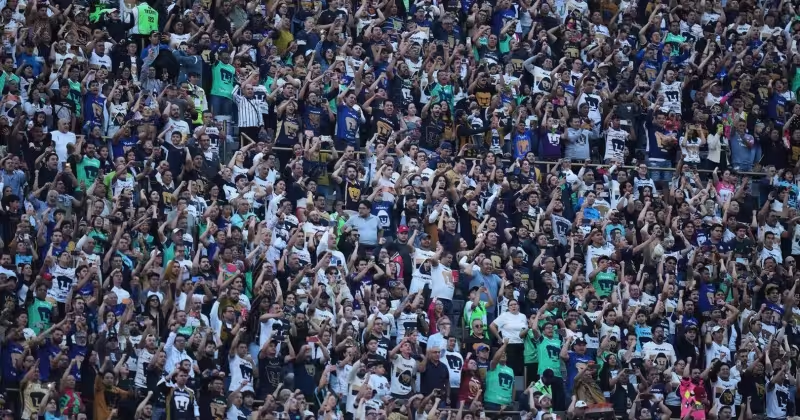
The Mexican Football Federation on Thursday launched an advertising campaign, called "The Wave Yes, The Chant No," aimed at stopping a one-word homophobic chant that has shadowed Mexico's fans for two decades as the country prepares to open the 2026 World Cup on June 11.
Former Mexico stars including Hugo Sánchez, Manuel Negrete and Javier Aguirre will front the effort and ask fans not to shout the chant, which usually erupts when an opposing goalkeeper takes a goal kick. The federation said the campaign will run in two stages — May 21 to 31 and June 1 to 30 — and will appear on social media and on stadium video screens during Mexico's three friendly matches before the tournament. Mexico's first friendly shown in the campaign is against Ghana in Puebla next Friday.

The timing is stark: the chant resurfaced strongly in recent weeks, including during Liga MX playoff matches held last weekend, and the federation noted that FIFA has repeatedly sanctioned Mexico over it. The chant has earned Mexico a dozen FIFA sanctions and Mexico has appeals against FIFA punishment over a 2024 match against the U.S. currently pending before the Court of Arbitration for Sport.
"This campaign aims to raise awareness among fans about the importance of supporting the Mexican national team with the wave and not with discriminatory chants that FIFA sanctions," the Mexican Football Federation said. The campaign also leans on a deeper piece of stadium folklore: "It was at a World Cup 40 years ago that The Wave was immortalized, a movement of unity that remains in stadiums today as one of the most significant and iconic legacies of international football."
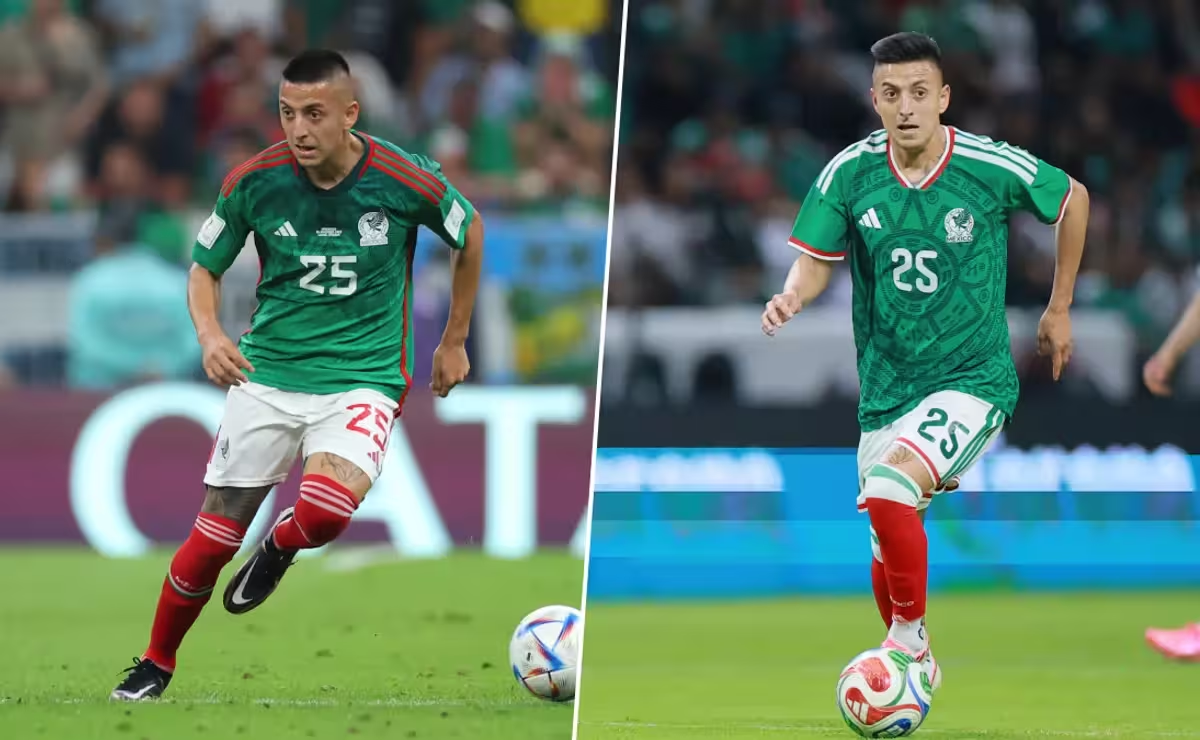
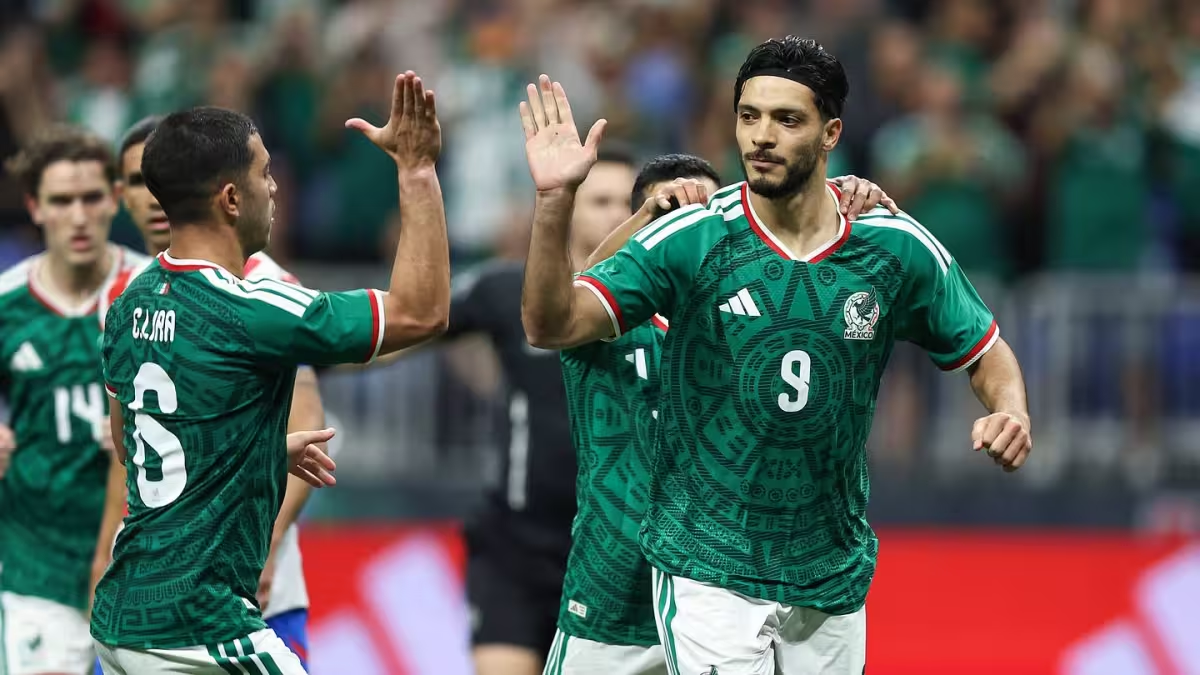
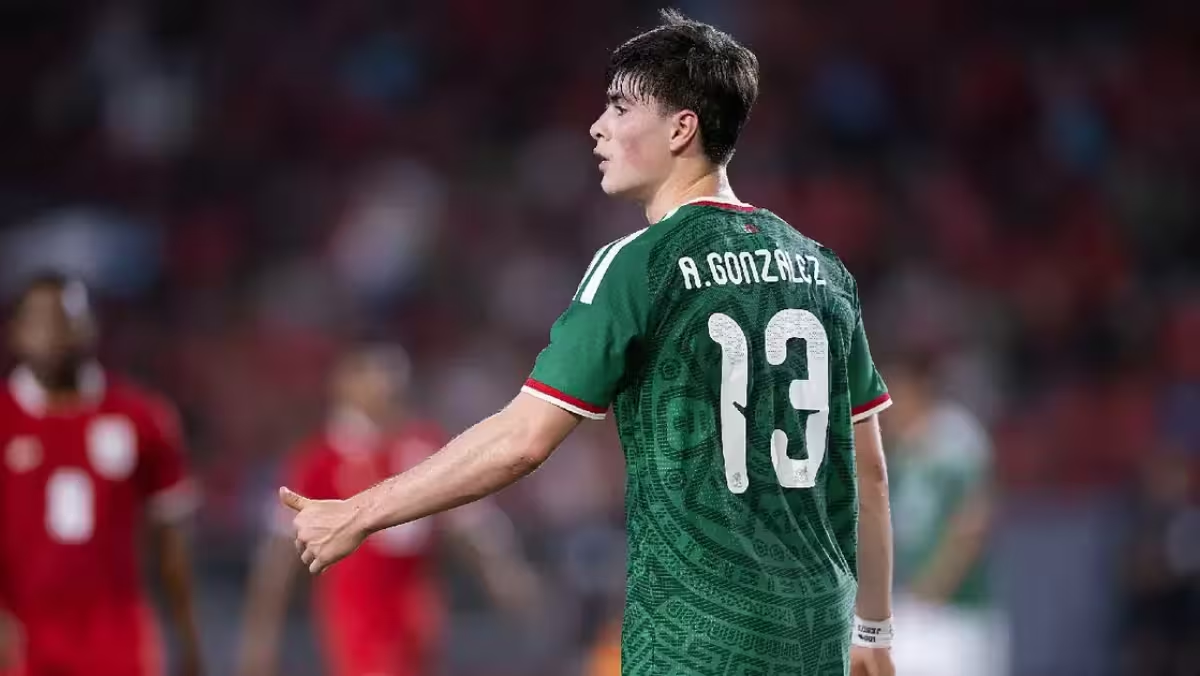
Those two sentences explain the campaign's strategy: replace a discriminatory outburst with a globally recognized, family-friendly stadium gesture. But the campaign faces a steep cultural headwind. The chant is a one-word slur that literally means male prostitute in Spanish, it went viral at the 2014 World Cup in Brazil, reappeared in Russia in 2018 and again four years later in Qatar, and has become an ingrained reflex at many matches.
That history is the campaign's tension. Mexico will be the first country to host the World Cup three times — having previously staged the tournament in 1970 and the 1986 World Cup — and will share hosting duties in 2026 with the United States and Canada. Hosting brings millions of eyes and the financial upside of a home tournament, but it also raises the stakes of any disciplinary lapse: repeated chants have already cost Mexico repeated FIFA fines and disciplinary measures.
Campaign organizers are betting on visibility and senior credibility. The advertisements feature survivors of Mexico's most famous team eras and will play in the run-up to the June 11 opener against South Africa. With less than a month before the tournament begins, the federation will test the ads and the players' appeals in public at the three warmup matches, including next Friday's match in Puebla.
The central question now is practical: can appeals from national icons and a two-stage ad push erase a chant that resurfaced this season and has produced a dozen FIFA sanctions over time? The federation has put its most recognizable faces and a clear message in front of fans; whether that will prevent new sanctions when Mexico hosts the world's stage is the immediate, decisive outcome to watch.



