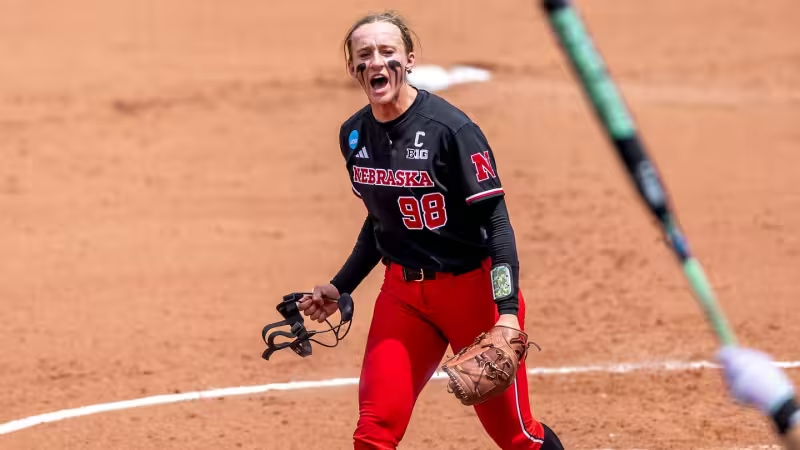
Thursday night, Nebraska opened a super regional at Bowlin Stadium against Oklahoma State, and the Huskers need two wins this weekend to reach the Women’s College World Series in Oklahoma City.
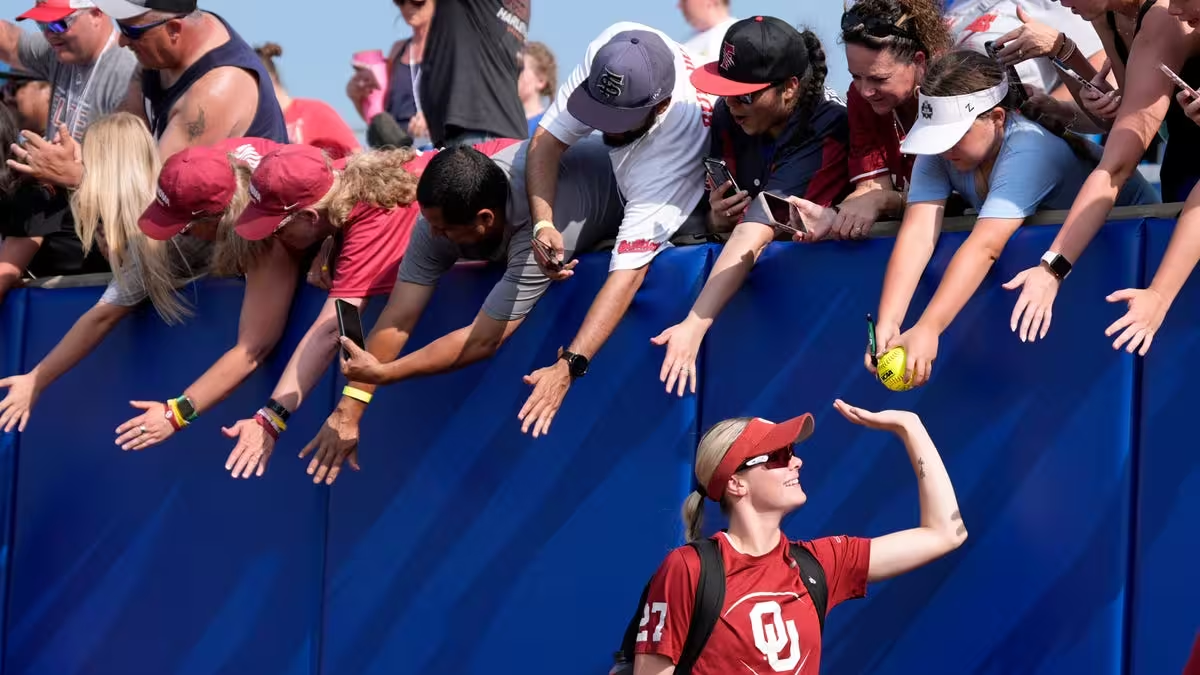
Jordy Frahm, the two-way star who both pitches and hits at an elite level, is the central figure in the moment. Frahm, in her second season in Lincoln after returning home following back-to-back national championships with Oklahoma, has been the catalyst for a surge that rides on her arm and bat.

The numbers underline how much has changed since Frahm arrived. After she announced her return, the Nebraska athletic department received 2,124 requests in the following days; by contrast, the program had 365 season-ticket holders for the 2023 season and just 26 ticket requests for 2024 before that announcement. Bowlin Stadium, which held around 2,500 before Frahm, was expanded to roughly 3,600. Nebraska averaged around 1,000 fans per home game in 2023 but broke, reset and broke its attendance record multiple times during 2026, with the regular-season finale against Iowa drawing 3,541 fans.
Those figures matter because they are a measure of expectation as much as support. Nebraska had not appeared in the Top 25 since 2015 before Frahm's arrival; since she came to Lincoln the team has consistently been ranked, and in 2026 Nebraska reached No. 1 for the first time in program history. Transfers and new arrivals followed the momentum: Bella Bacon came from Purdue, Ava Kuszak from Wisconsin, Kacie Hoffmann from Arkansas, Hannah Camenzind and Lauren Camenzind from Arkansas as well, and freshman Alexis Jensen joined the roster.
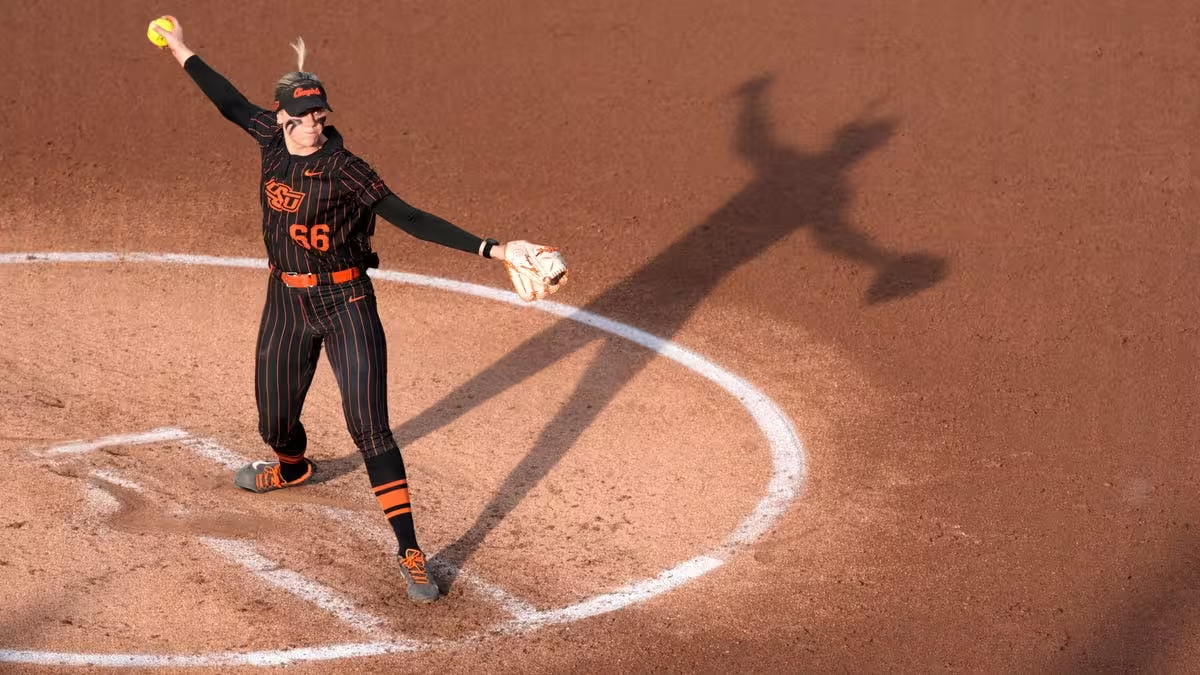
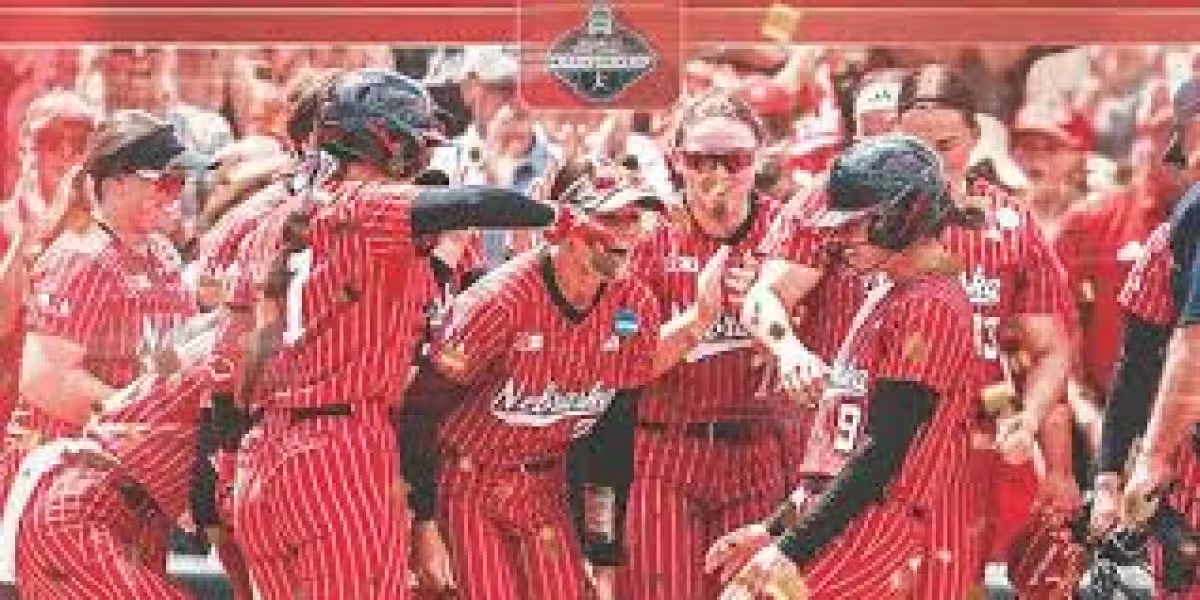
On the field, the story is less settled. The Huskers swept last week’s Lincoln Regional, but Oklahoma State arrives after winning its regional in Stillwater. The teams split their series in February, so Thursday’s opener at Bowlin Stadium is not a formality; it is the first step in a short weekend that requires two victories for Nebraska to advance to Oklahoma City.
Tension runs several ways. Frahm carries a spotlight that has prompted comparisons to Shohei Ohtani because she impacts games as both a pitcher and a hitter — a comparison that has become common during her two seasons in Lincoln. That attention has translated into more seats, louder crowds and higher rankings, but it also concentrates expectations on a single player and a single program. Oklahoma State’s regional win and the February split underline that a packed stadium and historic attendance do not guarantee the outcomes that send a team to the Women’s College World Series.
The rest of the weekend will answer the practical question at hand: can Nebraska turn fan momentum and Frahm’s two-way excellence into two wins? The program’s rapid climb is real — season tickets, stadium capacity, rankings and roster movement all changed after Frahm returned — and the Huskers have proven they can win regionals. What remains is finishing a super regional at home against a team that beat its own regional opponents and split with Nebraska earlier this year.
Frahm’s arrival has already rewritten the program’s recent history. If Nebraska advances this weekend, that change will have its clearest proof: a restored path to the Women’s College World Series shaped around a player who has altered attendance, recruiting and rankings in Lincoln. If the Huskers fall short, the figures and headlines will still mark a transformation, but the most consequential judgment on this two-season experiment will be that momentum without a trip to Oklahoma City was not enough.