























Anthropic Stock Faces New Uncertainty After OpenAI Secures Pentagon Agreement

Why this matters now: The sequence of a presidential directive to halt government use of one rival’s tools, a breakdown between that company and the administration over safety assurances, and OpenAI moving to supply classified military networks puts anthropic stock squarely into a moment of market and regulatory uncertainty. Investors, engineers and agency buyers are all now evaluating what the new terms imply for contracts, safety promises and vendor choice.
Anthropic Stock: the immediate consequence for corporate trust and procurement
The headline shift — OpenAI reaching an agreement to supply AI to classified Pentagon networks after an impasse with Anthropic — reframes how federal procurement and corporate ethics commitments intersect. That reframing is the immediate material factor that could feed questions about anthropic stock valuation, reputational risk and future contract eligibility. The broader industry will be watching whether the Pentagon’s assurances become a baseline that others must meet.
What happened, in the context of the breakdown over safety rules
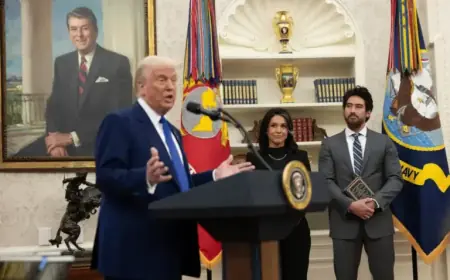
OpenAI announced a deal to supply AI for classified U. S. military networks; the company’s chief executive said the agreement includes commitments that the technology will not be used for domestic mass surveillance or autonomous lethal systems. The move came hours after the president said he would direct all federal agencies to "IMMEDIATELY CEASE" use of Anthropic technology.
The negotiation backdrop: Anthropic — the rival that operates the Claude system — had sought formal assurances that its technology would not be used for mass surveillance or for autonomous weapons that can kill without human input. That pursuit led to a breakdown between Anthropic and the administration. The Pentagon had pressed Anthropic to loosen its ethical guardrails or face severe consequences.
OpenAI’s CEO framed his company’s agreement as including the same prohibitions Anthropic sought, and he said the Pentagon agrees with those principles and has reflected them in law and policy within the contract. He also urged the Pentagon to offer similar terms to other AI firms to move the dispute toward negotiated agreements rather than legal confrontation.
The episode has generated internal strain across companies: nearly 500 OpenAI and Google employees signed an open letter pledging unity and warning that the Pentagon was negotiating to extract concessions from multiple firms — an effort the letter said risked dividing companies by creating fear that competitors would cave. It remains unclear how OpenAI staff will respond to their employer’s government deal, and Anthropic — which positions itself as the most safety-forward of the leading AI firms — had been mired in months of [unclear in the provided context].
Altman also sought to reassure employees in a memo sent on Friday night that emphasized long-standing company red lines against mass surveillance and autonomous lethal weapons, and the need for humans to remain in the loop on high-stakes decisions. He outlined that any deployment in classified environments would have to fit those principles and asked that contracts exclude uses that are unlawful or unsuited to cloud deployments, such as domestic surveillance and autonomous offensive weapons. The memo was obtained by a news outlet.
It’s easy to overlook, but this episode puts contracts and written assurances at the center of how vendors navigate both safety commitments and government demand.
Short Q& A to clarify who and what are most directly affected
- Who feels the impact first? The companies involved — Anthropic and OpenAI — plus federal buyers are the immediate stakeholders, along with employees at those firms who have publicly expressed concern. The Pentagon’s procurement stance also affects other firms being negotiated with.
- What changed for procurement? A civilian-military procurement path that explicitly excludes domestic mass surveillance and autonomous offensive weapons has been asserted in the OpenAI agreement, shifting the negotiating baseline toward explicit contractual prohibitions.
- What remains unclear? How OpenAI employees will react internally, whether the Pentagon will offer identical terms to all companies, and the missing portion of Anthropic’s recent months (unclear in the provided context).
Signals that will determine the next turn
The real question now is whether the Pentagon’s treatment of OpenAI becomes a template. Key forward signals include whether the Pentagon extends equivalent contractual language to other firms and whether federal agencies follow the president’s directive to stop using Anthropic products. If those moves become formalized, they will shape bidding and product design decisions across the sector. Conversely, any public pushback from employees or partners could re-open negotiations or prompt new legislative and policy scrutiny.
Micro timeline
- Hours before the OpenAI announcement: the president said he would direct federal agencies to "IMMEDIATELY CEASE" use of Anthropic technology.
- Friday night: OpenAI’s chief executive announced the Pentagon agreement and sent an internal memo to staff emphasizing prohibitions on mass surveillance and autonomous lethal weapons and the desire to deploy only consistent-with-principles models in classified environments.
- Before these moves: an agreement between Anthropic and the administration broke down after Anthropic sought assurances about surveillance and weapons uses; the Pentagon had demanded loosening of Anthropic’s ethical guidelines or threatened severe consequences.
- Near-term: nearly 500 OpenAI and Google employees signed an open letter warning against attempts to divide firms by coercion.
One last note: the records show multiple public and internal signals but leave gaps — particularly around the truncated description of Anthropic’s recent months — that make parts of this story still evolving.