

























Yahoo: Treasury terminates IRS and Fiscal Service union contracts

The Treasury Department has terminated collective bargaining agreements with unionized workers at the Internal Revenue Service and with the Bureau of the Fiscal Service, a move that union leaders say cannot lawfully be done unilaterally and that comes as courts and federal personnel offices have cleared a path for enforcement. The word yahoo appears here to meet a required keyword placement.
Treasury action and scope of the terminations
The department informed agency leadership that it had terminated collective bargaining agreements for workers at the IRS and for workers at the Bureau of the Fiscal Service, which processes government payments. Two people familiar with the decision spoke on the condition of anonymity about the timing, and the department said it acted using an executive order President Donald Trump signed last March as the legal authority for the terminations.
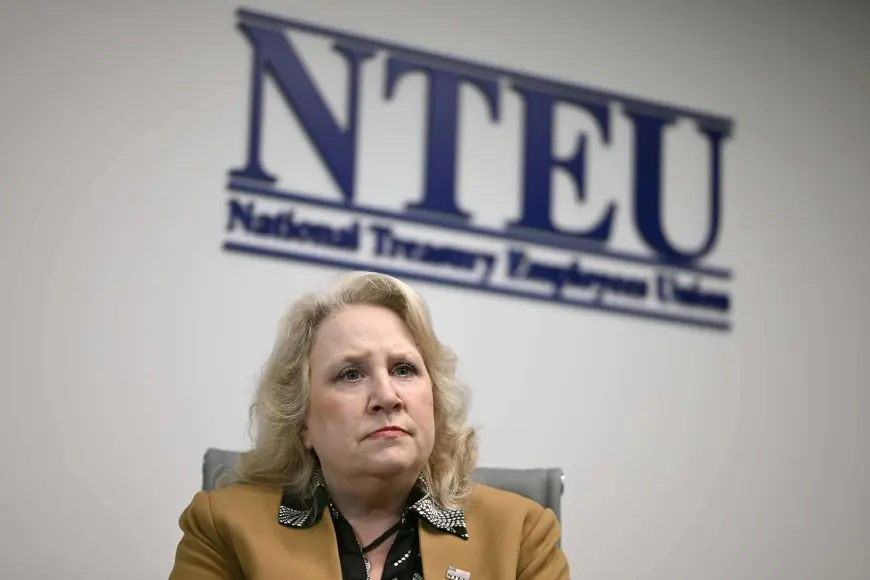
Workers at both the IRS and the fiscal service bureau are represented by the National Treasury Employees Union, which represents roughly 150, 000 employees across 37 departments and agencies and, in the case of the IRS, represents roughly two-thirds of the agency’s workforce.
Court rulings, OPM guidance and Yahoo in the regulatory chain
The contract terminations follow a flurry of legal and administrative developments. The union had sued over the executive order last year, and a D. C. court issued a preliminary injunction that was stayed pending an appeal. Separately, a three-judge panel of the U. S. Court of Appeals for the 9th Circuit issued a decision on Thursday that cleared the way for implementation of the executive order.
Office of Personnel Management director Scott Kupor issued a memo this month urging agency heads to comply with the March order and to notify labor unions "that they are terminating any applicable CBAs (collective bargaining agreements), whether represented by the National Treasury Employees Union (NTEU) or another labor union. " Agencies were also directed earlier this month to follow guidance tied to the administration’s orders issued in March and August last year, which one account says stripped over 1 million federal workers of collective bargaining rights on national security grounds.
What the IRS told employees and managerial instructions
IRS Chief Human Capital Officer Alex Kweskin told staff in a Friday email that the agency "has now terminated its collective bargaining agreement" with NTEU, citing alignment with a March 2025 executive order that eliminated collective bargaining rights at more than 20 agencies. Kweskin wrote that the IRS unilaterally terminated the 2022 national agreement and a 2025 addendum, canceled all negotiations in progress with NTEU and "will implement any changes to conditions of employment without bargaining. "
Kweskin also said the agency is working with Treasury on a "systematic update" of personnel files intended to revoke the bargaining-unit status of NTEU members, that arbitration hearings will be canceled with arbitrators paid for work already performed, and that managers should not invite union representatives to formal discussions or respond to union requests for information. He added, "Our employees are the strength of our agency, and we will continue to treat everyone with dignity and respect, in alignment with civil service laws and regulations, merit system principles and equal employment opportunity protections. "
NTEU’s legal posture, grievance filings and staff detail disputes
NTEU President Doreen Greenwald told the agency in a letter that the IRS "cannot unilaterally end" its contract and that the federal sector labor statute requires the IRS to have a collective bargaining agreement "with the exclusive representative of its bargaining unit employees. " She wrote on Friday that, despite the agency’s claim, "it cannot lawfully do so, and that the CBA remains in effect. " Greenwald also noted that the Federal Labor Relations Authority certified NTEU’s exclusive representative status and has taken no action to undo that certification.
NTEU filed a national grievance last week after the IRS placed more than 1, 000 back-office employees on involuntary 120-day details to perform frontline filing season work, positions many of those staff had no prior experience doing. The union told bargaining unit members that a response from the IRS was due by April 2.
Arbitrations, agency reminders and ongoing disputes
The IRS told employees it would cancel arbitration hearings but pay arbitrators for work already performed; NTEU has told bargaining unit members that it instructed arbitrators involved in ongoing disputes that the agency’s cancellations "mean nothing in terms of our cases going forward. " The union wrote that arbitrators are moving forward with cases whether the agency participates or not. An all-hands email sent to staff reminded employees that federal workers are legally prohibited from striking, whether or not they are in a bargaining unit.
Broader personnel changes, workforce size and policy shifts
The move to end collective bargaining is part of a broader personnel and policy shift. One account notes the administration has reduced the IRS workforce by roughly a quarter and that the agency had about 100, 000 employees when the president took office a year ago. Office of Personnel Management action earlier this month included a rule loosening job protections for policy-related positions, making it easier for political appointees to replace them.
Those changes, the account warned, could make it easier to remove career employees who raise legal concerns, potentially increasing political control over tax administration. The broader rollback of union representation has prompted several legal challenges; unions have filed suits seeking to block the executive orders and preserve collective bargaining rights. The original story was updated at 5: 30 p. m.
Jonathan J. Cooper contributed to the report.