
















Reed Sheppard Rising: Defense and Shooting Surge Put Rockets Guard in Award Conversations

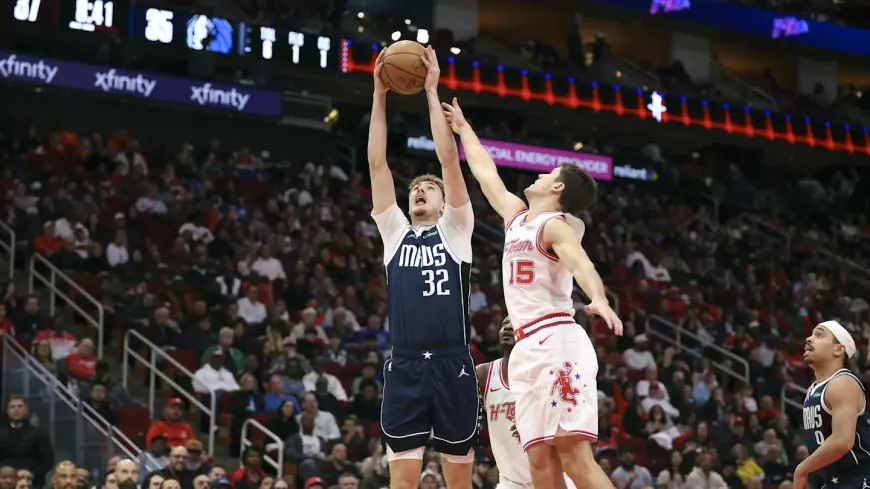
Reed Sheppard has emerged as a key reserve for the Houston Rockets this season, pairing a marked jump in 3-point accuracy with more consistent minutes after a vacancy opened in the backcourt. The development matters now because it has vaulted him into late-season award conversations and left the Rockets better positioned as they pursue a high playoff seed.
Reed Sheppard: Development details
Sheppard, the Rockets' third pick in the 2024 NBA Draft and a one-year standout at the University of Kentucky where he led the nation in 3-point shooting, has posted tangible statistical gains in his second NBA season. He is averaging 12. 7 points per game with a 55 percent true shooting rate, nearly 3. 0 rebounds, about 1. 4 steals, and roughly three assists in nearly 25 minutes per contest. Over six starts he has shown the type of production that has put him into the conversation for Sixth Man of the Year and Most Improved Player.
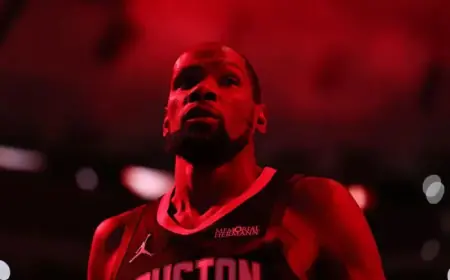
The rotation change that expanded his role began at the outset of the 2025/26 season when starting point guard Fred VanVleet suffered an ACL tear during training camp. That injury created a vacuum in the Rockets' backcourt; while Sheppard was not tasked with replacing VanVleet’s playmaking entirely, the opening allowed him to play alongside newly acquired Kevin Durant and to inherit more shooting opportunities off the bench.
His shooting numbers illustrate the shift. After a rookie campaign that featured a 33. 1 percent mark from deep, Sheppard has risen to 38. 4 percent from beyond the arc this season. The confidence he demonstrates at the rim and from distance follows a year in which he spent significant time with the franchise’s G League affiliate, the Rio Grande Valley Vipers, including a standout 50-point performance that underscored his scoring ceiling.
Context and escalation
Sheppard's path to this point was not linear. As a rookie in 2024/25 he struggled offensively and defensively, experiences that led to a stint with the Vipers rather than a steady NBA role. That G League stretch produced eye-catching scoring but did not immediately translate into NBA consistency. Early in his Rockets tenure, defensive lapses prompted coach Ime Udoka to bench him for extended stretches while opponents targeted him when he entered games.
What makes this notable is the contrast between that early hesitation and the current evaluation of his defensive value: while he initially struggled on that end, Sheppard is now regarded as a high-effort, on-ball defender who can log meaningful minutes late in contests. His stature has not prevented him from staying on the floor, and his on-court role has evolved from developmental prospect to a dependable scoring option off the bench.
Immediate impact
The shifts in Sheppard’s game have measurable effects on the Rockets’ season. Houston sits at 34-20 and occupies a top-three seed in the Western Conference picture, with Sheppard contributing bench scoring and perimeter spacing in a lineup that includes Kevin Durant. The team has gone 13-10 in its last 23 games, a stretch in which Sheppard had moments such as a 13-point outing off the bench in a 105-101 win over Charlotte. The Rockets face a marquee matchup at Madison Square Garden against the 35-21 New York Knicks, giving Sheppard a national platform to reinforce his case for postseason honors.
Beyond single-game output, his improved 3-point accuracy and nearly 25 minutes per night have provided the Rockets with a more reliable shooting option than they had at the same point in recent seasons. That spacing and scoring relieve pressure on starters and give coach Ime Udoka tactical choices late in games.
Forward outlook
The immediate calendar offers clear milestones: Sheppard will appear in a high-profile matchup at Madison Square Garden and the Rockets will push toward the playoffs with each remaining regular-season game carrying seeding implications. Statistically, he is positioned to finish the season with improved per-game outputs compared with his rookie year—particularly in 3-point percentage and scoring—if current trends hold.
Selection committees and award voters will reassess candidates across the final weeks of the regular season. For the Rockets, maintaining a top-three standing in the West will hinge in part on whether Sheppard can sustain his shooting and continue to limit defensive lapses. The team’s immediate actions—continuing to play him alongside Durant and keeping him in lineups that exploit his shooting—represent confirmed strategies shaping both his candidacy for awards and Houston’s postseason positioning.