

















The Walsh Sisters Review Bbc — Stefanie Preissner on awkward sex scenes, rehab and compressing five novels

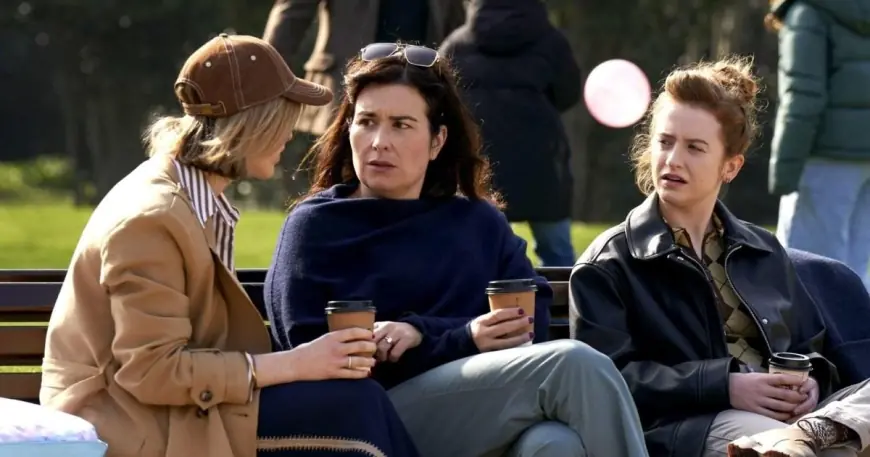
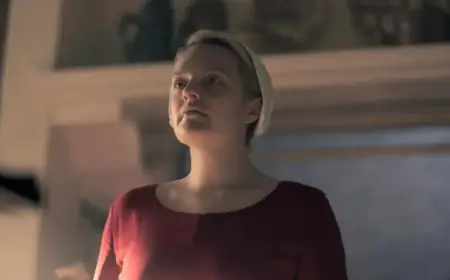
The walsh sisters review is led by Stefanie Preissner, who both wrote the adaptation and plays Maggie, the sensible sister married and reckoning with fertility struggles. Preissner, 38, has said she sometimes regretted pulling double duty on set — most notably during the show’s only sex scene — and the adaptation compresses multiple Marian Keyes plotlines into six sharp episodes.
On-set intimacy: a rehearsed scene in Dublin went awkward
Preissner described rehearsing the intimate scene one morning while shooting in Dublin and later lying on her back on an office table with a stranger between her legs, dry humping a yoga ball. She said she wondered why she had written the scene while performing it, and that the production had to wait four hours in a trailer before the take — during which her period arrived, forcing a reorganisation because the implied nudity required "invisible underwear" she couldn’t wear. She praised the production team and intimacy coordinator Ciara Duffy for treating the moment like choreography, and said a directorial note pushed the performance to be "a bit more breathless. " Preissner vowed that if there is a second season, Maggie will not have sex scenes.
Compressing five novels into six episodes felt like a Rubik’s Cube
Preissner was tasked with distilling the tales of five Marian Keyes novels into six episodes, a process she likened to solving a Rubik’s Cube. The adaptation was devised by Stefanie Preissner alongside Kefi Chadwick and draws on specific Keyes novels, knitting together strands from Rachel’s Holiday (published in 1997) and Anybody Out There?. That compression reflects the source material’s scale: Keyes’s wider series includes lengthy novels — each roughly a 400-page book devoted to a single sister — and the television format inevitably flattens and alters characters.
Anna and Rachel emerge as the central throughline, with rehab and loss
In the television version, the relationship between Anna (played by Louisa Harland, known for Orla in Derry Girls) and Rachel (Caroline Menton) became the show’s emotional throughline. Rachel, one of the middle sisters and presented as a party girl, opens the six-part series with her boyfriend Luke (Jay Duffy) calling an ambulance when he cannot wake her the morning after a night of excess. When she comes to, she and Anna mock him, but he sees Rachel’s appetite for oblivion as dangerous. Anna is shown, in what some have called a slightly rushed arc, accepting the idea of rehab for Rachel; Menton visited a rehab centre to prepare for the role. In the series Rachel later rooms in rehab with It Girl icon Debbie Mazar — Harland said, "We were so jealous, " and noted she did not get to share scenes with Mazar — and Anna suffers a devastating loss that arrives in an attenuated form in episode two, bringing grief and guilt into the sisters’ relationship.
Maggie’s fertility struggles sit alongside a large Walsh family dynamic
Preissner’s Maggie is presented as dutiful and trying for a baby without success, with little emotional support from her husband Garv, played by Stephen Mullan. The adaptation situates Maggie within the broader Walsh family: five daughters orbit a matriarch, Mammy Walsh, while their father Jack remains a background steadying presence. Claire, played by Danielle Galligan, is divorced and technically a single mother, and youngest sister Helen, played by Máiréad Tyers, tells the family, "We’re all raising that child. " Preissner has said, "No one can hurt you like your family, but also no one can heal you like your family. "
The Walsh Sisters Review: tone and reception — humour pared back, characters cheerless
The take on the Walsh Sisters shifts the balance of the Marian Keyes books, and that tonal change is visible across the six-part series. Marian Keyes is noted in the adaptation’s context for a long career spanning 30 years, 23 books and millions of sales, and her novels typically blend warmth and humour with hardship. In this television version, however, the humour of the novels is diminished and various characters are rendered cheerless. Critics and viewers may notice that the amalgamation and alteration of multiple book plotlines — taken from long, single-sister novels — both flattens some characters and changes the family dynamic.