




















Carlos Alcaraz tightens his grip on the season with another dominant Doha title and shifting momentum

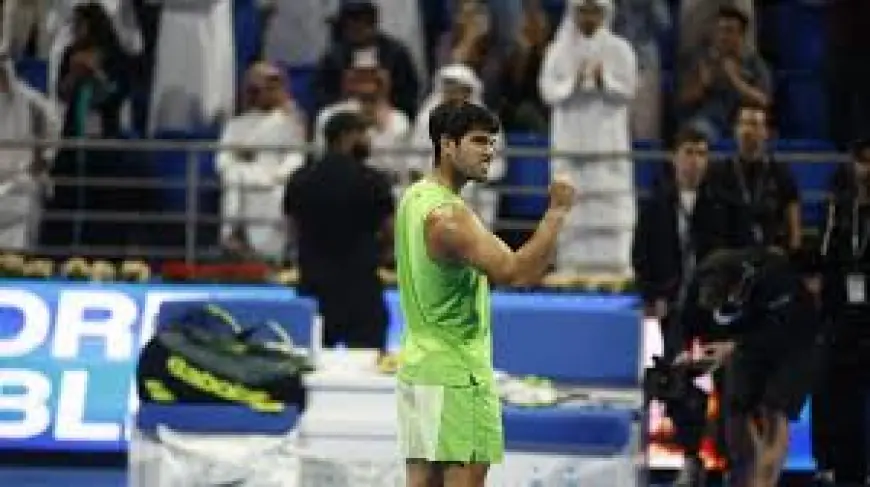
Why this matters now: carlos alcaraz’s victory in Doha isn't just another trophy — it changes the immediate competitive map and confirms a hot streak that already includes the season’s opening major. The win alters short-term ranking movement, highlights a widening gap with peers, and frames Arthur Fils’ comeback as a durable but still-developing story.
Carlos Alcaraz: momentum, numbers and a growing performance gap
The outcome in Doha reinforces a performance shift: the winner conceded only three games in the final (6-2, 6-1) and closed the match in 50 minutes. This is his second title this season after the Australian Open victory earlier in the course. At 22 years old he is credited with 26 career titles, framed in context as being close to David Ferrer’s total (the provided context pairs both figures), and now sits with two more trophies than Jannik Sinner and Alexander Zverev in this snapshot of the season. Novak Djokovic’s loss in Melbourne and Sinner’s uneven form are presented alongside Alcaraz’s week as signs of a split at the top of the sport.
Event details and match pathway that led here
Before the final, Alcaraz reached, for the first time, the final of the ATP 500 in Doha. He advanced past Andrey Rublev (28 years old, ranked 14th) in the semifinals with a 7-6, 6-4 victory that lasted 2 hours and 3 minutes. Jannik Sinner was eliminated in the quarterfinals of the tournament.
In the final itself, Arthur Fils, 21, could not match the winner’s level: Alcaraz broke early in the first set and again in the second, Fils’ racket was broken around the third game, and the match concluded in roughly 50 minutes (noted also as under an hour in the match narrative). The scoreline — 6-2, 6-1 — leaves little room for debate about the one-sided nature of the contest.
Arthur Fils’ trajectory: recovery, ranking effects and coaching change
Fils’ run to the Doha final arrives after a recovery from a stress fracture in the L5 vertebra suffered during Roland Garros (second-round match vs Jaume Munar), a match he won but after which he could not continue to face Andrey Rublev. He attempted an early comeback in Toronto (winning against Pablo Carreño) but then paused until February. His official return began in Montpellier, where he reached the quarterfinals before losing to Félix Auger-Aliassime, the eventual champion, and he later lost a difficult debut in Rotterdam to Alex de Miñaur, the tournament winner there. In Doha he progressed further and reached the final.
Fils is 21 and listed at No. 40 in the provided ranking snapshot; the final guarantees he will appear at No. 33 the following Monday. The context also notes his best career ranking previously was No. 14. During the lead-up to Doha he added Goran Ivanisevic as part of his team; he described Ivanisevic as an exceptional champion and Grand Slam winner and expressed that the coach’s experience should be positive for his long-term path. Ivanisevic’s résumé in the context includes work with other top players such as Novak Djokovic, Stefanos Tsitsipas and Elina Rybakina.
- Key takeaways: Alcaraz’s win grows his seasonal momentum and tightens immediate ranking narratives.
- Fils’ presence in the final confirms a successful return sequence after an L5 stress fracture, but the title match exposed remaining gaps versus the very top level.
- Semifinal performance: Alcaraz beat Andrey Rublev (28, ranked 14th) 7-6, 6-4 in 2: 03 to reach his first Doha final.
- Ranking movement: Fils moves toward No. 33 on the next ranking update; his career-best of No. 14 remains a separate benchmark.
Here's the part that matters for viewers and followers: the final was scheduled for Saturday 21 February on the central court at the Khalifa International Complex in Doha at 19: 00 Spanish time (21: 00 local). Spanish viewers were offered a live TV option through the national rights-holder broadcaster (narration by José Antonio Mielgo with commentary from Roberto Carretero) on a channel listed on dial 7 with no long-term commitment required; broader live minute-by-minute and highlight coverage was promoted for fans, with options to comment and sign up for alerts.
Short timeline and context notes
- Third-round note: The first time Alcaraz had faced an opponent younger than him on tour was in the 2024 Australian Open (vs Junchen Shang).
- Recent head-to-heads: The other recent meeting between these two was a week later in the Barcelona semifinals (unclear in the provided context which year is referenced).
- Additional date detail in the provided context references 14 April 2025 and a Masters 1000 Montecarlo quarterfinal noted as being voted the best match of 2025, but that passage is unclear in the provided context about the specific players involved.
It’s easy to overlook, but the combination of Fils’ return-from-injury arc and Alcaraz’s accelerating consistency is the broader story: one player consolidates dominance while the other rebuilds momentum under new coaching. The real test will be how both translate these signals into the hard-court swing and upcoming events where ranking shifts become definitive.
Readers can comment on coverage and sign up for alerts or newsletters if they want updates and minute-by-minute reporting on future matches and developments.