



















Jennifer Garner Goes Back on the Run as Season 2 Tightens the Story of The Last Thing He Told Me

Jennifer Garner returns as Hannah Michaels in Season 2 of The Last Thing He Told Me, which restarts with the same brief gallery encounter that closed the first season and quickly sends her back on the run. The new chapters matter because the series leans into tangible changes in Hannah’s life—training, weaponry and cash stashes—that reshape what a continuation feels like.
Hannah Michaels’ repeated gallery encounter with Owen
Season 1 ended on a small but pointed moment: at a gallery, Hannah Michaels briefly and secretly encountered her supposedly disappeared husband, Owen, played by Nikolaj Coster-Waldau. That scene functioned as a minor tease rather than a cliffhanger, and Season 2 opens by returning to that identical brief moment, picking up the same secretive exchange as a narrative hook.
Jennifer Garner’s physical turn about 15 minutes in
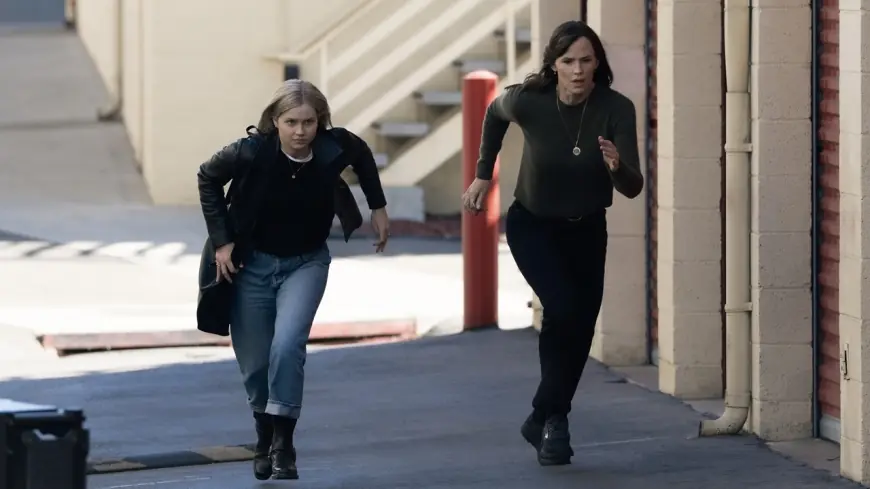
What shifts immediately is the show’s willingness to let Jennifer Garner get physical: roughly 15 minutes into the new season she demonstrates fighting skills onscreen. This is a deliberate choice—the series uses Garner’s capacity as a physical actor, moving her beyond the narrowly defined “The Mom” parts she has often inhabited and allowing her to drive action sequences early in the episode.
Hannah’s five-year transformation: training, weapons and hidden cash
The series places Hannah five years later in a life built around anticipating disruption. The on-screen changes are concrete: she trains in fighting, actively carries a weapon, uses burner cell phones, maintains bank lockboxes full of untraceable cash and rents secret storage units. Those preparations create cause-and-effect momentum—because she has prepared for another upheaval, she is materially better equipped to respond when a new threat emerges.
Deal with David Morse’s character collapses, forcing flight with Bailey
At the end of Season 1, Hannah struck a deal with her husband’s late wife’s father, a mobbed lawyer played by David Morse, that shielded her and her stepdaughter Bailey (Angourie Rice) from retaliation by his clients, the Campanos, over Owen’s betrayal. In Season 2 that agreement has been undone, and because that protection is gone Hannah is driven back onto the run with Bailey. The narrative pivot—agreement ends → forced flight—is explicit and propulsive.
Campanos threat and the show’s narrative leap about a betrayal almost twenty years old
The precipitating event that nullifies the deal provides the immediate cause for the renewed danger, but the series asks viewers to accept a large motivation: a crime family so stung by a betrayal almost twenty years in the past would seize the first chance to kill someone associated with that betrayal. The target, notably, is not the original betrayer but his daughter, who was so young at the time she has no memories of the events, and the new wife, who did not meet that man until about a decade later. And please keep in mind, this comes after several Campan—unclear in the provided context.
What makes this notable is how the series balances that demand on the audience with character-based justification: Hannah’s preparedness and changed behavior are presented as earned developments from Season 1, even if the mob’s motivations require a leap.
Season 2 adapts Laura Dave’s just-published sequel for Apple TV as familiar faces return
The season adapts a sequel novel by Laura Dave that was just published last year and arrives on the screen as a continuation rather than a simple rerun of previous beats. It also brings familiar faces back into play while leaning into a repeat of the gallery moment as a launching point. That adaptation choice produces an inessential-feeling season in one critic’s view, but overall the new episodes are judged to be a step up from the first run—more focused on character change and on leveraging Garner’s physicality.
Criticism of the season comes in two strands: one, a broader frustration with literary adaptations that extend beyond a natural stopping point to chase more seasons; two, a specific skepticism about the plausibility of the Campanos’ renewed vendetta. Still, the show’s editorial decision to make Hannah an anticipatory, equipped protagonist—trained, armed, and financially prepared—creates a credible through-line that alters the stakes and sets the tone for the rest of the season.
For viewers, the chief takeaway is simple: Jennifer Garner’s Hannah returns not as the same character who closed Season 1, but as a woman five years hardened by experience and ready to respond when old threats resurface.