
























Livigno Snowstorm Shifts Medal Race at 2026 Winter Olympics Freestyle Skiing Halfpipe

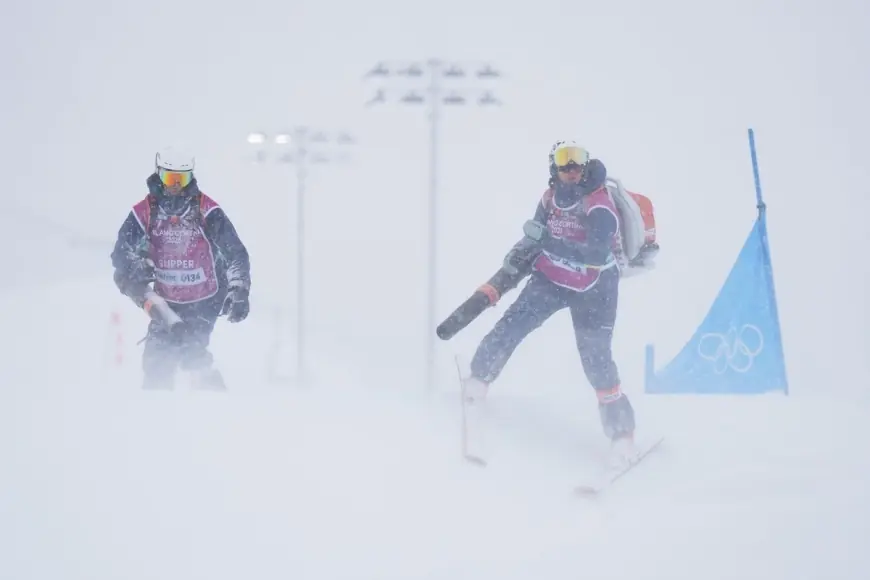
The snowstorm in Livigno has immediate consequences for competitors and national teams: the delay compresses recovery and travel windows and reshapes who benefits from an extra day of rest. The rescheduling directly affects the 2026 Winter Olympics Freestyle Skiing halfpipe final lineup — with top qualifier Zoe Atkin, defending champion Eileen Gu and China’s Li Fanghui now reconciling interrupted preparation with a new Sunday final.
2026 Winter Olympics Freestyle Skiing: who feels the impact first
Here’s the part that matters: athletes who were counting on tonight’s rhythm must adapt. The women’s halfpipe final was initially held up by an hour and a half when heavy snow blanketed the pipe and reduced visibility, then moved outright to Sunday morning. That shift alters recovery for multi-event skiers and changes the competition window in the town that has hosted snowboarding and freestyle skiing.
How the schedule changed and what that means
The final had been set for Saturday night at 7: 30 p. m. local (1: 30 p. m. ET). Persistent snowfall first caused a 90-minute delay and then forced organizers to push the final back by a day; the new start time is 10: 40 a. m. local (4: 40 a. m. ET) on Sunday, the final day of the Games. Snow in the Livigno area had already affected several events earlier in the week, and this halfpipe contest is the last event in town tied to snowboarding and freestyle skiing.
- Thursday: qualifying took place, with Zoe Atkin setting the early standard.
- Saturday 7: 30 p. m. local (1: 30 p. m. ET): scheduled final that was delayed and then postponed.
- Sunday 10: 40 a. m. local (4: 40 a. m. ET): rescheduled final on the Games’ last morning.
Who qualified where — the leaderboard carried into the delay
Zoe Atkin leads the qualifying order with a first-run score of 91. 50 that went unbeaten in qualifying. China’s Li Fanghui was the second-highest qualifier with a 90. 00 on her second run; Li and Atkin shared the overall World Cup crystal globe last season. Eileen Gu qualified in fifth place after clipping the lip of the pipe on her first run — a mistake on her third jump — then posting a competitive second run to recover into the final.
Atkin is described in coverage as 23 years old; she is the reigning X Games champion, having won a second X Games title a couple of weeks before the Olympics, and is also noted as the reigning world champion. She is aiming to improve on a ninth-place finish from Beijing 2022, her debut Games. Eileen Gu is described as a 22-year-old star who competes for China and is the defending gold medalist; another part of the coverage characterizes her as a five-time Olympic medallist. Gu has also medalled in the Games’ slopestyle and Big Air competitions, with mention that she won silver in slopestyle and earned a medal in big air during these Games.
Britain’s position and the wider medal picture
For Team GB, Atkin stands out as a leading medal hope. She is framed as Britain’s last snowsport medal chance after a run of near-misses and one earlier gold in Livigno: Charlotte Bankes and Huw Nightingale are noted as having secured Britain’s first-ever snowsport gold with victory in mixed snowboard cross last week. Freeskier Kirsty Muir is recorded as finishing fourth in both Big Air and slopestyle, while Mia Brookes is noted for a fourth place in the snowboard Big Air and a surprising failure to qualify for the slopestyle final. Overall, coverage describes GB Snowsport’s Games as mixed.
If you’re wondering why this keeps coming up, one complication is multi-event athletes: progressing in one discipline has already reduced available practice time for another, an issue raised by Eileen Gu in relation to halfpipe training. She said after qualifying that she felt exhausted and noted she had missed a training session because advancing in Big Air limited halfpipe practice — and that no judge rewards missing training when competitors must still face the best in the field.
It’s easy to overlook, but the extra day shifts more than a clock: it can change who is physically freshest, who adjusts technical plans, and who benefits from calmer conditions if the weather eases. The real test will be how athletes recover overnight and whether the snow conditions improve for the rescheduled morning final.
Practical ripple effects
Travel and broadcast windows are unclear in the provided context. What is clear from the available details is that heavy snowfall first delayed the final by an hour and a half, then forced a move to Sunday morning; the rescheduled start is 10: 40 a. m. local (4: 40 a. m. ET). Snow had already affected several nearby events earlier in the week, underlining that weather remains an active variable for these disciplines.
Micro timeline recap: Thursday qualifying (Atkin’s top first run), Saturday scheduled evening final (7: 30 p. m. local / 1: 30 p. m. ET) delayed then postponed, Sunday morning final set for 10: 40 a. m. local (4: 40 a. m. ET) as the Games conclude.
Recent updates indicate event details may evolve if weather remains problematic; those specifics are unclear in the provided context.