

















Car Accident Attorney: What Sacramento Drivers and Injured Parties Need First After the Arden Way Collision

Who feels the impact first after a local crash? The injured person and anyone whose travel or insurance exposure intersects with the scene—plus the evidence that can vanish fast. A Car Accident Attorney’s immediate priority in cases like the two-car crash at Arden Way and McLaughlin Street is preserving timely records and usable proof; that matters more than swapping blame on the roadside. One person was hospitalized after the crash on Thursday evening.
Immediate stakes and practical legal priorities for victims and witnesses
Here’s the part that matters: when someone is hurt and a vehicle collision has occurred, the window to secure critical evidence is short. Experienced counsel typically focuses first on documentation that survives changing road conditions and administrative delays. Claims involving larger commercial vehicles often hinge on data tied to speed, spacing and maintenance; even in passenger-vehicle collisions, vehicle systems and weather records can make or break a case.
- Preserve scene evidence: photos, witness contacts, and any dashcam or phone video captured near the time of the crash.
- Collect environmental records quickly: contemporaneous weather reports and road-condition logs help establish context before conditions change.
- Retain vehicle data where relevant: electronic control module extracts or telematics can show speed and braking inputs; for trucks, company logs and truck data are especially relevant.
- Note that federal safety rules apply to commercial drivers: regulations require extreme caution in hazardous conditions and can define the standard of care.
What’s easy to miss is how rapidly records and road conditions can change, which is why timely action is emphasized for building a claim. The real question now is how well evidence was captured at the Arden Way and McLaughlin Street scene while it remained intact.
Event details and broader safety context
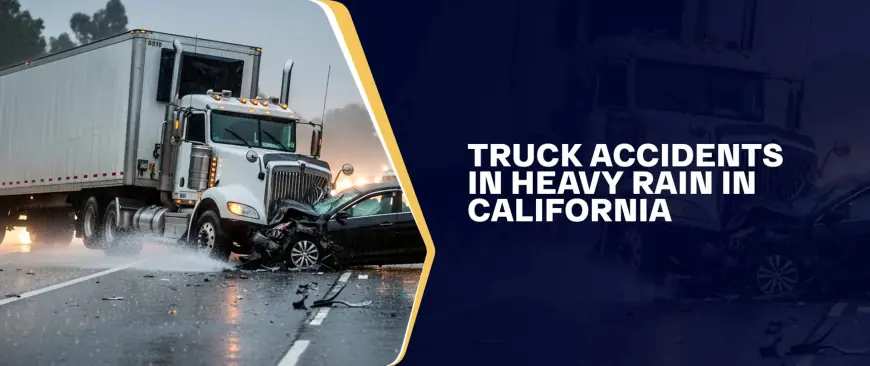
The collision occurred in the area of Arden Way and McLaughlin Street in Sacramento and left one person hospitalized following a two-car crash on Thursday evening. Beyond the immediate incident, recent guidance about truck crashes in heavy rain underscores a recurring cause of severe collisions: failure to adjust speed and vehicle handling to hazardous conditions.
Drivers—especially commercial drivers—have explicit duties in poor weather: reduce speed, increase following distance, use headlights and windshield wipers to maintain visibility, and pull off the road if safe operation is not possible. Federal Motor Carrier Safety Administration rules require commercial drivers to exercise extreme caution in hazardous conditions, and state basic speed laws prohibit traveling at the posted limit when conditions make it unsafe.
The takeaway for anyone involved in or witnessing a crash: documentation matters. Claims often rely on proof of speed, spacing, maintenance records and contemporaneous weather evidence before records are altered or conditions change.
Next signals that would clarify how liability and recovery might unfold include whether investigators gathered vehicle data or preserved on-scene footage, and whether weather or visibility records for the time and location were obtained promptly. If those items exist, they strengthen the factual foundation an attorney would use when advising an injured party.
For readers in Sacramento: if you were at Arden Way and McLaughlin Street during the incident and have photos, video, or eyewitness detail, securing that material now will likely be more valuable than waiting. If you’re wondering why this keeps coming up, it’s because early evidence capture is the factor that most often separates solvable claims from contested ones.
It’s important to note that the immediate facts are limited to the crash location, the hospitalization of one person, and the timing on Thursday evening. Details about causes or contributing conditions for this specific collision have not been established publicly and may evolve.
The larger signal here is that whether a case involves two passenger cars or a commercial truck, timely documentation and attention to vehicle data and weather records are consistently decisive in resolving responsibility and securing compensation.