
























Gale Watch: Weekend Risk Mix — Red Flag Fire Danger in San Antonio, Frigid Weekend and a Rapid, Gusty Warm-Up in the Ozarks

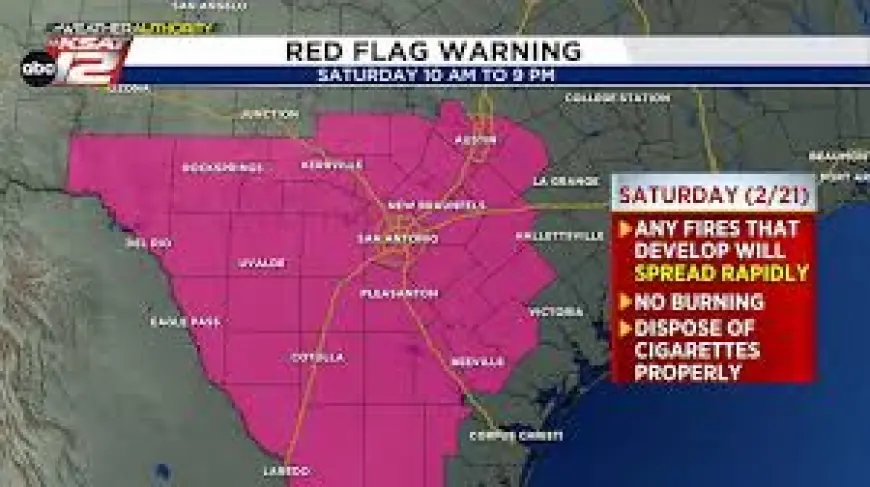
A split-weather weekend creates sharply different hazards for two regions: a Red Flag Warning elevates fire danger for San Antonio and the Hill Country on Saturday, while the Ozarks are set for a frigid stretch that flips into a gusty, warm surge. The term gale watch appears here as a risk shorthand for the gusty transition expected in the Ozarks; travel and outdoor plans should account for both dry-fire risk and rapidly changing winds and temperatures.
Gale Watch framing: uncertainty and operational risks across two separate regions
Here’s the part that matters: these are parallel hazards rather than one unified system. In south-central Texas the immediate worry is elevated fire danger under a Red Flag Warning for San Antonio and Hill Country on Saturday. In the Ozarks the near-term uncertainty centers on a cold, breezy weekend that will briefly produce minimal precipitation before a very strong westerly wind surge brings a dramatic warm-up, with gusts likely exceeding 30 mph.
Because the hazards differ by location, the practical questions are local and operational—how to protect property and outdoor works in a Red Flag zone, and how to prepare for low temperatures, wind chills, and then sudden high winds and temperature swings in the Ozarks. The moisture available for any precipitation in the Ozarks is minimal—barely enough to wet the ground—so the expected light precipitation is unlikely to blunt fire risk or dramatically change road conditions.
It’s easy to overlook, but the bigger signal here is the speed of the temperature swing in the Ozarks: readings move from near-freezing and low-20s in the mornings to the mid-60s by midweek, and that rapid change arrives with strong winds. That combination raises transport and outdoor-safety questions even where precipitation is light.
Event details and the timeline of change
San Antonio and Hill Country: a Red Flag Warning is in place for Saturday, signaling high fire danger for that day. Specific local actions and restrictions are determined locally.
Ozarks forecast snapshot (schedule subject to change):
- Late-night to Saturday morning: a disturbance moving from the southern Rocky Mountains brings increasing clouds and a chance of light precipitation, with rain possible and a few snow flurries or brief sleet mainly south of I-44 and into northern Arkansas. Moisture is minimal, so no significant impacts are expected from precipitation.
- Saturday: cold and breezy with highs holding in the lower 40s because of northwest winds and cloud cover; temperatures will dip close to freezing overnight.
- Sunday: sunny, cold, and windy; morning lows tumble to the low 20s with wind chills near the low teens while afternoon highs reach the low 40s.
- Monday: the coldest morning of the stretch, with readings near the mid-teens; high pressure brings light winds and sunshine and highs around 40 degrees.
- Tuesday into midweek: a sharp warm-up begins as very strong westerly winds develop overnight, ushering much warmer air. Morning starts in the mid-20s with highs surging into the low to mid-60s; gusts are likely to exceed 30 mph. Wednesday remains warm in the mid-60s, while Thursday brings a chance of rain with thicker clouds and strong winds keeping highs in the mid-to-upper 50s. Friday trends sunnier and warmer again toward the mid-60s.
The real question now is how communities and individuals calibrate preparations for two very different hazards at once. In Texas, Saturday’s Red Flag Warning focuses attention on outdoor burning and property protection. In the Ozarks, the sequence of freezing mornings, gusty winds, and rapid warming calls for flexible plans around sensitive activities and travel.
Practical signals that will confirm the next turn include measurements of actual wind gusts during the overnight surge and observed precipitation amounts during the disturbance’s passage; minimal observed moisture will reinforce expectations of light impacts from rain or sleet.
Writer's aside: What’s easy to miss is how a brief period of minimal moisture can still coincide with dangerous conditions—dry fuels plus windy conditions can produce elevated fire risk even when measurable rain is scarce.