

























U.S. Jets Intercept Russian Fighter Jets Off Alaska as NORAD Escorts Bombers and Spy Plane Out of ADIZ

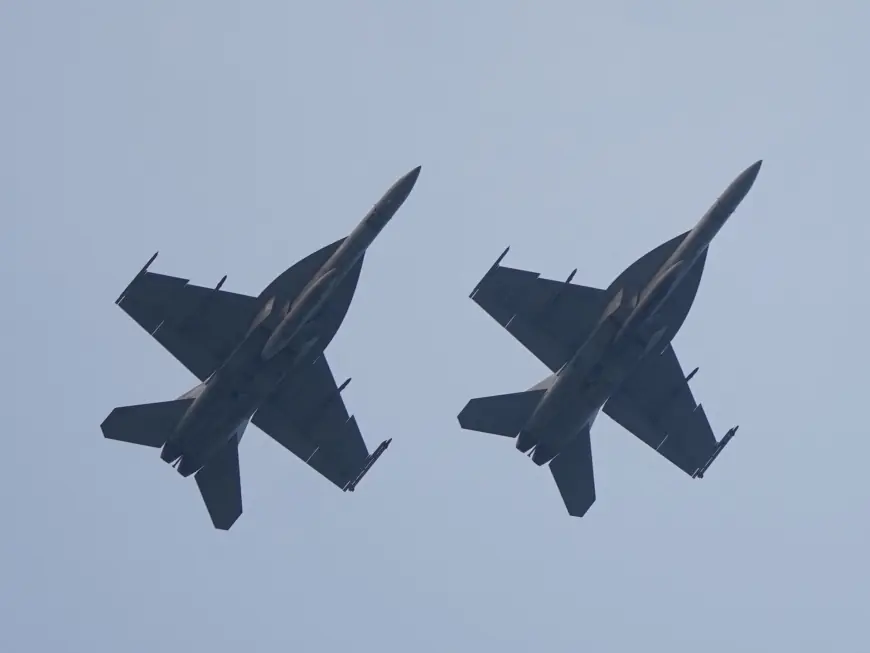
The North American Aerospace Defense Command scrambled aircraft to meet and escort Russian military planes operating near Alaska, a move that underscores ongoing aerial interactions in the region. Russian Fighter Jets were among the aircraft tracked in the Alaskan Air Defense Identification Zone and were escorted until they departed the area.
Russian Fighter Jets: What happened and what’s new
On Thursday, U. S. air defense forces launched jets after multiple Russian military aircraft were detected flying off Alaska’s western coast near the Bering Strait, in the Alaskan Air Defense Identification Zone. The group of Russian planes included two Tu-95 bombers, two Su-35 fighters and an A-50 surveillance aircraft,.
To monitor and escort the Russian formation until it left the ADIZ, NORAD launched two F-16s, two F-35s and four KC-135 tankers. Photographs of the Russian aircraft being escorted out of the zone were posted the following day. Officials characterized the activity as a regular occurrence and said the aircraft did not enter U. S. or Canadian sovereign airspace.
Behind the headline
This episode fits into a pattern of repeated operations near Alaska’s ADIZ. NORAD has framed such encounters as routine and not considered a direct threat while emphasizing the purpose of the ADIZ as a defined stretch of international airspace that requires ready identification of aircraft for national security. Previous incidents cited by officials include multiple intercepts in recent years involving long-range Russian aircraft and, on at least one occasion, coordinated flights including other countries' bombers.
Key actors include NORAD and U. S. air defense assets responsible for detecting and escorting foreign military aircraft in the ADIZ, and the Russian military aircraft operating in that international airspace. Stakeholders extend to Canadian air defense, given the ADIZ spans where U. S. and Canadian sovereign airspace ends, and to regional security watchers who track patterns of activity and responses.
What we still don’t know
- Whether an airborne warning and control aircraft (E-3) participated alongside the escorting U. S. jets; one account lists such an aircraft while another does not.
- Whether Russia’s Ministry of Defence will issue a public statement responding to this specific encounter; it had not issued one at the time of the latest briefings.
- The detailed flight paths and timings inside the ADIZ beyond the broad characterization that the aircraft were detected, tracked and escorted until departure.
- Any tactical communications exchanged between the escorting jets and the Russian formation beyond routine identification procedures.
What happens next
- Continued monitoring and routine intercepts: NORAD is likely to maintain surveillance and scramble escorts when aircraft enter the ADIZ; trigger — further flights by long-range aircraft near Alaska.
- Public statements or clarifications: Russia’s military could choose to comment publicly on the flights; trigger — an official release from the Russian defence authorities.
- Operational adjustments: U. S. and Canadian air defense could alter patrol patterns or asset posture in response to frequency or composition changes in observed flights; trigger — sustained or escalated activity in the ADIZ.
Why it matters
For regional defense planners and the public, the incident highlights the role of the ADIZ as a buffer zone where identification and escort procedures are exercised. While officials described this activity as routine and not a threat, repeated encounters keep attention on readiness, resource allocation for patrols and the mechanics of aerial identification near sovereign airspace. Near-term implications include continued operational tempo for intercept-capable aircraft and ongoing surveillance to ensure aircraft are identified and escorted when necessary.
Observers should watch for any formal comment from the Russian military, confirmation or denial of additional escorting assets from U. S. authorities, and whether similar formations appear in the ADIZ in the coming weeks.